A dental checkup can feel like a familiar appointment with an unclear purpose. You sit back, hear a few numbers, answer questions about flossing and leave with a date for next time. Yet there is much more you can take away from the visit than the reassuring feeling that it is finished. A useful checkup gives you an understandable picture of your mouth, a chance to raise concerns and a plan that makes sense in your everyday life.
If you are booking dental checkups in Guelph around work, classes or family commitments, it helps to know what you want from that time. Perhaps a tooth has started feeling different. Perhaps you have no discomfort but would like to understand whether your home routine is working. Either is a worthwhile reason to talk. You do not need a dramatic symptom or a perfectly worded question to deserve a clear explanation.
Start with the question that matters to you
Before the appointment, finish this sentence: “I would feel better leaving today if I understood…” Your answer might concern a sore spot, an old filling, a recommendation from your last visit or a habit you have struggled to change. Write it in your phone. Bringing one main question makes it easier to remember when you are settling into the chair and answering several other questions at once.
Be concrete when you can. “Sometimes my tooth hurts” gives the team a starting point, while “the lower left side feels sharp when I drink cold water, and I first noticed it last week” adds useful context. You do not need to decide which tooth is responsible. Describe what you actually noticed rather than guessing at a diagnosis. If the sensation comes and goes, mention that too.
There is also room for concerns that are not physical. You may be worried about costs, uncomfortable lying back, embarrassed about a long gap in care or uncertain about previous advice. Say so near the beginning rather than saving it for the doorway. The appointment can then include the information you need, instead of leaving the team to assume what is most important to you.
What the examination is looking at
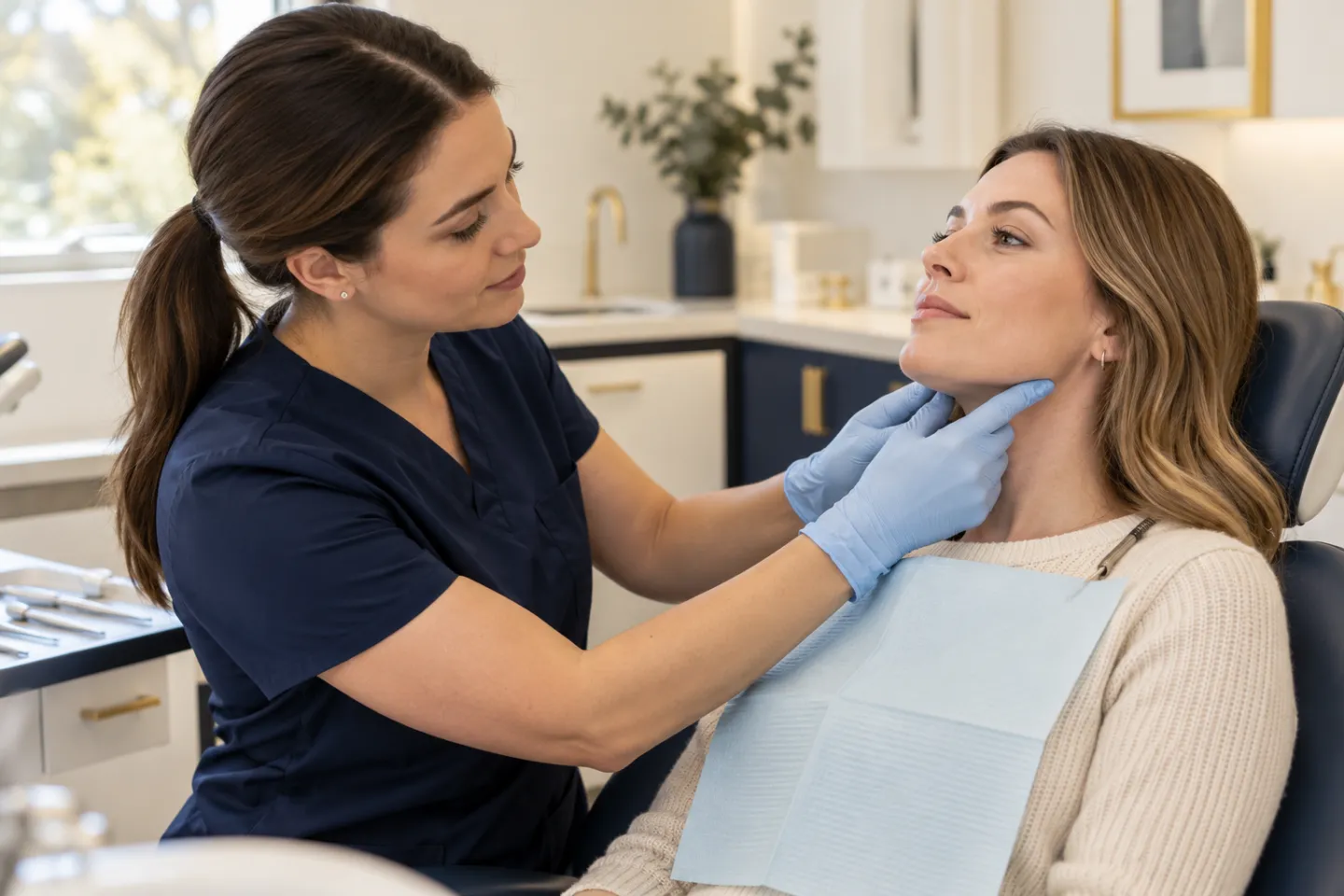
A dental examination considers more than the surfaces you can see in a bathroom mirror. The Canadian Dental Association describes assessment of teeth, gums, existing dental work, the bite, oral tissues and jaw function, along with a review of relevant health information. X-rays may be recommended when they help answer a clinical question. The combination allows the dentist to consider findings in context rather than judging a single tooth in isolation. Read the CDA’s explanation of the dental exam.
During the visit, ask the dentist to translate unfamiliar terms. If you hear “watch this area,” ask what is being watched and what would count as a change. If a surface is described as worn, ask where it is and how that affects the plan. Understanding the location can be as useful as knowing the technical name. A mirror or a picture, when available and appropriate, may make the explanation easier to follow.
You can also ask the team to distinguish an observation from a recommendation. An observation might be that an area is difficult to clean. A recommendation might be to adapt your technique, review it later or investigate further. Hearing these separately helps you understand why a suggestion is being made. It also keeps a long conversation from sounding like a list of unrelated problems.
Feeling fine is useful information, but it is not the whole picture
It is reasonable to wonder why you need an examination when your teeth feel comfortable. The American Dental Association’s patient guidance explains that some oral health problems have no symptoms that a person would notice themselves. Regular care also gives the team an opportunity to review changes in general health and discuss prevention. Comfort is good news, but it cannot answer every question an examination is designed to address. See the ADA’s common questions about dental visits.
This does not mean every comfortable tooth needs treatment. It means the next step should follow the actual findings. You can ask, “What did you see that led to this recommendation?” and “How certain is the finding?” These are ordinary questions, not a challenge to the dentist. A clear answer should help you understand the reason for care and any reasonable alternatives.
Equally, mention a symptom even if it disappears before your appointment. You do not need to reproduce it on command for it to be worth discussing. Bring a short description of when it happened and how long it lasted. Avoid repeatedly testing a painful tooth at home just to collect more detail. The team can decide what examination or investigation is appropriate.
Make the health update accurate rather than complicated
When a form asks about changes in your health, it can be tempting to write “same” and move on. Take a moment to think about the period since your last visit. A new prescription, an allergy that was recently identified or care from another health professional may belong in the conversation. The CDA specifically encourages patients to report changes in medications, medical conditions, pregnancy, sensitivities and oral symptoms. Its dental exam checklist explains what to mention.
You do not have to rely on memory. Keep a current medication list on your phone or bring the information you normally use at medical appointments. If you do not know a name or date, say that you are unsure. It is more useful to acknowledge a missing detail and find it than to supply a confident guess. Ask the team how they would like you to share any follow-up information.
For a family appointment, keep each person’s details separate. A child’s recent concern and a parent’s medication update can easily become tangled when one adult is completing several forms. A few notes under each name can prevent the end-of-visit realization that an important question belonged to someone else.
Ask what an X-ray would help answer
Dental X-rays are not automatically required at every checkup. The CDA explains that timing depends on oral health and what needs monitoring, just as the interval between examinations should reflect individual needs. If imaging is recommended, ask what the dentist hopes to learn and whether previous images are available for comparison. The decision should be understandable in relation to your circumstances. Read the CDA’s guidance on checkups and X-rays.
A helpful question is, “How could the result change what we do next?” That focuses the conversation on purpose. If you have recently moved to Guelph or changed practices, mention where and approximately when earlier images were taken. The office can explain the process for requesting records and whether those records will meet the present need.
Our dental X-rays guide provides a place to revisit the terminology after the appointment. Reading ahead can help you form questions, but you do not need to study an imaging guide before you are allowed to ask why an image is recommended.
Turn findings into an order of priorities
Sometimes the most challenging part of a checkup comes after the examination, when several options are discussed quickly. Ask the dentist to organise the conversation into what requires attention soon, what can be planned and what will be monitored. This gives each recommendation a place in the overall picture without assuming that every item has the same urgency.
For any proposed treatment, useful questions include what it is intended to accomplish, what alternatives may be appropriate and what the disadvantages of waiting could be. If timing matters, ask for a practical explanation. “We should address this” is less helpful for planning than a conversation about the finding, the risks and the recommended next step. Let the team know if you need a written summary.
Costs belong in that discussion too. Ask for an estimate and clarify which appointments or stages it covers. If you have benefits, separate the clinical recommendation from the question of what the plan may reimburse. Our insurance information can help you prepare the administrative questions. You should be able to understand the proposed care before trying to fit it into a calendar or household budget.
Leave with one home-care change you can actually explain
Advice is easiest to use when it is specific. Instead of leaving with a general intention to “do better,” ask the team to show you the area they would like you to focus on. You might ask where to place your brush, how to reach a difficult space or whether the tool you already own is suitable. A demonstration creates a more useful starting point than buying several unfamiliar products on the way home.
Try explaining the advice back in your own words: “So the part I need to change is the angle here, rather than pressing harder?” This gives the team a chance to correct a misunderstanding while you are still together. If using the recommended method is difficult because of hand movement, gagging, access or another practical issue, describe that obstacle. A plan that ignores the obstacle is unlikely to fit your day.
Choose a reminder that connects with something already familiar. You could keep the written instruction with your toothbrush supplies or add a note to the evening reminder you use for other routines. The aim is to remember the agreed approach, not to create a complicated tracking project. At the next visit, tell the team what worked and what did not.
Make follow-up a clear decision
Before you leave, check whether the next appointment is another examination, a cleaning, a treatment visit or a review of a specific concern. These can sound interchangeable when an appointment is booked at a busy reception desk. Knowing the purpose helps you reserve the right amount of time and arrive with the right expectations.
The CDA notes that examination intervals vary with factors such as oral health, past problems and how quickly deposits build up. A familiar six-month schedule is not a universal rule. Ask why the suggested interval fits your situation and what would be a reason to contact the office sooner. More on individual checkup timing is available from the CDA.
For a busy Guelph household, putting the appointment into the shared calendar while the purpose is fresh can save confusion later. Add a short private note about any question still outstanding. If you leave and realise you misunderstood something, contact the office for clarification. You are not expected to remember an entire conversation word for word.
A good outcome from a checkup is a clearer understanding of what is happening and what comes next. You should know which findings matter, what you can do at home and how to proceed with any recommended care. If you are arranging an appointment with a new team, our first-visit information can help you prepare for that conversation. Bring your questions as you are; you do not need to have the answers before you arrive.
Further reading
- Canadian Dental Association: The dental exam
- Canadian Dental Association: Regular dental checkups
- American Dental Association: Common questions about going to the dentist
This article offers general education. Your dental team can help you apply it to your own health, treatment and recovery.