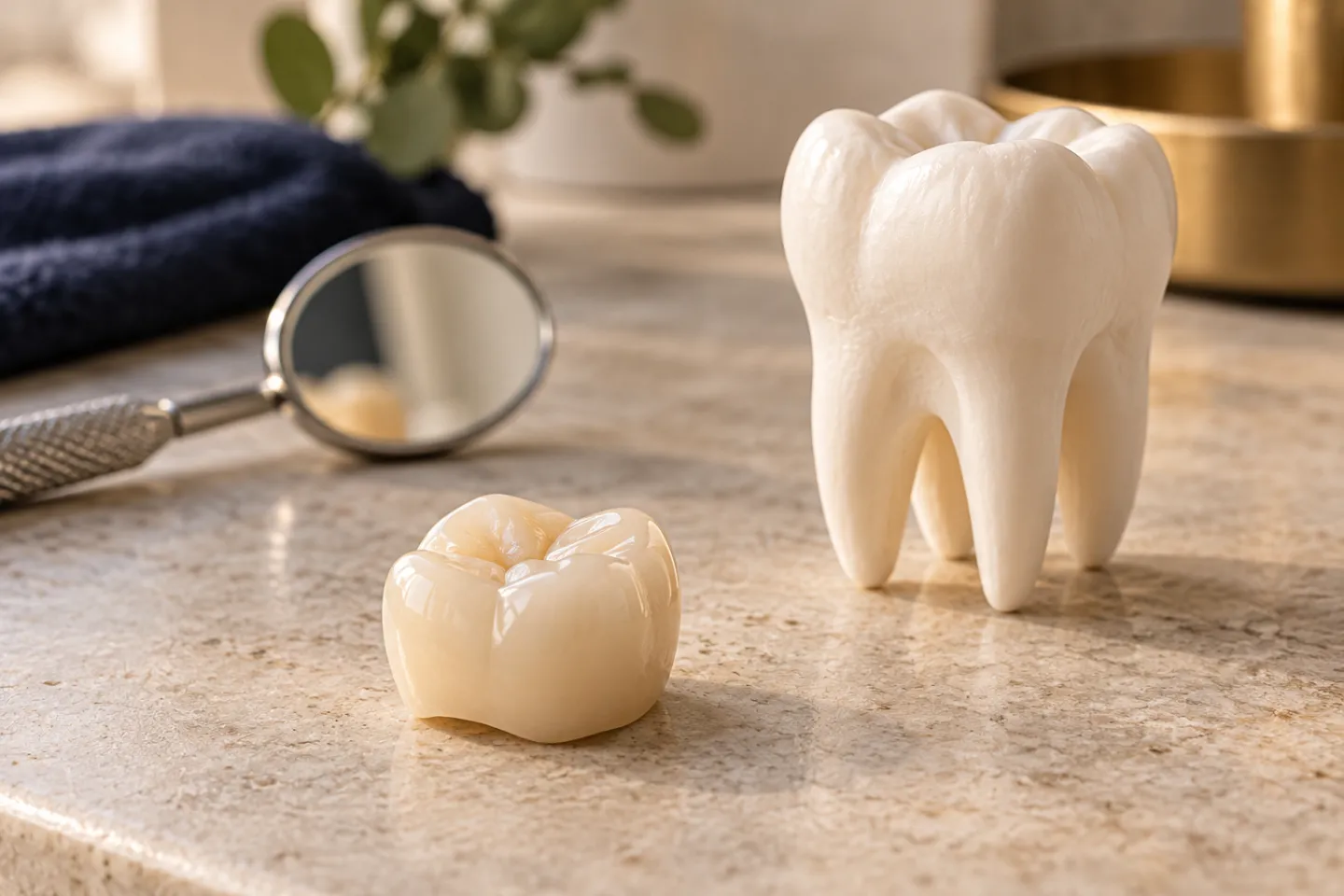
You may first hear the word “crown” after a large filling breaks, a tooth loses a piece or root canal treatment is discussed. It can sound like a major change from the care you expected. The key to understanding the recommendation is the tooth underneath: how much sound structure remains, what it needs to do and whether a covering restoration is a sensible way to support it.
A crown, also called a cap, fits over a prepared tooth. The Canadian Dental Association describes crowns as a way to restore the shape, strength and appearance of damaged teeth. They can be used for broken teeth, teeth with large fillings and some teeth after root canal care. Read the CDA’s overview of crowns.
For anyone considering dental crowns in Guelph, the important questions extend beyond what the finished tooth will look like. You also need to understand the preparation, the time between stages, the fit and the maintenance afterward. A crown becomes part of your everyday bite, so the plan should make sense in both clinical and practical terms.
The decision begins with what is left
A filling replaces a missing portion of tooth. A crown covers a prepared tooth more extensively. That greater coverage can be useful, but it also involves removing tooth structure to make room. Leeds Teaching Hospitals explains that crowns are considered for badly broken or weakened teeth and that the most suitable approach should preserve natural tooth where possible. Its crown information describes the reasons and alternatives.
This is why the size of an existing filling is only part of the discussion. A recommendation should relate to the remaining tooth and the overall assessment. Hearing that a crown is “stronger” is not enough to explain why your tooth needs one. The useful detail is what the proposed restoration is intended to protect or rebuild.
There may be alternatives. Bristol Dental School includes fillings and onlays among the options that can be considered, depending on the situation. An onlay covers selected parts of the chewing surface rather than enclosing the tooth in the same way as a full crown. Suitability depends on how much tooth remains and what needs support. See Bristol’s crown treatment information.
You do not need to select a design from a photograph. The dentist should connect the proposed option to your examination, including why a less extensive repair may or may not be appropriate. This makes the decision about a particular tooth rather than about choosing the biggest or smallest procedure by name.
Understand the foundation before discussing the finish
Terms such as “core” and “post” can make a crown estimate look like several unrelated treatments. A core is a built-up foundation for the crown. In selected root-treated teeth with limited remaining structure, a post can help retain that foundation. A post is not needed for every crown and is not the same thing as an implant replacing a tooth root. Leeds Teaching Hospitals explains posts and cores.
If these stages appear in your plan, have them explained together. It should be clear which part addresses the tooth’s foundation and which part supplies the outer restoration. A simple sketch can make the relationship easier to understand than a list of billing terms. Keep that explanation with the estimate so you can refer to it later.
A crown and root canal treatment also do different jobs. The crown concerns the restoration around the tooth; root canal treatment addresses the tissues and spaces inside it. One does not automatically mean that the other has already been performed. If both are recommended, confirm their order and who is responsible for each stage. Our root canal treatment guide explains that separate procedure.
Choose materials through the needs of the tooth
Crowns can be made from metal alloys, ceramics or combinations of metal and ceramic. The American Dental Association’s review of indirect restorative materials describes differences in their mechanical and aesthetic properties. It also emphasises that a restoration’s outcome depends on more than its material alone. There is no single material name that settles every clinical question. Explore the ADA’s overview of crown materials.
The following comparison is a way to organise the discussion, rather than a ranking of products:
| Consideration | What to clarify |
|---|---|
| Appearance | How the proposed material and shade will look beside your own teeth. |
| Position | How visible the tooth is and what demands its location places on the restoration. |
| Preparation | How the design affects the amount of tooth that needs to be reshaped. |
| Health history | Whether a known material allergy or another concern affects the options. |
| Maintenance | What kinds of wear, damage or follow-up the dentist wants you to understand. |
If the crown is visible in your smile, discuss your appearance goals before it is made. “I want it to blend with the neighbouring teeth” is a different goal from wanting a general colour change. A photograph you like can communicate a preference, but it cannot predict how a specific material will look in your mouth.
Be wary of turning the choice into a contest between the newest-sounding materials. What matters is whether the proposed restoration fits the clinical situation and your priorities. The dentist’s explanation should include the limitations of the chosen option, not only its attractive features.
Preparation and fitting are separate tasks
In a conventional laboratory-made crown process, the tooth is prepared, a record of its shape and the surrounding teeth is taken, and a temporary crown protects it while the final crown is made. At the fitting appointment, the dentist checks the restoration’s fit, colour and bite before securing it. The CDA outlines this sequence and notes that additional treatment can sometimes add stages. See how a crown is placed.
Your own workflow and appointment count should be confirmed with the office. Do not assume a timetable from an online article applies to the technique being proposed or to the condition of your tooth. If a holiday, work trip or important event is approaching, bring that date into the conversation before preparation begins.
It is helpful to book the connected appointments with their purposes clearly identified. For a Guelph household coordinating transport or childcare, “prepare crown” and “fit crown” are more useful calendar entries than two identical reminders. You can then check that practical arrangements cover the whole treatment sequence.
At the fitting stage, describe what you notice honestly. If you are unsure about the appearance, ask to see it clearly before the process is completed. If your teeth do not seem to meet naturally, explain the sensation. Your feedback adds information that a visual check alone cannot capture.
Take the temporary stage seriously
A temporary crown is made for an interim role and is generally less robust than the definitive restoration. Bristol Dental School highlights the importance of returning for completion rather than treating the temporary as a long-term substitute. It also describes potential crown complications, including fracture, changes around the gum margin and problems involving the tooth’s pulp. Read Bristol’s benefits and risks information.
While you have a temporary crown, instructions may include avoiding sticky foods, taking care with chewing and sliding floss out rather than lifting it against the restoration. MedlinePlus advises contacting the dentist if the temporary crown is lost, swelling worsens or the bite feels wrong. Follow the specific instructions supplied for your tooth. See MedlinePlus’s crown aftercare advice.
Make the food advice practical before you leave. If a suggested restriction conflicts with what you normally pack for lunch or eat during a shift, identify an easy alternative. The temporary period is easier to manage when it does not depend on making a new decision at every meal.
If the crown loosens or comes off, contact the dental office rather than experimenting with household adhesives. Keep the crown if you have it and explain what happened. The team can advise on timing and next steps. An online repair video cannot establish whether the crown, the prepared tooth or another part of the restoration has been damaged.
What a finished crown should mean for daily life
The aim of treatment is a restoration you can use comfortably as part of your normal bite. At first, you may be very aware of the tooth simply because you have spent time thinking about it. That awareness is different from persistent pain, a sense that the crown hits first or difficulty cleaning around it. Describe a continuing concern to the dental team rather than deciding that you must get used to it.
Give the office a useful description. “My back teeth meet differently when I close” is more informative than “the crown is strange.” Note whether the concern appears during chewing, when the teeth meet or around the gum. You do not need to determine the cause yourself, and repeated biting tests are not necessary to make the complaint legitimate.
Any aftercare plan should account for the procedures you received, including local anaesthetic and additional work. Ask when normal eating can resume and what precautions apply while sensation returns. Keep those instructions accessible rather than relying on what someone else remembers from their own crown appointment.
Our dental crowns guide provides another place to review the terminology. It can help you identify the part of the process you want explained when you call.
Protect the tooth around the crown
A crown does not remove the need to care for the underlying tooth and surrounding gums. Regular brushing with fluoride toothpaste, cleaning between teeth and appropriate dental review remain part of maintenance. Leeds Teaching Hospitals includes these measures in its advice for looking after crowned teeth. Read its crown-care recommendations.
Ask for a demonstration if cleaning around the new restoration feels unfamiliar. The important point is to understand how to reach the area with a suitable tool, especially if you already have other restorations nearby. A change in how floss passes, recurring food trapping or persistent gum discomfort is useful information to report.
Do not judge long-term success only by whether the crown still looks attractive. Comfort, the surrounding tissues and the clinician’s assessment matter too. If you grind your teeth or have been advised to wear an appliance, include that in the maintenance discussion. The crown should be considered within the way your whole mouth functions.
For dental crowns in Guelph, a thoughtful plan begins with the remaining tooth and ends with care you can manage. Understanding the foundation, the material and the temporary stage gives you a clearer picture of what you are agreeing to. The finished crown is one part of the result; knowing how it fits into your ongoing oral care is the other.
Further reading
- Canadian Dental Association: Crowns
- Leeds Teaching Hospitals: Crown materials, foundations and care
- University of Bristol Dental School: Dental crown treatment
- American Dental Association: Materials for indirect restorations
- MedlinePlus: Dental crowns and aftercare
This article offers general education. Your dental team can help you apply it to your own health, treatment and recovery.