Most illustrations of a dental implant show a neat sequence: a small implant in the jaw, a connector and a tooth on top. The picture is helpful, but it leaves out the part that occupies most of a patient’s life: eating breakfast, cleaning around the new tooth, returning for reviews and knowing what to do if something changes.
Those everyday details should be part of the discussion from the beginning. Dental implant treatment includes surgery and restoration, followed by continuing care of the implant, the surrounding tissues and the replacement it supports. A plan is more complete when it explains all three.
For anyone considering dental implants in Guelph, this article looks past the placement appointment. It explains the different parts, the distinction between healing and final fitting, and the practical information worth keeping once treatment is complete.
Understand what is being placed and what is being fitted
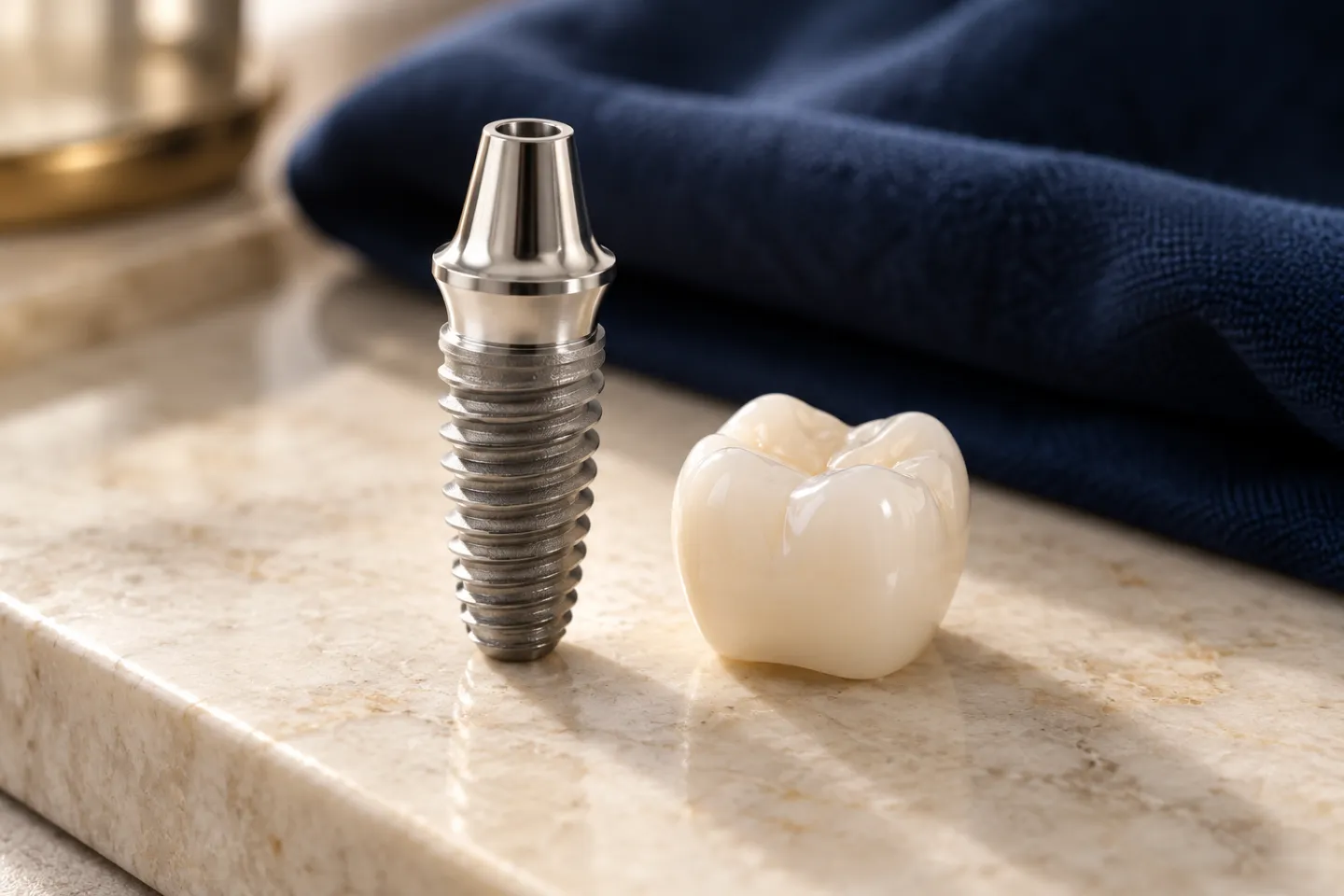
An implant system usually includes a body placed in the jawbone, an abutment that connects it to the restoration, and the artificial tooth or teeth above it. A screw may be part of the connection. These components have different roles, so a problem with a visible replacement does not automatically identify what is happening below it. The FDA illustrates the parts of a dental implant system.
At the planning stage, it is useful to point to each part on a model. Which component is being discussed when the clinician says “implant”? Does the estimate cover the surgical placement only, or the restoration as well? Which appointment involves assessing the fit and appearance of the new tooth?
This is particularly helpful if treatment involves different providers. The person placing an implant and the person making the restoration may have different responsibilities. Keep the sequence clear without assuming that every stage happens in the same chair or on the same day.
You can revisit the basic terminology in our dental implants guide. Once you can distinguish the parts, a treatment conversation becomes easier to follow and a written plan becomes easier to check.
Fixed and removable replacements need different routines
Implants can support a fixed crown or bridge, or a removable overdenture. A fixed restoration remains in the mouth during the wearer’s normal cleaning routine. An overdenture is designed to be removed, allowing access to both the appliance and its attachments. The word “implant” therefore describes the support, not whether you will remove the teeth yourself. Leeds Teaching Hospitals explains these restoration types.
Before choosing between reasonable options, picture the cleaning arrangement. A fixed bridge may sound simpler because there is nothing to take out, yet you still need to understand how to reach beneath and around it. A removable design introduces a handling and storage routine. A demonstration is more informative than assuming that either design will automatically be easier.
If your hands are stiff, your vision is limited or someone helps with daily care, bring that into the design discussion. Ask to practise any proposed handling technique before the instructions are finalised. There is little value in a technically clear explanation if the person doing the care cannot comfortably perform it.
The same distinction matters when discussing repair or replacement. Use the exact name of the part involved rather than assuming that every later adjustment would involve the implant in the bone. The clinician can explain which components are relevant to your plan.
Healing is an active stage of treatment
After placement, bone heals around an implant in a process called osseointegration. The artificial tooth may be fitted after a healing period, although selected treatment plans use different timing. A temporary restoration may be part of the process. The schedule depends on the clinical situation, not simply on a preferred completion date. The American Dental Association describes the main implant treatment phases.
This makes it useful to separate several calendar questions. When is surgery planned? When is healing checked? When are records taken for the replacement? When is the fit reviewed? A date for one of these steps is not necessarily a promise that all treatment will be complete by then.
If you have an important event or travel planned, explain it before treatment starts. The discussion can then include appearance during the interim period, the availability of follow-up and what happens if healing requires more time. It is better to understand those possibilities early than to discover them after arranging non-refundable plans.
Do not interpret a temporary tooth as permission to use the area in every way you used a natural tooth. Follow the instructions for the actual restoration and stage you have reached. If the written advice seems to conflict with something you remember hearing, contact the team and clarify the wording before making your own adjustment.
Keep early recovery instructions separate from long-term care
Immediately after surgery, cleaning and eating instructions may differ from the routine used once the area has healed. Guy’s and St Thomas’ NHS guidance, for example, distinguishes the surgical site from the rest of the mouth and stresses personalised instructions and follow-up. Its hospital protocol is not a substitute for the plan from your own treating team. Read its overview of care after implant surgery.
Before leaving, identify three practical details: what to do today, what changes after the next review and whom to contact if the instructions are difficult to follow. Keep medicine directions with the medicine rather than relying on a general article for a dose or schedule.
If someone is helping you after the procedure, share the actual instructions with them. A family member may remember advice from their own surgery, but their treatment could have involved different tissues, restorations or medicines. One clear set of current instructions is easier to follow than several competing recollections.
For work and family planning in Guelph, ask about the likely demands of your specific appointment. Recovery arrangements can depend on the procedure and whether sedation is involved. Confirm transport and supervision requirements directly with the office when applicable, and build the day around those requirements rather than an online estimate of recovery time.
The surrounding gums remain part of the story
Peri-implant mucositis is inflammation of the soft tissues around an implant without associated bone loss. Peri-implantitis involves inflammation with deterioration of supporting bone. Bleeding, redness or tenderness around an implant deserve attention, and regular professional monitoring is important. A history of gum disease, smoking, diabetes and difficulty controlling plaque are relevant risk factors. The American Academy of Periodontology explains peri-implant disease.
Knowing these terms helps correct an easy misunderstanding: fitting replacement teeth does not remove the need to care for living tissues. Maintenance should be discussed as a continuing part of treatment, with a method tailored to the restoration you actually have.
At a cleaning demonstration, concentrate on the entry point and path of the tool. Where should it pass? What should it touch? Which surfaces are being cleaned? Ask the clinician to watch you try, because an angle that looks obvious from the front may feel awkward when you are working from inside your own mouth.
If the routine repeatedly causes trouble, describe the exact obstacle. “I cannot reach this side without the handle hitting the other teeth” gives the team something to solve. Do not compensate by pushing harder, using improvised sharp objects or abandoning the area. Request a review of the method and the tool’s suitability.
Treat movement or discomfort as information to report
Implant treatment can have complications, including problems with healing, surrounding tissues or the connection between components. A loose or painful implant or replacement should be reported promptly. A sensation of movement can sometimes involve a loosened connecting screw, but it requires assessment rather than a home diagnosis. The FDA discusses implant risks and symptoms to report.
Avoid repeatedly wiggling a restoration to see whether the movement is real. Explain what you noticed during normal eating or cleaning, when it began and whether anything else has changed. You do not need to identify which component is involved before calling.
It can help to distinguish an observation from an explanation. “The tooth feels different when I bite” is an observation. “The implant has failed” is a conclusion that needs examination. Keeping that distinction allows you to communicate clearly without minimising the concern or assuming the worst.
If a piece comes loose, keep it safely and contact the dental team for instructions. Do not try to glue, tighten or reshape it yourself. The restoration is part of a fitted system, and an improvised repair can make it harder to understand what happened.
Make follow-up more than a reminder in the calendar
A review is a chance to compare the current situation with earlier findings, check the restoration and revisit daily care. Ask what your review is intended to assess and how the recommended interval relates to your own needs. Keep attending even when you are comfortable; the point is to obtain professional information as well as discuss symptoms.
Bring changes in your general health, medicines or smoking status into that conversation. Do not assume the information recorded before surgery remains current indefinitely. If you see several health professionals, a medication list that you maintain in one place can make those updates easier.
Our gum disease guide provides background on caring for the supporting tissues around natural teeth. If you have both natural teeth and implants, have the clinician explain where the care methods overlap and where the design of your restoration requires a different approach.
When the team recommends a change, record the reason as well as the instruction. “Use this tool here because the bridge limits access from the other side” is easier to remember than a brand name alone. At the next review, report whether you were able to use it consistently.
Keep a small record for the future
The FDA recommends keeping the brand and model of the implant system. This information can be useful when future care is provided by another team. See the FDA’s recommendations for implant patients.
Store that information alongside the treatment dates, provider contact details and any written care instructions you receive. A simple folder or secure note is enough. You are not expected to maintain a clinical record, but knowing where to find the relevant details can save confusion after a move or change of practice.
Include the purpose of any ongoing follow-up arrangement. If one office provides routine care and another reviews the implant restoration, make sure both arrangements are understood. When you change providers, tell the new team what has been done and ask how previous records should be transferred.
Dental implants in Guelph should be considered with the years after fitting in view. A clear plan explains the parts, the stages, the daily routine and the route back to professional help. That understanding is useful long after the surgery date has passed and the replacement tooth has become a familiar part of your smile.
Further reading
- FDA: Dental implants—what you should know
- Leeds Teaching Hospitals: Dental implant restorations
- American Dental Association: Implants
- Guy’s and St Thomas’: After having a dental implant
- American Academy of Periodontology: Peri-implant diseases
This article offers general education. Your dental team can help you apply it to your own health, treatment and recovery.