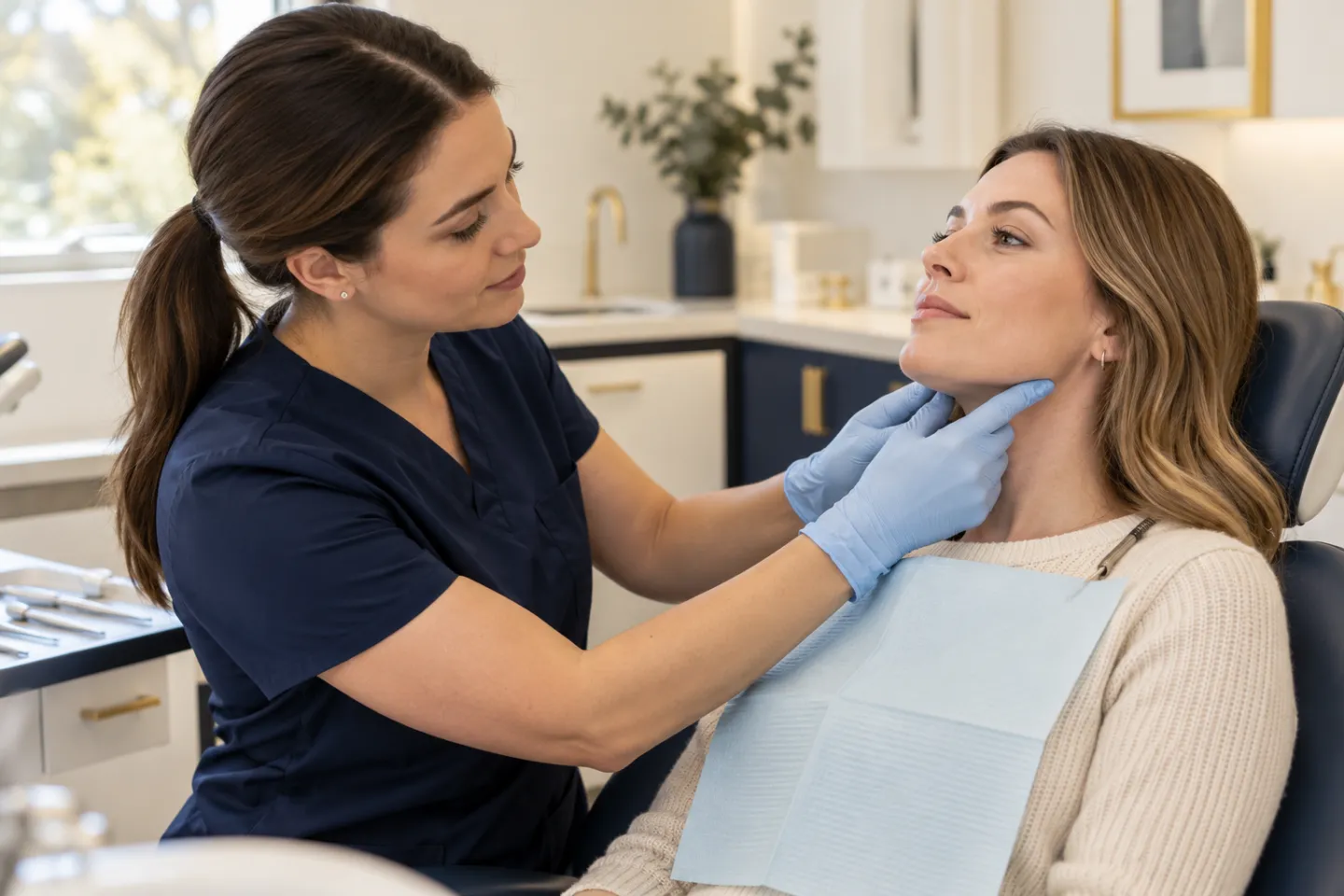
New dentures introduce more than a different smile. They add a few unfamiliar tasks to ordinary moments: getting ready in the morning, choosing a meal, speaking on the phone and cleaning up before bed. Even someone who is pleased with the appearance may need time and practical support to feel at ease with the routine.
The adjustment is personal. A first denture, a replacement for an old appliance and a denture fitted after extractions can involve different experiences. Instructions also depend on the design and materials. The advice that worked for a relative may not be the right instructions for your own appliance.
If you are getting dentures in Guelph, think of the fitting appointment as the beginning of learning to use them. Understanding how to handle the appliance, how to care for your mouth and when to return for help makes that learning much less uncertain.
Know which stage you are in
Complete dentures replace all the teeth in an upper or lower arch; partial dentures replace some missing teeth. Immediate dentures may be fitted soon after teeth are removed, and their fit can change as the mouth heals. They may need adjustment or replacement as part of that process. The NHS explains denture types and immediate dentures.
Before leaving the fitting visit, be clear about what you have received. Is this the planned final appliance, an immediate denture during healing or another temporary arrangement? Which appointments are already part of the plan? The answer helps you understand why a later adjustment might be expected rather than assuming that the first fit is the end of treatment.
Our complete dentures guide can help you revisit the terms. Keep the instructions for your current stage alongside it. Advice about routine overnight removal, for example, should not replace specific instructions from the treating clinician immediately after extractions.
Write down any difference between “today” and “once healing has progressed.” It is easier to follow a staged plan when the stages are clearly labelled, especially if several people are helping with meals or care at home.
Give everyday activities room to feel unfamiliar
Speaking and eating may feel different when dentures are new. Guy’s and St Thomas’ NHS guidance recommends beginning with softer foods and progressing as you become comfortable, with follow-up to assess progress. It also distinguishes immediate post-extraction instructions from the routine used later. Read its information on getting used to dentures.
For meals, begin with the food guidance you were given and make the setting easy. A relaxed meal at home gives you more time to notice what feels manageable than a hurried lunch before an appointment. You do not have to make the first meal a test involving everything you have missed eating.
Keep the rest of your nutritional needs in mind. If you follow a particular diet for a medical condition, explain that before the fitting so that any suggested changes are realistic. If eating remains difficult or your choices become increasingly restricted, tell the dental team rather than silently working around the problem.
For speech, choose a low-pressure way to hear how things feel: a short conversation with someone you trust, reading a familiar paragraph or practising the introduction you use on the telephone. These are opportunities to identify a specific difficulty, not a requirement to sound a certain way by a deadline.
Make a note if a particular sound or movement repeatedly causes trouble. “It shifts when I say this word” gives more useful information at a review than “I cannot get used to it.” A specific description helps separate a learning concern from a fit issue that needs assessment.
Practise handling while help is available
Insertion and removal are skills worth practising during the appointment. Watch the demonstration, then try the movement yourself with the clinician’s guidance. A partial denture with attachments may require a different approach from a complete denture, so avoid copying a technique from an unrelated video.
Pay attention to the practical setup. Can you see the appliance clearly? Can you hold it securely? Do you need a mirror in a different position? If your grip is weak or one hand is difficult to use, mention that before deciding the routine is something you simply cannot manage.
At home, choose a consistent place for cleaning and storage. Dentures can break if dropped onto a hard surface; handling them over a towel or a basin of water helps cushion an accidental drop. Guy’s and St Thomas’ provides safe handling guidance.
A labelled case is easier to find than an appliance wrapped in a tissue on the counter. Make sure everyone who helps knows where it belongs. If you spend time in more than one home, pack the same essential supplies rather than assuming that the other bathroom will have something suitable.
Separate cleaning the denture from cleaning your mouth
Daily denture cleaning involves removing deposits from all surfaces with suitable products, including the surface that rests against the gums. The Oral Health Foundation recommends a soft brush and a non-abrasive denture cleanser appropriate to the material. Ordinary toothpaste can damage denture surfaces; cleansers should be used outside the mouth and rinsed away thoroughly before reinsertion. Metal components require particular care in product selection. See the foundation’s denture care guidance.
This is a good reason to keep the denture supplies distinct from the products used on natural teeth. A separate brush and clearly labelled cleanser make the routine easier to understand, particularly when another person occasionally helps. Keep the product’s directions available rather than estimating the amount or soaking time from memory.
Work around the appliance in a consistent order so you can recognise which surfaces have been cleaned. If you cannot see an area well, ask the dental professional to show it to you during the review. Pay attention to small attachments without bending or forcing them. The aim is to carry out the demonstrated method, not to make the appliance look new by scrubbing more aggressively.
For people with partial dentures, the remaining teeth need their own care, including brushing with fluoride toothpaste. The gums and tongue also need gentle cleaning. An appliance that looks clean does not mean the mouth beneath it has been cleaned. NSW Health explains these separate care needs.
Our partial dentures guide is useful if you need to review how an appliance fits alongside natural teeth. At the appointment, have the team demonstrate the complete routine in the order you will use at home.
Make overnight care specific to your appliance
Dentures are generally removed for sleep unless the treating clinician gives different instructions. Storage conditions should suit the material; acrylic dentures need protection from drying out, and high temperatures can distort an appliance. The recommended container, liquid and any soaking product should therefore be confirmed for your denture rather than guessed. The Oral Health Foundation explains overnight removal and storage.
Turn that instruction into a repeatable sequence: clean the denture, clean your mouth, prepare the storage container and place it somewhere secure. Keep the case away from pets and out of reach of children. Do not place it beside a hot appliance or use boiling water in an attempt to sanitise it.
When travelling, bring the actual care instructions if your routine is new. A small kit with the suitable brush, labelled container and approved cleanser is easier to manage than trying to replace everything at your destination. Keep cleanser packaging intact so there is no confusion about what the product is or how it should be used.
If someone else manages your overnight care, agree on where the supplies are stored and how questions will be handled. Consistency is especially useful when a family member helps on some nights and a support worker helps on others.
Understand the role of adhesive
Denture adhesive may be part of a recommended routine, but it is not a repair for a poorly fitting appliance. The American Dental Association advises professional assessment when dentures become unstable, damaged or persistently irritating. It also stresses following product instructions and removing adhesive during cleaning. Read the ADA’s information on denture care and adhesives.
If an adhesive has been recommended, ask for a demonstration with the specific product. Know how to apply it, how to remove it and what change would mean the denture needs a fit review. Do not keep increasing the amount because yesterday’s routine suddenly feels less secure.
Describe the change instead. Is the denture moving during speech, lifting with a certain movement or uncomfortable in one place? Has the issue appeared gradually or suddenly? That information helps the clinician decide what needs examining.
Avoid comparing the amount you use with another person’s routine. Different appliances and mouths do not necessarily behave the same way, and an online demonstration does not establish that an adhesive is suitable for your design.
A sore spot or changing fit is a reason to return
Pain, clicking, slipping, damage or a denture that no longer fits properly are reasons to contact a dental professional. Mouth shape and appliances can change over time, so a once-comfortable denture may eventually need attention. Bring any broken parts to the appointment rather than discarding them. The NHS lists denture problems that need assessment.
Do not file a sore edge, bend a clasp or use household glue to repair a break. NSW Health specifically advises against trying to adjust dentures yourself. The team needs to assess the appliance and the tissues together to understand the cause of discomfort. Its denture care factsheet explains what carers should look for.
Our denture adjustments guide provides background for that visit. When booking, explain whether the problem prevents you from wearing the denture or eating comfortably. Ask the office whether it wants you to wear the appliance before the assessment; do not force prolonged wear through significant pain just to demonstrate the problem.
Keep notes about where and when soreness occurs. A brief description of the circumstances can be useful even when you cannot identify the exact spot. If a sore or unusual patch does not heal, arrange an examination rather than assuming that the denture must be the only explanation.
Keep the person, not just the appliance, in the routine
Regular dental reviews remain important even when there are no natural teeth. They assess denture function and the lips, cheeks, tongue and other tissues for problems. NSW Health explains why continuing examinations matter for denture wearers.
For someone helping a family member, ask which parts of care they want assistance with and which they prefer to do themselves. Set out the supplies within reach and allow time for their usual sequence. Handling a person’s dentures can feel intimate; a clear explanation and their participation help preserve dignity.
When life in Guelph gets busy, the routine should still be simple enough to repeat. Keep the supplies together, know the next review date and contact the team when comfort changes. Getting used to dentures is not about tolerating every difficulty quietly. It is about building familiarity, caring for the mouth beneath the appliance and getting adjustments or advice when the routine needs help.
Further reading
- NHS: Dentures
- Guy’s and St Thomas’: Living with and caring for dentures
- Oral Health Foundation: Denture care guidelines
- American Dental Association: Denture care and maintenance
- NSW Health: Denture care
This article offers general education. Your dental team can help you apply it to your own health, treatment and recovery.