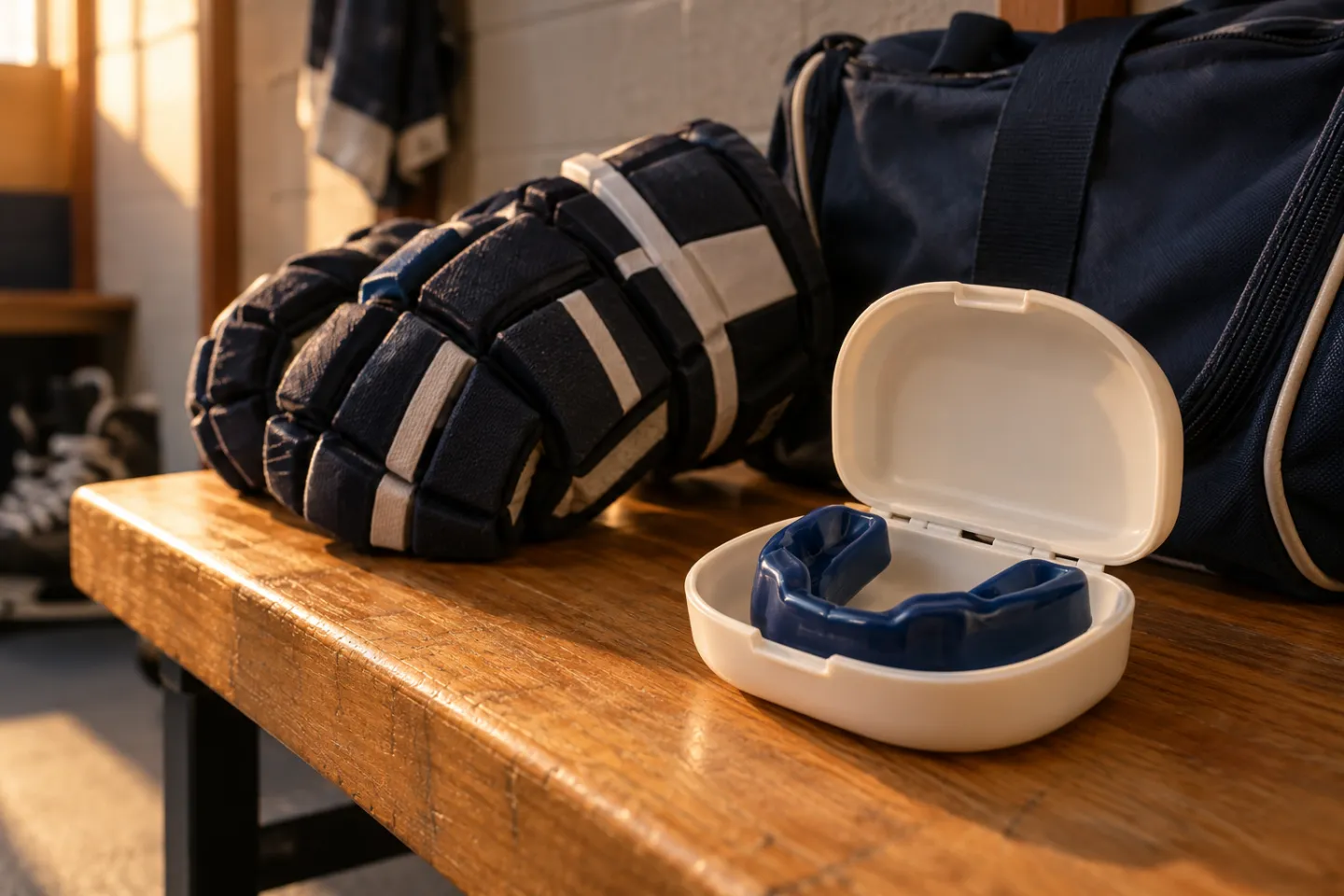
A mouthguard is easy to forget because it is small. It can disappear under a towel, remain in yesterday’s bag or sit in its case while warm-ups begin. Unlike a missing skate or shoe, its absence does not necessarily stop someone from joining the activity. That makes the routine around it almost as important as choosing the device.
Sports mouthguards in Guelph belong in conversations about hockey, field sports and other activities where a collision, fall or fast-moving object could injure the mouth. The question is broader than whether a league requires one. It is whether the guard fits the person, suits the activity and will actually be worn when needed.
Good planning begins before the first busy weekend of the season. A few checks can prevent an uncomfortable or damaged guard from becoming another item everyone intends to replace later.
Look at the activity, including practice
Mouthguards reduce the risk of sports-related dental injuries, though they cannot eliminate every injury. The American Dental Association recommends a properly fitted guard for activities with a meaningful risk of dental or facial trauma. That includes some activities usually described as non-contact, where falls or equipment can still reach the face. Its athletic mouth protector guidance explains the protective purpose.
Describe the actual activity when discussing a guard. The sport, level of participation, other protective equipment and any orthodontic appliances are useful details. “My child plays sport” is less informative than explaining the kind of training and equipment involved.
Include practices, informal games and skills sessions in the plan. A collision does not need an official scorekeeper. The Australian Dental Association’s oral injury policy supports protective equipment during training as well as competition.
Check your organisation’s current equipment rules directly with the coach or organiser. Rules can vary, and an article cannot confirm the requirements for your particular programme. Treat the rule as one part of preparation rather than the only reason to consider protection.
Fit determines whether wearing it is realistic
A useful guard should remain in place comfortably without requiring constant attention. If an athlete spends the session chewing it, taking it out to speak or struggling to keep it positioned, explain that problem at the fitting or review.
Try the guard while you can still discuss adjustments. Speak a few sentences, follow the clinician’s instructions for checking the fit and describe any edge that rubs. Do not settle for “I suppose I could tolerate it” if you already know the person will remove it during activity.
For a child, ask specific questions rather than simply “Is it okay?” Does it feel loose at the back? Is there a spot that catches the cheek? Can they put it in and take it out as shown? A child may use “too big” to describe several different sensations.
Avoid cutting or reshaping a guard at home to solve discomfort. The Ontario Dental Association’s mouthguard advice recommends professional advice about fit and cautions against altering or chewing the appliance.
Bring the concern back while the details are fresh. A small practical adjustment may be easier to discuss before the guard becomes something associated with irritation and arguments.
Understand the available designs
Sports guards generally fall into three groups. Ready-made guards come in set shapes. Mouth-formed versions are adapted according to the manufacturer’s instructions. Custom guards are made from an impression or scan of the individual mouth. Fit, retention and comfort differ, and a custom option can be designed around particular needs. The American College of Prosthodontists’ position statement explains these categories.
Compare the options by how they work for the wearer. Can the guard stay in place as intended? Does it fit around the teeth and any appliances? Can it be cleaned and stored easily? What follow-up is available if the fit changes?
Cost is a reasonable part of the conversation. Ask what is included in an estimate, whether adjustments are included and how replacement is handled. An answer about price is more useful when you understand what the device and fitting process involve.
If you choose a product that requires home fitting, follow that specific manufacturer’s instructions. Do not transfer a heating or moulding method from another brand. Ask a dental professional for help if the result seems loose, distorted or uncomfortable.
A brightly coloured guard or a favourite design may make the appliance easier to recognise, but appearance should follow suitability. The attractive option still needs to work in the mouth that will wear it.
Growing mouths need a fresh assessment
A guard that fitted at the start of one season may not feel the same later. Children lose teeth, new teeth appear and orthodontic treatment can change tooth position. Dental work can alter an adult’s fit too. Bring the appliance to a dental visit and mention any change rather than assuming last year’s fit remains appropriate.
Check it before a season begins, not in the car on the way to the first session. That gives you time to arrange advice or replacement if necessary. A calendar reminder beside the equipment checklist can keep it from being overlooked.
If braces or aligners are involved, ask the treating clinician how sports protection should be managed. Do not improvise by layering appliances or using an orthodontic tray as if it were a sports guard. The right arrangement needs to account for the treatment and the activity.
Our orthodontic care guide can help you prepare questions about appliances. At the appointment, bring the actual guard and describe the sport rather than expecting a general answer to cover every setup.
For families passing sports equipment between siblings, remember that a fitted oral appliance is personal equipment. Treat the fit and care as individual, even when helmets, bags or jerseys are being reused appropriately.
Give the case a permanent place
An easy storage system prevents several predictable problems. Put the case in the same compartment after every use. Label the case so it is recognisable, and teach the wearer to return the guard directly to it rather than wrapping it in tissue or leaving it on a bench.
For a child who moves between caregivers, include the guard in the handover. “The case is in the front pocket” is more reliable than assuming everyone knows where it lives. If a second sports bag is used, decide who checks that the case moves with it.
At home, give cleaning and drying a clear place in the routine. The guard should not remain forgotten inside a damp bag until the next practice. Keep it away from pets and young children, who may treat a small flexible object as a toy.
For busy Guelph families balancing school, work and evening activities, this can be a short checklist: guard, case, water bottle, other required equipment. The checklist is useful because it is quick enough to use when everyone is already heading out the door.
An adult recreational player benefits from the same system. Equipment routines are not only for children, and familiarity with a sport does not make a forgotten guard protective.
Clean it and inspect it together
Follow the cleaning instructions for the material and device you have. The Ontario Dental Association advises rinsing after use, allowing the guard to dry and storing it in a protective container. It also recommends checking for tears, cracks or wear and reporting changes in fit. See its mouthguard care guidance.
Use cleaning as the moment for a quick inspection. Look at the guard while it is out of the mouth rather than discovering damage during activity. If you notice a sharp area, a split or a section that seems thinner, arrange advice before relying on it again.
Do not assume a stronger household cleaner is better. A product that disinfects a countertop is not automatically appropriate for something worn in the mouth. Use only the cleaning method recommended for the appliance and rinse as instructed.
Keep the case clean too. Repeatedly putting a freshly cleaned guard into a neglected container defeats the purpose of the routine. If the manufacturer gives instructions for ventilation or storage, follow them rather than choosing a sealed improvised container.
If the guard has been damaged during a collision, have it checked even when the damage seems minor. Keep the appliance available so the dental team can see what happened.
A mouthguard is one part of protection
Wear the other protective equipment required for the activity and follow the relevant safety rules. A mouthguard does not replace a helmet, face protection, appropriate coaching or assessment after a significant impact.
Claims about concussion protection need particular caution. The evidence for mouthguards reducing dental injuries is stronger than the evidence for preventing concussion, which remains less consistent. The ADA’s evidence overview discusses this distinction.
Do not use the fact that someone wore a guard as a reason to dismiss a head injury. Follow the sport’s concussion procedures and seek medical assessment when indicated. Returning to play is a separate decision from whether the teeth appear intact.
Talk with children about reporting an impact honestly. A child should not feel that admitting discomfort automatically means they have let the team down. The same applies to adults who are tempted to finish a game before acknowledging a problem.
Have a dental injury plan before it is needed
Save the dental office’s contact information and know how to obtain urgent advice outside usual hours. Coaches and caregivers should know whom to contact and where the child’s relevant information is kept. Keep this practical and private rather than distributing unnecessary health details widely.
A knocked-out permanent tooth needs urgent dental attention. Handle it by the crown rather than the root and keep it moist; milk can be used for transport if it cannot be replanted safely. Never replant a baby tooth. The Oral Health Foundation’s knocked-out tooth guidance explains the immediate response. Call 911 for serious head injury, breathing problems or major uncontrolled bleeding, as outlined by BC Emergency Health Services.
Other dental injuries also deserve assessment. A tooth can be displaced or damaged even when the initial appearance is not dramatic. Describe the impact, symptoms and any change in the bite when calling for advice. Do not try to repair the guard or tooth before getting the appropriate guidance.
Our dental emergency guide explains immediate first aid, including what to do with a knocked-out permanent tooth, but urgent injuries need direct contact. Keep the focus on obtaining help rather than searching for a perfect match to a photograph online.
Sports mouthguards in Guelph are most useful when they are part of an ordinary equipment habit: fitted, worn, cleaned, checked and replaced when needed. That routine allows the attention to return to the activity while giving the mouth a practical layer of protection.
Further reading
- American Dental Association: Athletic mouth protectors
- Australian Dental Association: Prevention and management of oral injuries
- Ontario Dental Association: Mouthguards
- American College of Prosthodontists: Mouthguard use in sports
- Oral Health Foundation: Knocked-out teeth
This article offers general education. Your dental team can help you apply it to your own health, treatment and recovery.