That smooth feeling after a dental cleaning is easy to appreciate. It is also only one part of the appointment’s value. Professional cleaning is an opportunity to address deposits you cannot remove yourself, understand the condition of your gums and work out how to make daily care more effective. The most useful result is a cleaner mouth and a clearer idea of how to look after it.
For someone arranging teeth cleaning in Guelph, the appointment may be a regular item on the calendar or the first visit after a long break. Those starting points are different, and so are people’s questions. One person wants to know why a particular spot collects buildup. Another wants help using floss without getting frustrated. Someone else needs to discuss sensitivity before any instruments are used. All of those conversations belong in a hygiene visit.
The difference between what you feel and what needs removing
Plaque is a bacterial film that forms on teeth. When it remains, it can harden into tartar, also called calculus. Tartar needs professional removal; brushing alone cannot remove it. Plaque and tartar can contribute to inflammation in the gums and supporting tissues. This explains why daily care and professional cleaning have different jobs rather than being substitutes for one another. The National Institute of Dental and Craniofacial Research explains plaque, tartar and gum disease.
You may be able to feel a rough area with your tongue, but that sensation does not tell you exactly what it is. Ask the hygienist to identify the area rather than trying to scrape it yourself. A useful question is, “Is this something I can prevent with a technique change, or is it something that needs professional attention?” The answer can connect what you notice at home with a specific plan.
Try not to treat the amount of buildup as a report card on your character. The appointment is a chance to understand your situation. If a particular part of your mouth is repeatedly difficult to reach, the helpful response is to examine that difficulty together. You need an approach you can carry out comfortably and consistently, not a vague instruction to try harder.
What actually happens at a hygiene appointment?
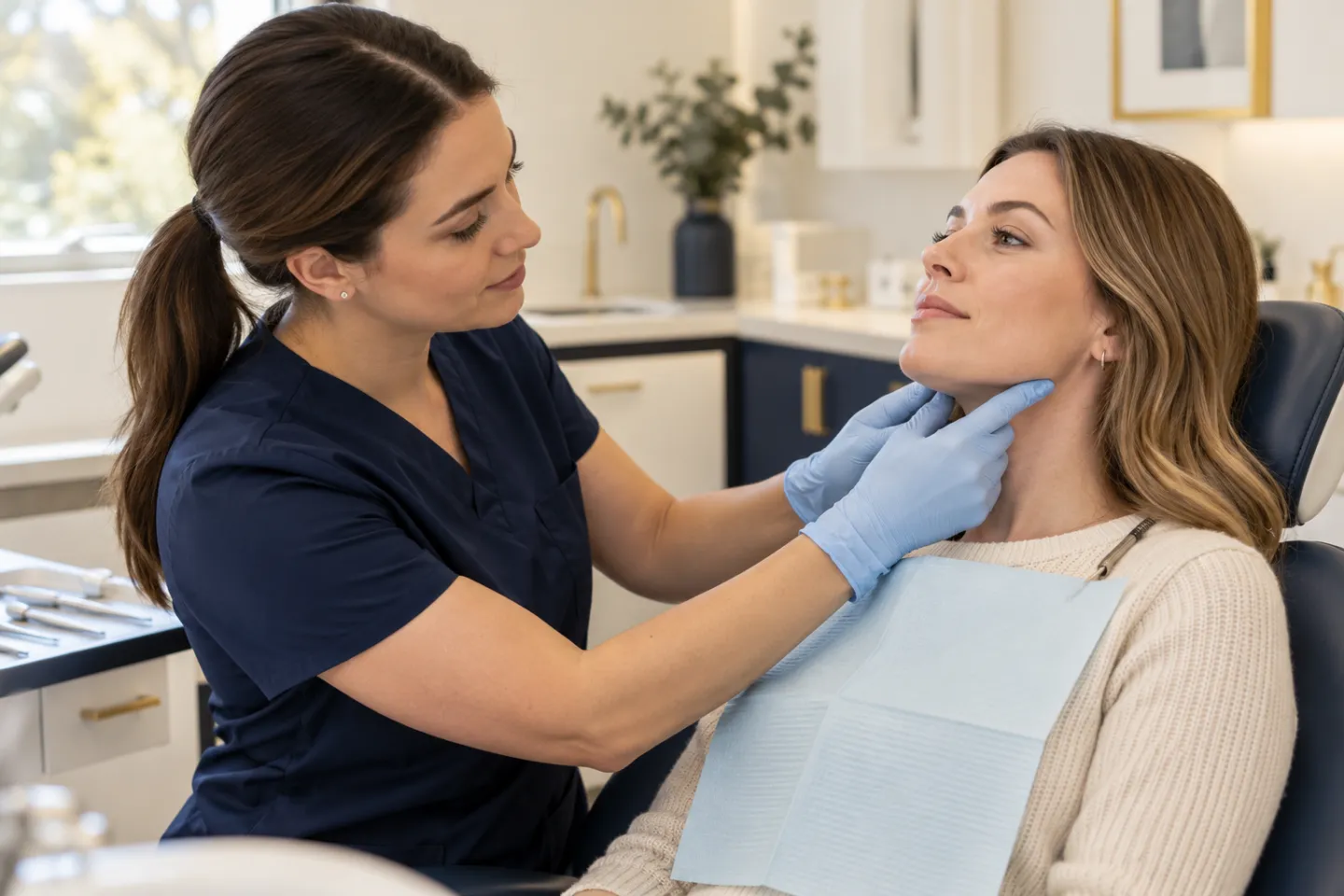
The Ontario Dental Hygienists’ Association describes a visit that includes health updates, assessment of the mouth and gums, recording findings and removing deposits with hand or mechanical instruments. Polishing may be used when needed for stain removal, and other preventive measures depend on the patient’s needs. Education is part of the process. A cleaning is therefore more than a fixed sequence of polishing every tooth and sending you home. See the ODHA’s overview of a typical appointment.
At the start, mention any area that is sensitive and anything about previous cleanings that you found difficult. It helps to be specific: was it a cold sensation, the sound, water collecting in your mouth, a long period with your mouth open or uncertainty about what was happening? Different concerns call for different conversations. You do not have to use technical language to describe them.
Ask how the visit is expected to proceed and when there will be opportunities to talk. It is much easier to agree on a way to request a pause before your mouth is open. If you prefer explanations before each step, say so. If too much detail makes you more tense, you can explain that preference as well. Communication should help you feel oriented rather than overwhelmed.
Sometimes you will hear measurements or observations being recorded. You can ask for a plain-language explanation afterward. “Which areas should I pay extra attention to?” is often more useful than trying to remember every number. If the team is following a particular area over time, ask how today’s findings compare with previous ones and what the next review is intended to establish.
A cleaning and whitening answer different questions
Surface stain removal may change how teeth look, but a hygiene appointment should not be booked with the assumption that it will produce a particular shade. Bleaching works differently from mechanical stain removal, and natural teeth and restorations do not respond in the same way. The American Dental Association notes that whitening does not change the colour of crowns, veneers or fillings, and that some people experience sensitivity. Read the ADA’s patient information on whitening.
If appearance is one of your goals, tell the team directly. You might ask whether what you are noticing is surface stain, the underlying colour of your teeth or a difference between a natural tooth and existing dental work. That question is more productive than selecting a product because its packaging promises a brighter smile. It gives you a chance to understand what an option can realistically change.
You can also separate goals within the same conversation. “I want to keep my gums healthy, and I am curious about this stain” is clear and reasonable. The team can explain the hygiene findings first and discuss cosmetic possibilities separately. You should not leave assuming that an optional appearance change is necessary simply because it was mentioned during a cleaning.
When the plan includes gum treatment
The phrase “deep cleaning” can cause confusion because it sounds like a more thorough version of any ordinary cleaning. In the context of periodontal care, scaling and root planing is a treatment for gum disease. The CDC distinguishes gingivitis from more advanced periodontitis and explains that treatment depends on the condition; some people need additional care or referral to a periodontist. Read the CDC’s explanation of periodontal disease and treatment.
If gum treatment is recommended, ask the clinician to name the diagnosis and show you how the findings support it. Find out which areas are affected, what the proposed visits involve and how the response will be assessed. You can also ask whether the quoted plan includes a later reassessment. These details help you understand the purpose of several appointments that might otherwise look identical on a calendar.
Avoid comparing your plan with a friend’s appointment solely by length or price. Two people may use the word “cleaning” for care that addresses very different needs. Your own assessment should explain the recommendation. If you are unsure, it is reasonable to ask for clarification or time to consider a written plan. Our gum disease guide offers background you can revisit after the conversation.
Make the appointment fit the rest of your day
When booking, ask how much time to allow and whether an examination or another procedure is included. A calendar entry that says only “cleaning” can hide assumptions. If you need to return to work, collect a child or attend a class afterward, explain the timing constraint in advance. The office can tell you whether the available appointment fits the care being planned.
For a winter appointment in Guelph, leaving a little travel margin can make arrival feel less rushed. The point is not to build an entire day around a routine visit; it is to avoid putting the team and yourself under an unexpected deadline. If plans change, contact the office as early as possible and refer to the appointment policy for the practical details.
Before leaving the chair, ask whether you need any specific instructions for the treatment you received. Advice can depend on whether products or additional procedures were used. Rather than assuming the rules from an earlier appointment still apply, confirm what you should do today and how to contact the team if something does not feel right. Keep written instructions when they are provided.
The most useful souvenir is a technique you understand
The basics still matter between visits. NIDCR recommends brushing twice a day with fluoride toothpaste and cleaning between the teeth. Its oral hygiene guidance explains that cleaning between teeth reaches areas brushing alone does not adequately clean, and that several types of tools may be suitable. The right choice should account for your mouth and your ability to use it. Explore NIDCR’s oral hygiene advice.
At your appointment, ask for a demonstration using the kind of tool you will actually use. If floss is awkward around a specific tooth, show the hygienist where it catches or where your fingers cannot reach. If you use an interdental brush, ask how to select an appropriate size and where to use it. If you already own an electric toothbrush, bring its model name or a photo rather than guessing about the settings.
Then practise the movement while someone can offer feedback, if that is practical during the visit. Watching a demonstration and performing it yourself are different experiences. You may discover that the difficult part is the angle of your hand or the order in which you approach the teeth. A small adjustment can make the instructions feel much less abstract.
Be honest about your routine. If evenings are unpredictable but mornings are organised, describe that. If you share a busy bathroom and keep losing supplies, mention it as a practical obstacle rather than an excuse. The aim is to build a workable routine around sound advice. A recommendation that lives only on a leaflet is less useful than one you can repeat on an ordinary Tuesday.
What should you pay attention to afterward?
Ask the team which changes they would like you to notice before the next visit. That may mean reporting a continuing concern, explaining whether a new technique is manageable or returning for an agreed reassessment. Do not assume that a fresh, smooth feeling tells you everything about gum health. A follow-up plan is based on the clinical findings as well as your experience.
If you are worried about discomfort after care, contact the office and describe where it is, when it began and whether it is improving or worsening. You do not need to decide for yourself whether it is “normal” before asking. Equally, avoid borrowing someone else’s aftercare instructions when their treatment may have been different. The team who knows what was done can give more relevant guidance.
At the next appointment, bring back the practical results of your plan. “I managed this most nights, but this space is still difficult” gives the hygienist something useful to work with. Success does not require a dramatic transformation between visits. It can be a clearer understanding of one troublesome area and an easier way to care for it.
Professional teeth cleaning in Guelph can be a useful pause in a busy routine: time to remove deposits, discuss what is happening and adjust daily care with help. Our dental cleanings guide explains the topic further. Whether you come in regularly or are starting again, bring the questions you have now. A worthwhile appointment should leave you with more than polished teeth; it should leave you knowing what to do next.
Further reading
- Ontario Dental Hygienists’ Association: A typical dental hygiene appointment
- National Institute of Dental and Craniofacial Research: Gum disease
- National Institute of Dental and Craniofacial Research: Oral hygiene
- Centers for Disease Control and Prevention: Periodontal disease
- American Dental Association: Teeth whitening
This article offers general education. Your dental team can help you apply it to your own health, treatment and recovery.