Perhaps someone has heard you grinding your teeth at night. Perhaps your jaw feels tired after an afternoon of concentrated work, or a dentist has pointed out wear you had never noticed. These are different starting points for the same useful conversation: what is happening, what effects is it having, and what would help?
Teeth grinding in Guelph deserves more than a quick instruction to relax. You may already be doing your best to manage a demanding schedule. Understanding the pattern and choosing a practical response is more useful than treating the problem as a personal failure or assuming that every person needs the same appliance.
Two patterns that can overlap
Bruxism means grinding, clenching or gnashing the teeth. It can happen while awake or asleep, in children and adults. Mild cases may need no treatment, while more significant bruxism can contribute to damaged teeth, jaw discomfort or fatigue, and headaches. You may be unaware of it, particularly during sleep. The National Institute of Dental and Craniofacial Research describes these patterns and symptoms.
The distinction matters when describing your experience. “I catch myself holding my teeth together while answering emails” gives different information from “My partner hears grinding after I fall asleep.” You might notice both. You might have neither observation and only know that your jaw feels uncomfortable.
Start with what you actually know. There is no need to label yourself a lifelong grinder based on one sound or one sore morning. Equally, you do not need to wait until you can prove the pattern before mentioning discomfort at an appointment. An honest description of uncertainty is a useful part of the history.
Collect a few observations, not a perfect record
A short note can make a dental conversation more concrete. Record when you notice the problem, where it is felt and what you were doing. Keep the wording simple: “Jaw tired on waking,” “Caught myself clenching while driving,” or “Left side uncomfortable during lunch.”
If someone has heard grinding, ask what they noticed rather than asking them to monitor you throughout the night. Their observation is one piece of information, not a test that establishes the cause of every symptom.
You can also note recent changes in your routine, medicines or sleep. Bring your medication list rather than relying on memory. If you already wear a retainer, guard or another oral appliance, bring that too, including one you have stopped wearing. Explain why you stopped: fit, discomfort, forgetfulness or uncertainty about its purpose.
The record need not be lengthy. A few accurate examples are more useful than a detailed chart that makes you anxious about every jaw movement. Do not postpone assessment of pain or damage until you have collected a particular number of days of notes.
What the examination is trying to separate
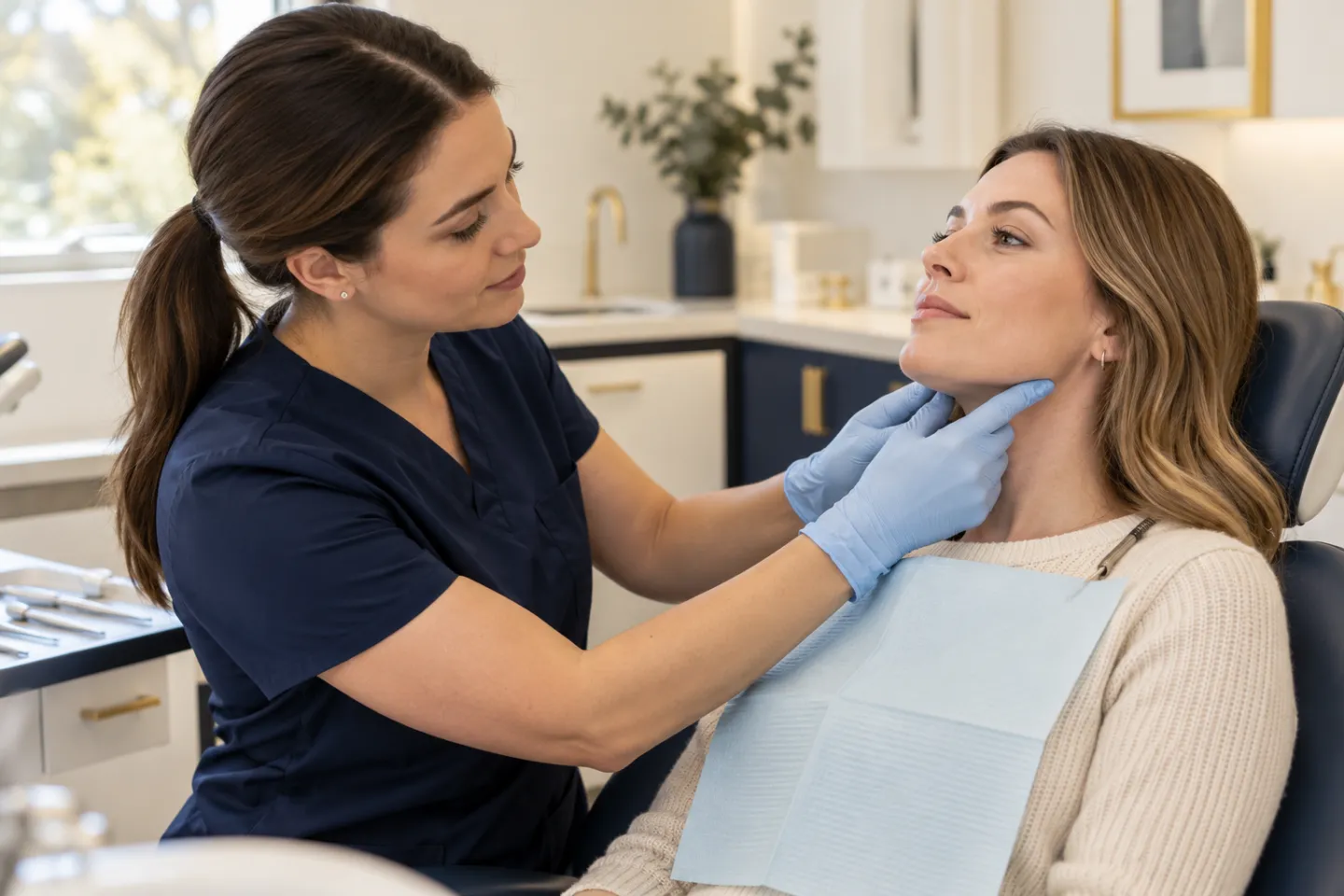
A dentist examines the teeth and asks about symptoms, sleep habits, general health and medicines. Medical assessment for possible sleep apnea may be relevant in some circumstances. Healthdirect describes this diagnostic approach. The point is to connect what you report with the findings, rather than choosing treatment from one sign alone.
It can help to organise the discussion into three questions: Is there damage needing attention? Is pain or limited function the main concern? Is there a possible contributor that needs a dental or medical response? These questions may lead to different parts of a care plan.
Ask the dentist to show you any wear or fracture being discussed. If older photographs, models or records exist, ask whether comparison would be useful. You do not need to judge the images yourself; seeing the area can help you understand why monitoring, protection or repair is being proposed.
Before leaving, clarify what has been established and what remains uncertain. “We will watch this area for change” should come with an explanation of how and when it will be reviewed.
Stress may matter without being the whole explanation
Factors associated with bruxism include stress and other emotional factors, genetics, alcohol, caffeine, smoking and certain medicines. An association does not identify the cause in an individual person. NIDCR’s overview describes this range. If symptoms began after a medication change, discuss that timing with the prescriber; do not stop prescribed treatment on your own.
This is a reason for an open conversation rather than blame. Someone may have obvious work pressures; someone else may feel generally well. Neither account should be squeezed into a ready-made explanation. Describe your circumstances in the way that feels accurate to you.
If stress is part of the picture, choose support that is realistic. A quiet walk, a brief pause between tasks or professional counselling may each mean different things to different people. You can discuss these options alongside dental care without expecting a leisure activity to solve a damaged tooth or a longstanding pain problem.
For a student, shift worker or caregiver in Guelph, the practical challenge may be finding a repeatable routine. A plan that acknowledges those constraints is easier to discuss honestly than one built around an ideal schedule you cannot maintain.
Daytime awareness can be a modest first step
For awake clenching, NIDCR suggests reminders to notice the habit and keep the teeth apart when at rest. Ask your dental team to demonstrate a comfortable resting position if you are uncertain. The aim is a relaxed pause, not forceful stretching or repeatedly testing your bite.
Choose one ordinary cue, such as finishing a call or opening a work document. A small note near your screen can be enough. If frequent phone alarms feel intrusive, a cue already present in your day may be more practical.
When you notice clenching, simply acknowledge it and follow the advice you were given. Turning every episode into a failure can make the exercise unpleasant and difficult to continue. You are gathering awareness of something that may previously have happened unnoticed.
At follow-up, report whether the reminder was usable. “I remembered during desk work but forgot while driving” helps refine the approach. A strategy can be sensible in principle and still need adjustment to fit your life.
A night guard has a specific job
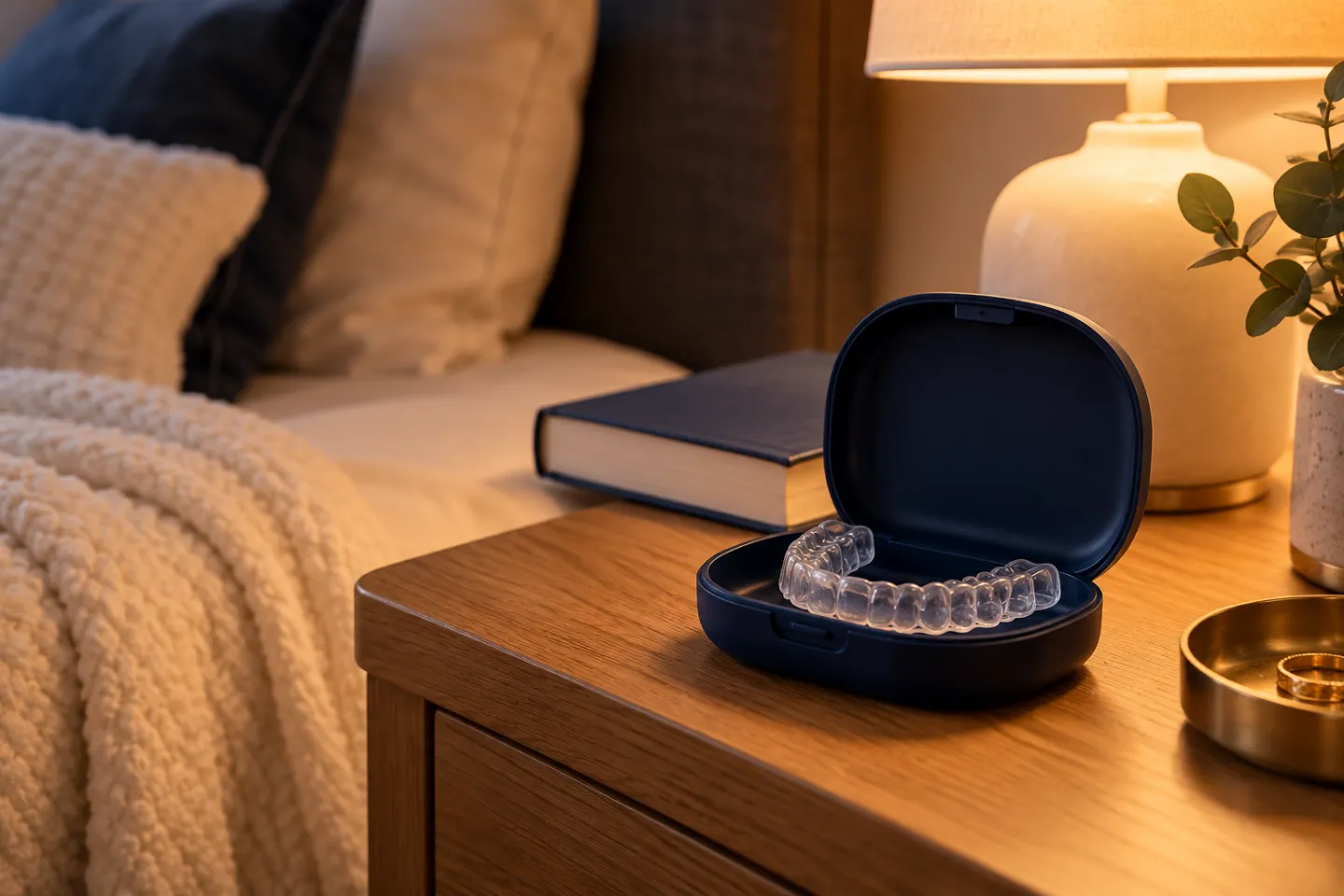
A dentist may recommend an occlusal splint, often called a night guard, to protect teeth from grinding-related wear or damage. It does not necessarily stop the grinding itself. A dental splint differs from a sports mouthguard, and not everyone who grinds needs one. The Australian Dental Association explains the role of splints.
Before obtaining an appliance, make sure you know the intended purpose in your case. Is the immediate goal protecting a restoration, limiting further tooth wear or supporting a broader management plan? Ask which improvements would suggest it is helping and which symptoms would require reassessment.
Our night guard education page provides an overview to read alongside the instructions for your own device. If you already use another appliance, discuss how the two fit into the plan. Bring the actual device rather than assuming that its name tells the dentist everything about its design.
Cost and convenience matter, but the decision also includes fit, follow-up and what to do if the guard becomes uncomfortable. An appliance purchase should come with instructions you understand, including when to wear it and how to contact the provider about a problem.
Keep the appliance part of ongoing care
A splint should be reviewed if it becomes worn, damaged, distorted or no longer fits. Dental work that changes tooth shape can also affect its fit. Bring it to routine dental appointments so it can be checked. These maintenance points are included in the Australian Dental Association’s grinding guidance.
Follow the cleaning and storage directions supplied for your particular appliance. Put its case somewhere that makes sense for your routine, and include it when packing for an overnight trip. If the guard frequently remains in its case, identify the obstacle: an inconvenient location, uncertainty about cleaning, or discomfort that needs attention.
Tell the team what happens when you try to wear it. “It feels tight on one tooth” is more useful than quietly abandoning it. Ask before trying to reshape or repair the device yourself. The answer may involve a fit review, different instructions or reassessing whether the original plan still suits your situation.
Jaw pain and grinding are related topics, not identical diagnoses
Temporomandibular disorders, or TMDs, involve the jaw joints or chewing muscles. Jaw pain can have several explanations, and a clinician may need to rule out other conditions. Clicking without pain is common and does not by itself require treatment. For TMD, experts generally favour conservative approaches before procedures that permanently change teeth, the bite or joints. The NIDCR’s TMD guide explains these distinctions.
This helps frame an important question: what problem is each proposed treatment intended to address? Repairing a broken tooth and treating persistent facial pain are separate objectives, even when both are discussed at one appointment. You should understand which objective belongs to which part of the plan.
Report pain that persists, worsens or limits eating or mouth opening. If an appliance itself causes pain, stop using it and contact the treating dentist or doctor, as advised in the NIDCR guide. Do not assume that discomfort must be endured for a device to work.
For sudden injury, swelling or severe dental symptoms, use the urgency guidance in our dental emergencies article rather than attributing everything to grinding.
Sleep deserves a separate conversation when needed
Frequent loud snoring, breathing pauses, gasping during sleep and significant daytime sleepiness are reasons to speak with a healthcare professional about possible sleep apnea. These observations do not establish the diagnosis; a sleep study may be needed. The National Heart, Lung, and Blood Institute describes sleep apnea symptoms.
If these concerns are present, mention them during both dental and medical appointments. Do not let the discussion end with the noise of grinding while a more important sleep concern remains unexplained. Ask who will assess the sleep symptoms and how any findings should be shared.
Managing bruxism can involve more than one approach, including dental protection, behavioural support and attention to related medical conditions. Healthdirect’s bruxism information describes this combined approach. A dental appliance is one possible component, not a substitute for every other assessment.
Review progress in terms that matter to you
At a follow-up, compare everyday function as well as observations. Is breakfast more comfortable? Is morning jaw fatigue changing? Are you able to use the recommended appliance? Does a habit reminder fit your workday? Bring the same examples you used at the first visit so the comparison is meaningful.
A useful plan has a reason for each step and a time to review it. For teeth grinding in Guelph, that might mean monitoring, protection, repair or additional assessment, depending on the findings. The goal is to understand and manage your situation with clear expectations, rather than chasing a promise that one device or one lifestyle change will resolve everything.
Further reading
- NIDCR: Bruxism
- Australian Dental Association: Teeth grinding
- NIDCR: Temporomandibular disorders
- NHLBI: Sleep apnea symptoms
- Healthdirect: Teeth grinding
This article offers general education. Your dental team can help you apply it to your own health, treatment and recovery.