

Specialized dental care in Guelph
A bite assessment that explains why your teeth feel the way they do when they come together.
Your bite is the way your upper and lower teeth meet when you close, chew, and move your jaw side to side. When one tooth hits first, a new crown feels tall, or certain teeth keep chipping, a focused bite and occlusion assessment helps us find the pattern behind it before we recommend any change.
Why your bite matters
Understanding your bite helps protect teeth, dental work, and comfort.
A bite that is slightly out of balance may not hurt at first, but it can show up over time as wear, chips, sensitivity, or loose dental work.
Find the tooth that hits first
A single high spot can make the whole bite feel wrong. Identifying it helps explain soreness, sensitivity, or a feeling that your teeth no longer fit together.
Explain chips and cracks
Repeated chipping on the same teeth often points to how forces are landing. Seeing that pattern helps us choose repairs that are more likely to last.
Check new dental work
After a filling, crown, or bridge, your bite should feel natural within a short time. If it does not, an assessment helps us see whether the new work is part of the issue.
Plan restorative work with confidence
When several teeth need crowns or rebuilding, knowing how your bite works lets us plan restorations that share the load sensibly.
Track change over time
Photos, models, or digital scans create a baseline we can compare at future visits, so slow shifts in your bite are easier to recognize.
Avoid unnecessary treatment
Many bites are uneven yet healthy and comfortable. A proper assessment helps separate what needs attention from what can simply be monitored.
What to expect
How we study the way your teeth meet.
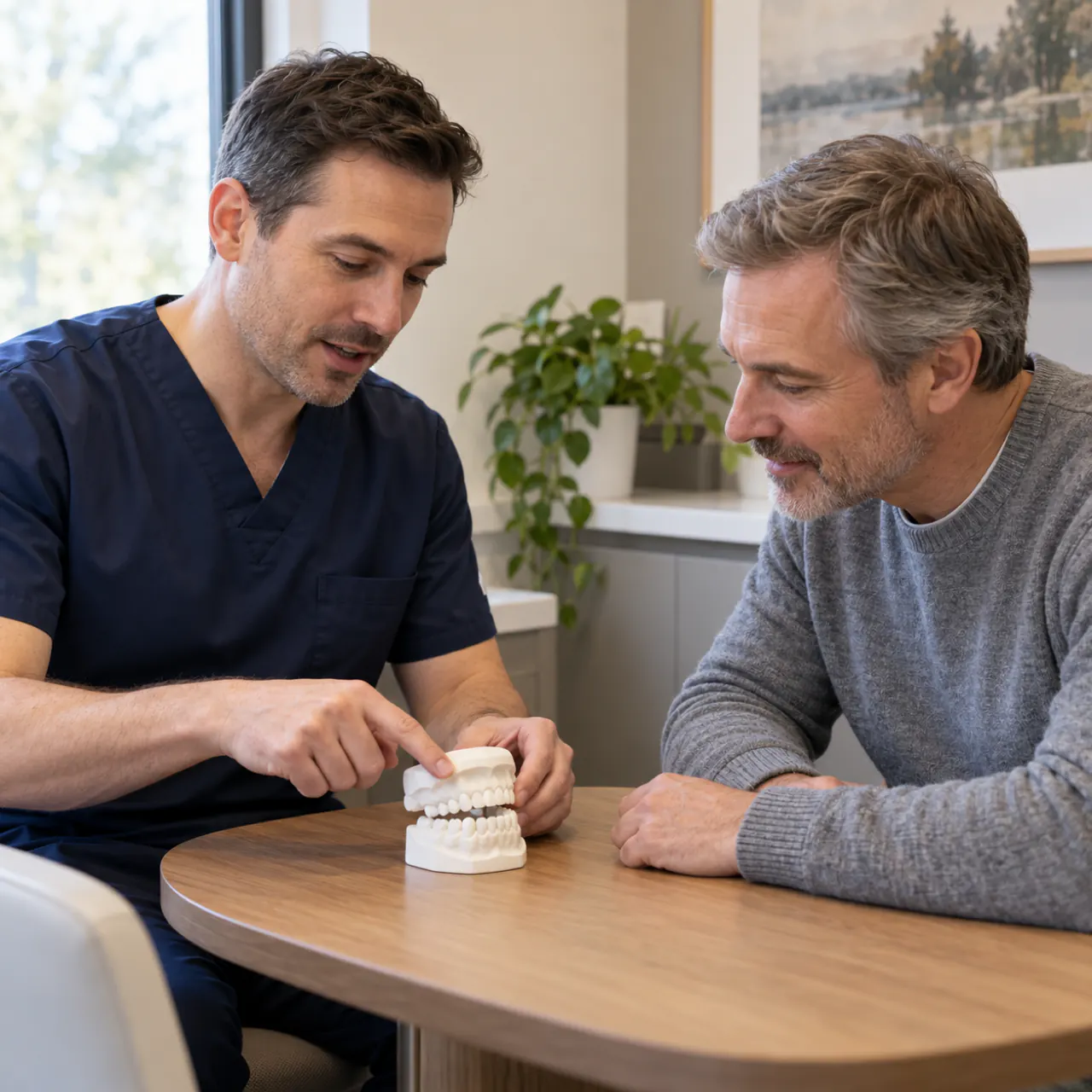
A bite and occlusion assessment is a diagnostic visit. We gather information first, explain what we see, and only then talk about whether anything needs to change.
Your bite story
We ask when you first noticed a change, whether anything was recently repaired, and how chewing feels on each side. Clenching, grinding, jaw soreness, and headaches are part of the conversation too.
Look at the teeth and dental work
Your dentist examines enamel wear, fracture lines, chipped edges, and the condition of existing fillings and crowns. These details often show where the bite is under the most stress.
Mark the contact points
Thin marking paper or film shows where your teeth touch when you close and when you glide forward or sideways. We may repeat this in different positions to see the full picture.
Check the jaw and muscles
We gently feel the jaw joints and chewing muscles and watch how your jaw opens and closes. This helps us tell whether bite discomfort is coming from the teeth, the joints, or the muscles.
Records when they help
Depending on your exam, we may recommend photos, x-rays, impressions, or a digital scan of your teeth. These records let us study your bite more closely after the appointment.
Findings and options
We explain what we found in plain language and outline any options, from simple monitoring to protecting, adjusting, or restoring certain teeth. You decide on next steps once you understand the reasons behind them.
Assessment details
The bite clues we look for and the questions we help answer.
Occlusion is about more than straight teeth. We look at contact points, jaw movement, and the history written into your enamel.
What we evaluate
- Where teeth make first contact when you close
- How the teeth guide your jaw when it slides forward and sideways
- Flattened, shiny, or cupped wear facets on enamel
- Chipped edges and fracture lines on front and back teeth
- Fillings, crowns, or bridges that may sit high
- Teeth that are shifting, tipping, or becoming loose
- Tenderness in the jaw joints and chewing muscles
- Missing teeth that change how the remaining teeth share force
Questions this assessment can help answer
- Why does one tooth feel sore when I bite down?
- Why does my new crown or filling feel tall?
- Why do my front teeth keep chipping?
- Is my bite changing as I get older?
- Could my bite be adding to jaw or muscle discomfort?
- Do I need protection for my teeth at night?
- Is my bite ready for larger restorative work?
- Should I consider orthodontic or other specialist input?
Bite care in Guelph
A bite check from a Guelph team that knows your dental history.
Because many of our patients have been coming to the Kortright Road West office for years, we can often compare today's bite with earlier records and notice gradual change. New patients are welcome too, and we are happy to review previous x-rays or notes you bring along.
Related services
Helpful next pages for bite and wear concerns.
Questions patients ask
Bite and occlusion assessment FAQs
Patients often notice their bite only when something feels different. These answers cover the questions we hear most.
What does occlusion mean in dentistry?
Occlusion is the dental term for how your upper and lower teeth come together, both when you close and when your jaw moves. It includes which teeth touch, how hard they touch, and how they guide your jaw during chewing.
My bite suddenly feels different. Should I be worried?
A sudden change can have several causes, including a cracked tooth, a loose or high restoration, gum or tooth infection, or jaw muscle soreness. It is worth booking an exam so we can find the cause, and if you also have swelling or significant pain, please call us promptly.
My new filling feels high. Will it settle on its own?
Some minor awareness can fade over a few days, but a filling or crown that is truly high usually does not settle by itself. If biting still feels uneven or the tooth is tender, call us so we can check and adjust it if needed.
Can a bad bite cause jaw pain?
A bite problem may contribute to jaw or muscle discomfort for some people, but jaw pain usually has several overlapping factors such as clenching, stress, sleep, and joint changes. Part of the assessment is figuring out how much the bite is really involved.
Does a bite assessment hurt?
No, the assessment is generally comfortable. You will be asked to bite on thin marking paper, move your jaw in a few directions, and let us gently feel the jaw joints and muscles.
Will I need braces if my bite is off?
Not necessarily. Many uneven bites are stable and comfortable and simply need monitoring. When alignment is contributing to wear or other problems, we may discuss orthodontic options such as clear aligners, or refer you for an orthodontic opinion.
How long does a bite and occlusion assessment take?
The time depends on how much needs to be checked and whether records such as photos, x-rays, or scans are taken. We will let you know when you book roughly how long to plan for.
Can I have my bite checked as a new patient in Guelph?
Yes. New patients are welcome at Ironwood Dental. A bite assessment can be part of a new-patient exam or booked on its own if a specific concern is bothering you.