

Restorative dentistry in Guelph
Bite reconstruction that brings your upper and lower teeth back into balance.
Over the years, worn teeth, missing teeth, and shifting teeth can change the way your bite comes together. Bite reconstruction focuses on that relationship: the height, contact, and guidance of your bite, so restorations can share chewing forces evenly and feel natural.
Why it matters
A balanced bite protects your teeth, jaw, and restorations.
When teeth no longer meet evenly, a few teeth often take more than their share of force. Rebuilding the bite can spread that load more comfortably.
Chew more evenly
Restoring proper contact between upper and lower teeth can make it easier to bite and chew on both sides.
Reduce stress on weak teeth
When force is shared across more teeth, fewer teeth are overloaded, which may lower the chance of new cracks and breaks.
Restore lost bite height
Severe wear can shorten teeth and close the bite. Rebuilding height may also improve the support of your lips and lower face.
Protect new restorations
Crowns and fillings last better when they are designed around a stable bite rather than fitted into an uneven one.
Support jaw comfort
Some patients notice less muscle fatigue when the bite is more balanced, though jaw symptoms have many causes and are assessed separately.
Test before you commit
Temporary restorations or appliances let you try the new bite before permanent work begins.
How it works
A careful, staged process that tests your new bite first.
Bite reconstruction is planned slowly and tested before anything permanent is placed. Each step gives you and your dentist a chance to confirm it feels right.
Comprehensive bite exam
We examine your teeth, gums, jaw joints, and chewing muscles, and ask about clenching, grinding, and jaw discomfort. This shows us what has changed and why.
Records and models
Photos, x-rays, and impressions or digital scans capture how your teeth meet now. We may also record your jaw position.
Plan the new bite
Your dentist designs a proposed bite on models or digitally and explains it to you. This is when we discuss options, staging, and timeline.
Trial with temporaries or an appliance
Temporary restorations or a removable appliance let you live with the new bite for a period. We adjust until it feels comfortable and stable.
Final restorations in stages
Permanent crowns, onlays, or bonding are placed in planned sections. Working in stages keeps each visit manageable.
Fine-tune and protect
We check and refine your bite after everything is in place. A nightguard is often recommended to protect the work if you clench or grind.
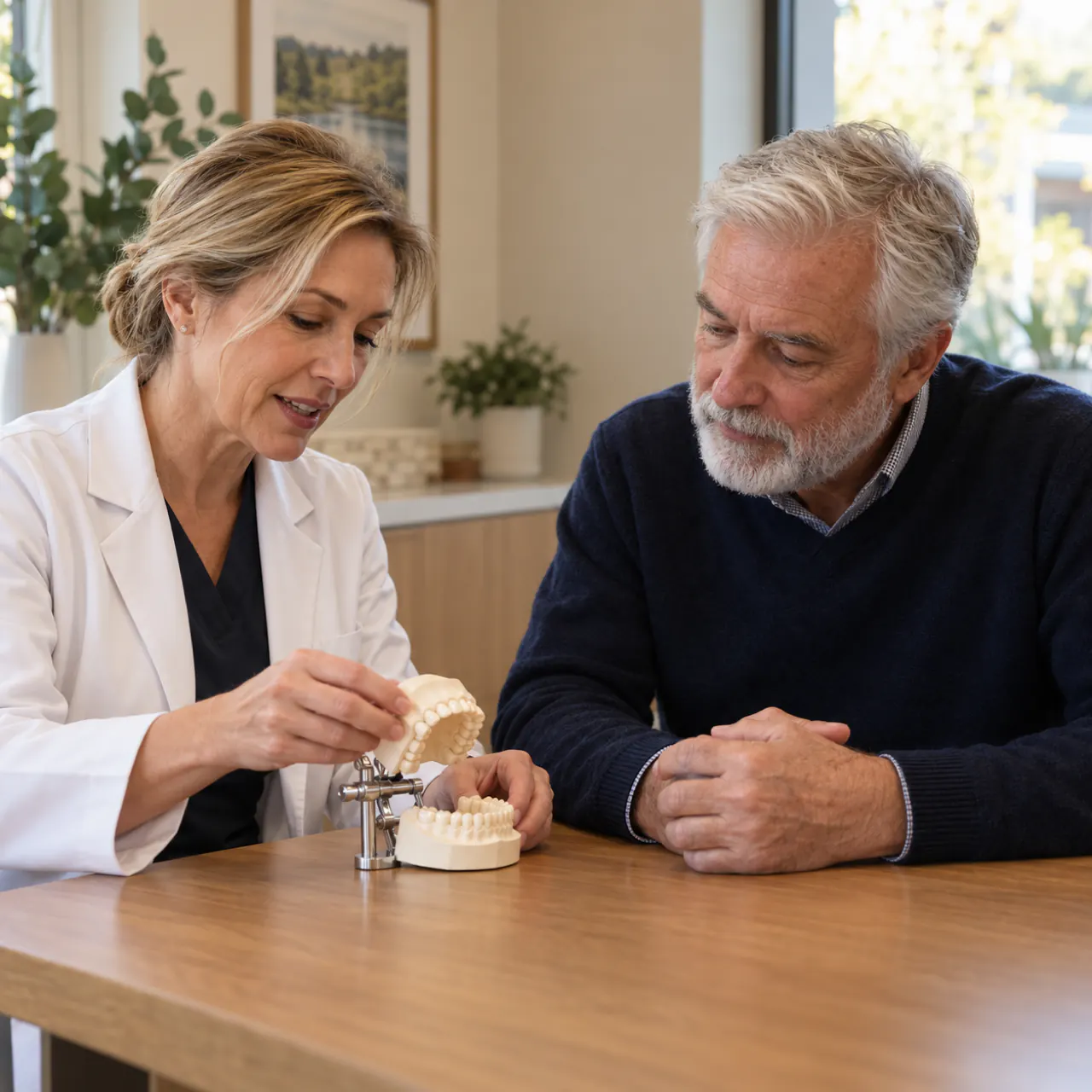
Bite reconstruction details
What we assess in your bite and what reconstruction may include.
Every bite is different, so the plan depends on what has changed and how your jaw and muscles respond.
What we look at in your bite
- How much tooth height has been lost to wear
- Which teeth touch first when you close
- How your front teeth guide side-to-side movements
- Missing teeth that let others drift or tip
- Signs of clenching or grinding
- Jaw joint sounds, tenderness, or limited opening
- Gum health and bone support around each tooth
- Existing crowns, fillings, and bridges that affect the bite
What reconstruction may include
- Diagnostic models or a digital bite design
- A trial bite using temporary restorations or an appliance
- Crowns or onlays to rebuild worn back teeth
- Bonding or veneers to restore front tooth length
- Replacing missing teeth with bridges, implants, or partials
- Minor tooth movement first when alignment is a barrier
- Staged treatment over several visits
- A protective nightguard after treatment is complete
Visit us in Guelph
Patient, unhurried bite planning in Guelph.
Bite reconstruction takes several visits, so a convenient office matters. Our Kortright Road West location offers evening appointments Monday to Thursday and Saturday mornings, which helps many Guelph patients fit a staged plan around work and family.
Related services
Related care for bite and wear concerns
Questions patients ask
Bite reconstruction FAQs
Common questions from patients whose bite has changed over time.
What is a collapsed bite?
A collapsed bite happens when teeth wear down, break, or are lost, so the upper and lower jaws close closer together than they used to. It can make the lower face look shorter and put extra stress on the remaining teeth.
How do I know if my bite needs reconstruction?
Signs can include teeth that look much shorter, frequent chipping, difficulty chewing, teeth that no longer meet evenly, or many restorations failing. An exam and bite records help us tell whether reconstruction would help or whether simpler care is enough.
Is bite reconstruction the same as full-mouth rehabilitation?
They overlap. Bite reconstruction focuses specifically on how your teeth come together, while full-mouth rehabilitation looks at the whole mouth, including gum health, missing teeth, and appearance. Many full-mouth plans include bite reconstruction.
How long does bite reconstruction take?
It depends on how many teeth are involved and whether a trial phase is needed. Many plans are completed over several months in planned stages, and we give you a realistic timeline before starting.
Will my new bite feel strange at first?
A changed bite usually takes some getting used to. That is why we test it with temporary restorations or an appliance first, so adjustments can be made before anything permanent is placed.
Can bite reconstruction help jaw pain?
Some patients find their jaw feels more comfortable with a balanced bite, but jaw pain has many causes. We assess jaw symptoms carefully and do not promise that changing the bite alone will resolve them.
Do I need to wear a nightguard afterward?
If you clench or grind, a nightguard is often recommended to protect your new restorations. Your dentist will let you know whether it makes sense for you.
Can I do bite reconstruction in stages to spread out the work?
Yes. Staging is common and often preferred. We plan which areas to treat first so your bite stays stable between visits.