

Gum care in Guelph
Bleeding gums are a signal worth answering, and most causes can be found and settled.
Pink in the sink after brushing is one of the most common things patients mention to us, and one of the easiest to ignore. At Ironwood Dental we look for the reason your gums are bleeding, whether that is plaque along the gumline, brushing habits, hormones, medications, or early gum disease, and then help you get them back to a calm, healthy state.
Why it matters
Healthy gums do not bleed, so bleeding tells us where to look.
Bleeding is usually the earliest sign that gum tissue is inflamed. Treating it early is simpler, more comfortable, and protects the bone and tissue that hold your teeth in place.
Find the real cause
Bleeding can come from plaque, tartar, brushing too hard, hormonal changes, certain medications, or gum disease. Knowing which one applies changes what actually helps.
Stop small problems from growing
Inflamed gums that are left alone may slowly progress to periodontitis. Treating bleeding early can help keep it at the reversible stage.
Brush and floss with confidence
Many patients stop flossing because it makes their gums bleed, which tends to make the bleeding worse. We help you break that cycle with gentler, more effective techniques.
Fresher breath and a cleaner feel
The plaque and tartar that irritate gums also contribute to bad breath. Removing them often leaves your mouth feeling noticeably fresher.
Care that fits your health history
If you take blood thinners, are pregnant, or manage diabetes, we factor that into how we interpret bleeding and how we plan your care.
Clear signs of progress
We record which areas bleed so that at your follow-up you can see whether your gums are improving rather than guessing.
What to expect
From where it bleeds to why it bleeds, step by step.
A bleeding gums visit is part detective work and part hands-on care. We map the areas that bleed, look for the cause, clean them thoroughly, and show you what to change at home.
Tell us what you have noticed
We ask when the bleeding happens, how long it has been going on, and whether anything else has changed, like new medications or a pregnancy. This helps us narrow down possible causes before we even look.
Gentle gum examination
Your hygienist or dentist checks the colour and texture of your gums and gently measures the space between teeth and gums. Areas that bleed during this check are noted on your chart.
X-rays if they are needed
If the exam suggests the problem may go deeper than the gumline, x-rays can show whether bone levels have changed. We only take them when they will help answer the question.
Thorough cleaning of trouble spots
We remove plaque and tartar along and just under the gumline, paying close attention to the areas that bled. If deeper buildup is found, we may recommend a separate deep cleaning appointment.
A home routine that works for you
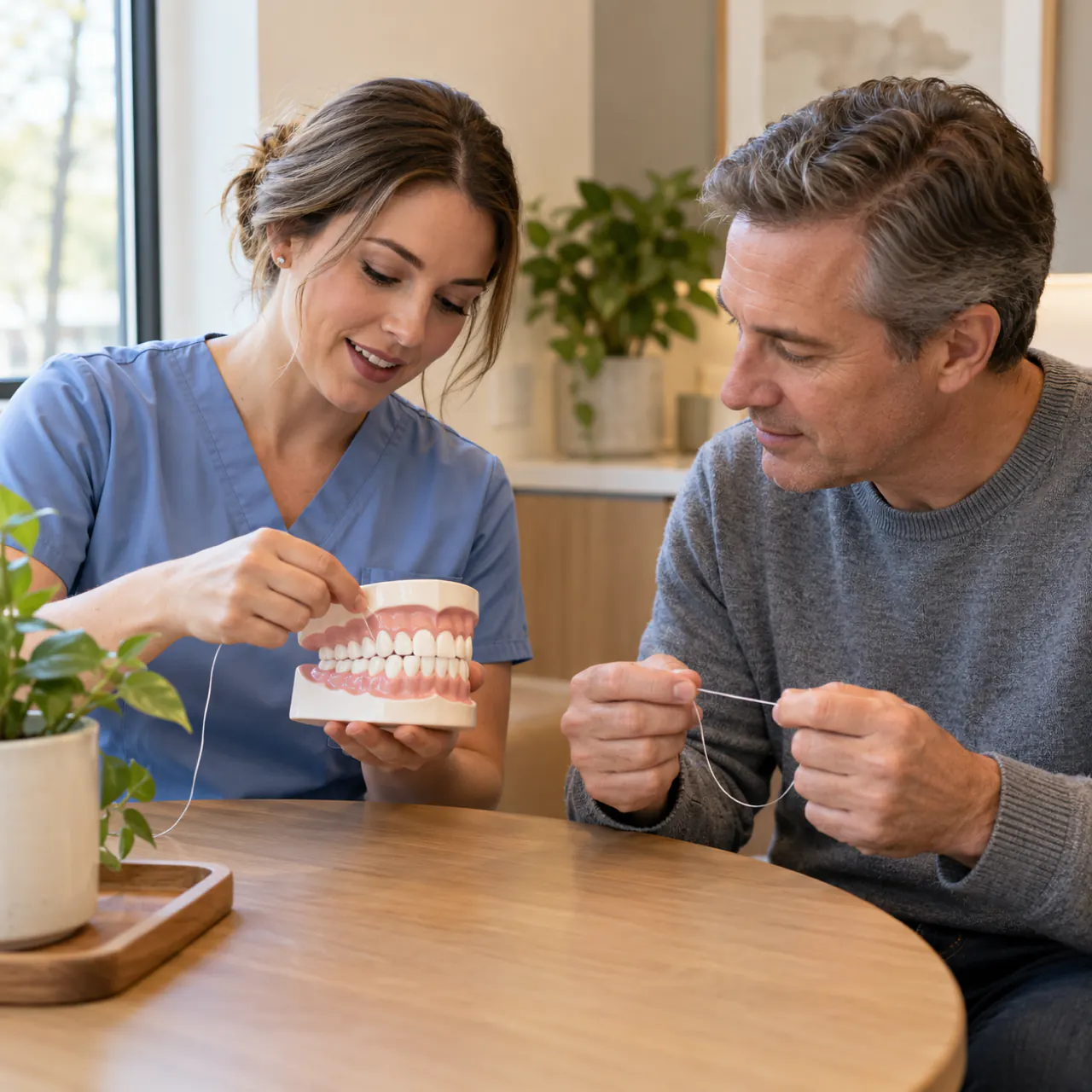
We show you brushing angle, pressure, and an interdental cleaning tool that suits the spaces between your teeth. You practise in the chair so it feels familiar when you get home.
Follow-up check
We usually suggest a short recheck after a few weeks to see how your gums have responded. If bleeding persists, we look further, which may include recommending you speak with your physician.
Causes and care
What we look for, and what usually helps.
Bleeding gums rarely have a single cause. These are the factors we check most often and the steps that tend to help them settle.
Common reasons gums bleed
- Plaque sitting along the gumline for more than a day or two
- Hardened tartar that brushing cannot remove
- Brushing too hard or using a stiff-bristled brush
- Starting to floss again after a long break
- Hormonal changes during pregnancy, puberty, or menopause
- Medications such as blood thinners that affect clotting
- Gingivitis or early periodontitis
- Poorly fitting fillings, crowns, or appliances that trap plaque
What usually helps
- A professional cleaning focused on inflamed areas
- A soft-bristled or electric toothbrush used with light pressure
- Daily cleaning between teeth with floss, picks, or small brushes
- Brushing for two full minutes, twice a day
- A recheck to compare bleeding points over time
- Deep cleaning when tartar has formed below the gumline
- Repairing rough or overhanging dental work that traps plaque
- Coordinating with your physician when a medical cause is suspected
Gum care close to home
Bleeding gums care on Kortright Road West.
Our Guelph office at 570 Kortright Rd W sees patients with bleeding gums every week, from students who have fallen out of a flossing routine to parents who have not had a cleaning in a while. Evening appointments Monday to Thursday make it easier to book a visit before a small concern becomes a bigger one.
Related services
Related gum care services
Questions patients ask
Bleeding gums FAQs
These are the questions we hear most often from Guelph patients who notice bleeding when they brush or floss.
Is it normal for my gums to bleed when I brush?
It is common, but it is not a sign of healthy gums. Bleeding usually means the tissue is inflamed, most often from plaque along the gumline. It is worth having it checked, especially if it has lasted more than a week or two.
Should I stop flossing if my gums bleed?
Usually not. Bleeding from flossing often improves within a week or two of gentle, daily cleaning as the inflammation settles. If bleeding continues or gets worse, book a visit so we can check for tartar or other causes.
Can brushing too hard make my gums bleed?
Yes. A stiff brush or heavy scrubbing can irritate gum tissue and, over time, contribute to recession. We can show you a lighter technique and help you choose a brush that cleans well without causing damage.
My gums bleed and I take a blood thinner. What should I do?
Please do not stop or change your medication on your own. Let us know which medication you take so we can plan your care, and speak with your physician if the bleeding is heavy or hard to stop. Gum inflammation can still be treated safely in most cases.
Why are my gums bleeding more during pregnancy?
Hormonal changes during pregnancy can make gums react more strongly to plaque, a condition often called pregnancy gingivitis. Cleanings are generally considered safe during pregnancy, and good home care can help a great deal. Let your prenatal care provider know about any concerns as well.
How long does it take for bleeding gums to stop?
When the cause is plaque-related inflammation, many patients notice improvement within a couple of weeks of a professional cleaning and consistent home care. Deeper gum problems can take longer and may need additional treatment.
Can bleeding gums be a sign of something serious?
Most of the time bleeding gums are related to plaque and inflammation, but they can occasionally point to gum disease or a medical condition. If bleeding is heavy, sudden, or comes with bruising or other symptoms, we may suggest you see your physician as well.
Do I need a deep cleaning for bleeding gums?
Not always. Many cases settle with a regular cleaning and better home care. A deep cleaning is recommended only when measurements and x-rays show tartar and inflammation below the gumline.