

Preventive dentistry in Guelph
Understand why cavities keep happening, so you can change the pattern.
Some people brush faithfully and still get new cavities at almost every checkup, while others rarely do. A cavity risk assessment looks at the specific factors in your mouth and routine that tip the balance, and turns them into a clearer, more personal prevention plan.
Why assess risk
Knowing your risk level changes what we recommend.
Two patients with the same number of fillings can have very different reasons for them. Sorting out those reasons helps us avoid a one-size-fits-all approach.
Answers instead of frustration
Many patients feel discouraged when cavities keep appearing. An assessment helps explain why, which makes it easier to know what to change.
Recall timing that fits
Lower-risk patients may not need extra visits, while higher-risk patients may benefit from closer monitoring. Your interval is based on your actual risk.
Targeted protection
We can match preventive tools, such as fluoride varnish, sealants, or higher-fluoride toothpaste, to the areas and factors that need them.
Spot medical contributors
Dry mouth from medications, reflux, and some health conditions can raise decay risk. Identifying them lets us plan around them.
Track change over time
Reassessing at future visits shows whether new habits and treatments are lowering your risk.
Protect existing dental work
Decay often returns at the edges of old fillings and crowns. Knowing your risk helps us decide how closely to watch them.
The assessment
How we work out your cavity risk.
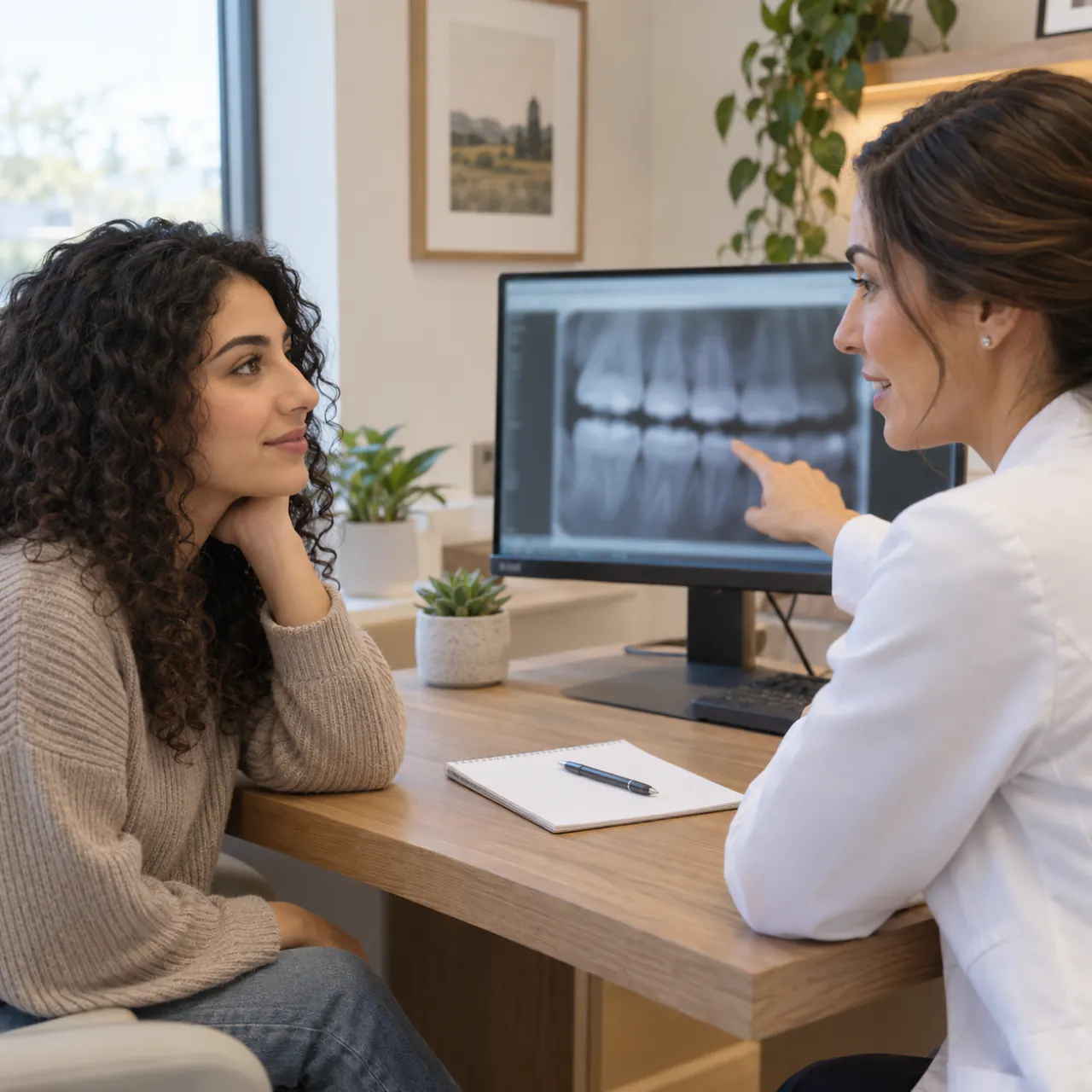
The assessment usually fits into a regular exam or new-patient visit. It combines conversation, observation, and your dental history.
Look back at your history
We review how many cavities you have had and when, along with any past fillings, crowns, or root canals. Patterns, such as decay mostly between teeth or near the gums, offer useful clues.
Talk about diet and routine
We ask about snacking, drinks, brushing, flossing, and the toothpaste you use. These questions are about understanding, not judging.
Review health and medications
Medications, medical conditions, and treatments that affect saliva flow are noted. We also ask about reflux, eating disorders, or other sources of acid when relevant.
Examine teeth and saliva
Your dentist checks for active decay, white spots, plaque levels, and how moist your mouth looks. X-rays may be taken when they help assess hidden areas.
Assign a risk level
We combine the findings into a general risk level, such as low, moderate, or high. We explain which factors drove that result.
Agree on a plan
We suggest preventive steps and a recall interval suited to your risk. At later visits, we check whether your risk has shifted.
Risk factors
What raises risk and what lowers it.
Cavity risk is a balance between factors that attack enamel and factors that protect it. These are the ones we pay most attention to.
Factors that can raise risk
- Several new cavities in the past few years
- Frequent snacking or sipping sweet or acidic drinks
- Reduced saliva flow from medications or health conditions
- Visible plaque buildup or difficulty cleaning
- Deep grooves or crowded teeth that trap food
- Exposed root surfaces from gum recession
- Orthodontic appliances or partial dentures
- Older fillings or crowns with worn or open edges
Factors that help protect teeth
- Regular use of fluoride toothpaste
- Healthy saliva flow
- Daily cleaning between teeth
- Sealants on deep grooves
- Keeping sugary foods to mealtimes
- Drinking water between meals
- Regular professional cleanings
- Prompt treatment of early enamel changes
Visiting our office
A personal assessment at our Guelph practice.
If you have had several new cavities recently, or you are new to Ironwood Dental and want to know where you stand, ask for a cavity risk review when you book at our Kortright Road West office. Bringing older x-rays or records from a previous dentist helps us see how things have changed over time.
Related services
Where your assessment may lead.
Questions patients ask
Cavity risk assessment questions
Here are answers to common questions about why some people are more prone to decay and what an assessment involves.
Why do I get cavities when I brush every day?
Brushing is important, but other factors also matter, such as how often you snack, how much saliva you produce, whether you clean between teeth, and the shape of your teeth. Sometimes cavities form between teeth or under old fillings where brushing does not reach. An assessment helps pinpoint which factors apply to you.
Is cavity risk genetic?
Genetics may play some role through things like enamel quality, tooth shape, and saliva, but habits and environment usually have a larger influence. Families also tend to share diet and routines, which can make decay seem inherited.
Does a cavity risk assessment cost extra?
In most cases, the assessment is part of the conversation during your regular exam or new-patient visit. If additional diagnostic steps are recommended, we will explain them first. Our front desk team can answer questions about your specific appointment.
Can my risk level change?
Yes, and it often does. Starting a new medication, getting braces, changing your diet, or developing gum recession can raise risk, while new habits and preventive care can lower it. We reassess at future visits.
What does dry mouth have to do with cavities?
Saliva rinses away food, neutralizes acid, and helps repair early enamel damage. When saliva is reduced, teeth lose much of that natural protection, and decay can develop more quickly. We can suggest ways to manage dryness and protect your teeth.
Do children get cavity risk assessments too?
Yes. Children's risk is assessed at their checkups with attention to diet, brushing help at home, fluoride use, and newly erupted molars. Parents get practical suggestions they can use right away.
Will I need more frequent cleanings if I am high risk?
You may. Some higher-risk patients benefit from shorter recall intervals for a period of time, along with fluoride or other preventive steps. Once your risk is lower, we can talk about returning to a longer interval.
What should I bring to my assessment?
A list of current medications, any recent x-rays from another office, and notes about your usual snacks and drinks are helpful. It also helps to bring the toothpaste and cleaning tools you use if you have questions about them.