

Children's dentistry in Guelph
Gentle children's teeth cleanings that leave kids with cleaner teeth and better brushing skills.
Even children who brush every day miss a few spots, especially along the gums and on back molars. A children's cleaning with our hygiene team removes the plaque and tartar left behind and turns each visit into a short, practical brushing lesson your child can take home.
Why children's cleanings help
Professional cleaning reaches what small hands and busy mornings miss.
Plaque that stays on teeth can lead to cavities and puffy gums, even in young children. Regular cleanings reset the mouth and show children how to keep it that way.
Remove plaque and early tartar
Hygienists clean along the gums and around back teeth where plaque tends to build up and harden, even in children who brush well.
Calm puffy or bleeding gums
Children can develop gum inflammation from plaque, braces, or new teeth erupting. A cleaning and better technique often help gums settle.
Show children where they miss
Using a mirror and, sometimes, a plaque-disclosing rinse, we show children exactly which spots their brush is skipping.
Coach age-appropriate technique
Young children practise simple circles with a parent finishing up, while older kids learn to angle the brush at the gums and floss on their own.
Freshen and polish
Polishing removes surface stains from foods and drinks and leaves teeth feeling smooth, which many children enjoy.
Support every other preventive step
Clean teeth make it easier for your dentist to examine the mouth and are the starting point for sealants and fluoride when they are recommended.
How we clean children's teeth
A step-by-step cleaning that moves at your child's comfort level.
Our hygienists explain everything in simple words and adjust their pace for each child. The goal is clean teeth and a child who is happy to come back.
Meet the hygienist
Your child gets a chance to say hello, sit in the chair, and see the light and mirror. We explain what will happen in a few short, friendly sentences.
Checking for plaque
The hygienist looks at each tooth and the gums to see where plaque is collecting. For some children we use a coloured rinse that temporarily tints plaque so it is easy to see.
Gentle scaling
Small hand instruments or a gentle ultrasonic tip remove plaque and tartar from around the teeth. We describe sounds and sensations before we start, and children can raise a hand for a break.
Polishing
A soft rubber cup and a mild polishing paste clean and smooth the tooth surfaces. Children can often choose a flavour.
Flossing and brushing practice
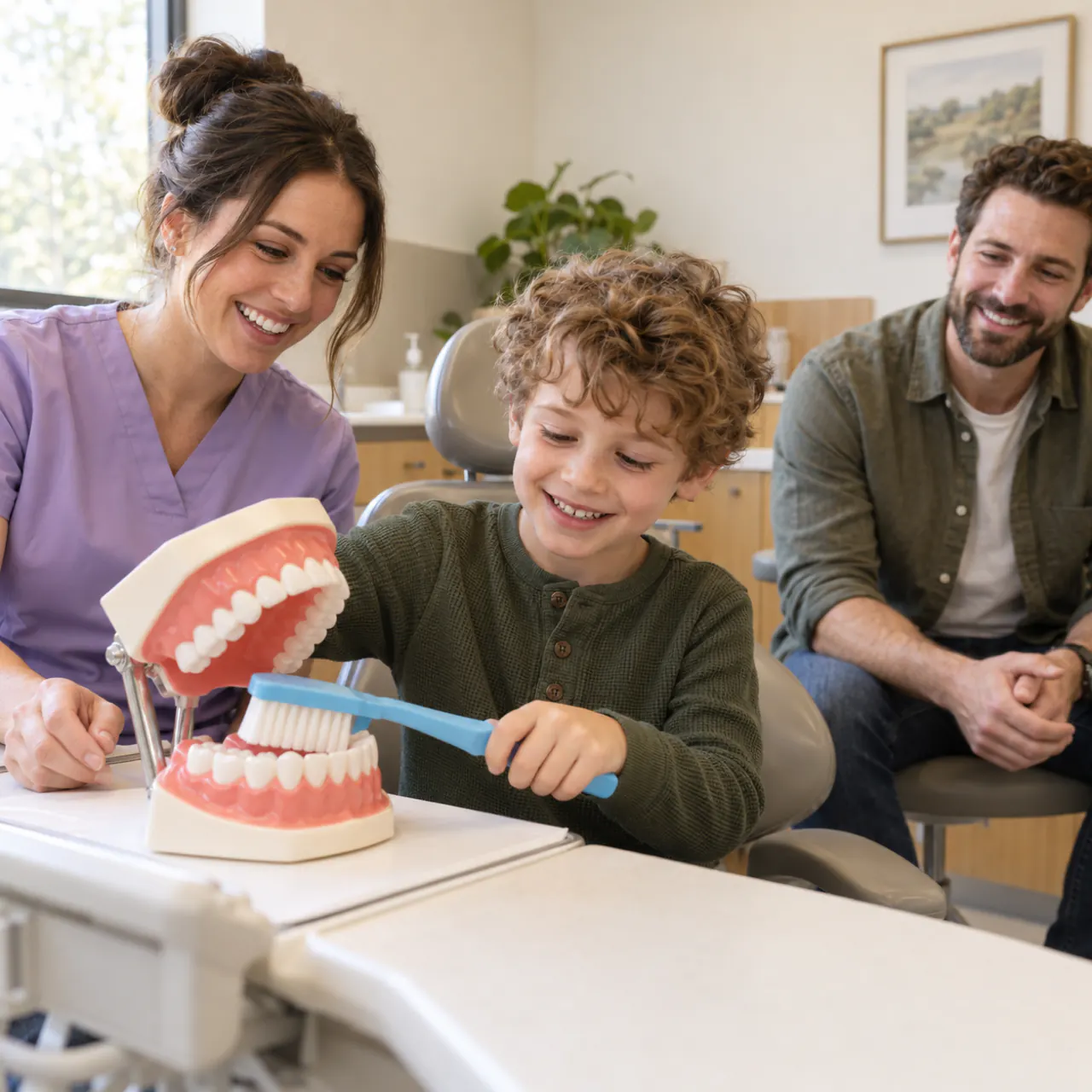
The hygienist flosses between teeth that touch and then has your child practise brushing, with tips for you to help at home.
Fluoride and handover to the dentist
If recommended, fluoride varnish is applied at the end. The hygienist then shares findings with your dentist, who completes the exam and talks with you about next steps.
Cleaning details
What the cleaning includes and what your child practises.
Each cleaning combines professional care with coaching that matches your child's age and dexterity.
What the cleaning includes
- Plaque removal around the gums and back molars
- Tartar removal where hardened deposits have formed
- Polishing to lift surface stains
- Flossing between teeth that touch
- Checking gums for redness, swelling, or bleeding
- Checking sealants and fillings for wear
- Fluoride varnish when it suits your child's risk
- Notes for the dentist about any areas of concern
What your child practises
- Angling the brush toward the gumline
- Reaching the back sides of the last molars
- Brushing for about two minutes
- Using a pea-sized amount of fluoride toothpaste for ages three and up
- Spitting rather than rinsing after brushing
- Using floss picks or regular floss between tight teeth
- Cleaning around braces or a space maintainer if present
- When parents should still help or check brushing
Hygiene visits in Guelph
Children's cleanings at a familiar Guelph office.
Families across Guelph have trusted Ironwood Dental for more than 25 years, and many of our young patients see the same hygiene team at every visit. Evening appointments Monday to Thursday make it easier to fit cleanings around school, practices, and lessons.
Related services
Related preventive care for children
Questions patients ask
Children's teeth cleaning FAQs
What parents want to know about cleanings for kids.
At what age do children get their first professional cleaning?
Many children have their first gentle cleaning between ages two and four, depending on their comfort and how many teeth have come in. Younger children may have their teeth brushed and checked rather than fully scaled.
Does a children's cleaning hurt?
Most children find a cleaning comfortable. Tender or inflamed gums can feel a little sensitive, and we adjust our pressure and take breaks whenever your child needs them.
Why does my child have tartar if they brush every day?
Some children build tartar quickly because of their saliva, especially behind the lower front teeth. Brushing helps but cannot remove tartar once it hardens, which is why professional cleanings matter.
Should my child floss?
Once teeth touch each other, flossing helps clean where a toothbrush cannot reach. Most young children need a parent's help, and floss picks can make it easier for kids to start on their own.
How long does a children's cleaning take?
A children's cleaning and exam usually fit comfortably into one appointment. The time varies with your child's age, how much buildup is present, and whether x-rays or fluoride are part of the visit.
What is the coloured rinse some hygienists use?
A disclosing rinse or tablet temporarily colours plaque so children can see exactly where they missed. It brushes away and is a helpful teaching tool, though we only use it when it suits your child.
My child's gums bleed when they brush. Is that normal?
Bleeding usually means plaque is irritating the gums. Gentle, consistent brushing along the gumline often helps within a week or two, but bleeding that continues should be checked at a cleaning visit.
Until what age should I help my child brush?
Many children need help or a parent check until about age seven or eight, when they have the hand control to brush thoroughly. Some need support for longer, and our hygienists can tell you how your child is doing.