

Periodontal procedures in Guelph
Crown lengthening gives a broken or short tooth enough structure to hold a lasting restoration.
Sometimes a tooth breaks or decays so close to the gum that there is nothing left for a crown to grip. Crown lengthening carefully repositions the gum, and sometimes a small amount of bone, so more healthy tooth is exposed. At Ironwood Dental we plan it as part of the bigger restoration, so the finished tooth is healthy, cleanable, and comfortable.
Why it matters
A crown is only as reliable as the tooth it sits on.
Crown lengthening is rarely a goal in itself. It is a foundation step that helps a restoration last and helps the gums around it stay healthy.
Gives a crown something to hold
A crown needs a band of healthy tooth above the gum to grip. Crown lengthening creates that space when decay or a fracture has removed it.
May help save a tooth
In some cases, crown lengthening allows a tooth to be restored that might otherwise need to be removed. Whether this is realistic depends on root length and bone support.
Keeps crown edges cleanable
When crown margins sit too deep under the gum, they are hard to clean and may lead to chronic inflammation. Proper spacing helps the gum stay healthy.
Respects the gum's natural attachment
Gums need a small zone of attachment above the bone. Crown lengthening restores that zone instead of crowding it with a restoration.
Can even out a gummy smile
When teeth look short because gum tissue covers too much of them, crown lengthening may reveal more of each tooth for a more balanced smile.
Planned around the final result
We design the gum line with the planned crown, veneer, or filling in mind so the finished tooth looks and functions naturally.
What to expect
From planning to the final crown, in a clear sequence.
Crown lengthening involves a consultation, the procedure itself, a healing period, and then the restoration. We plan each step so you know what is coming.
Consultation and imaging
We examine the tooth, measure the gum, and take x-rays to see how much root and bone are available. This tells us whether crown lengthening is a sensible option.
Treatment plan and timing
We explain how much tissue needs to be adjusted, how long healing usually takes, and when the final restoration can be placed. If a specialist is involved, we coordinate the referral.
Freezing and comfort
On the day of the procedure, the area is thoroughly numbed with local anaesthetic. We check in with you throughout and pause whenever you need a break.
Reshaping gum and bone
The gum is gently repositioned, and a small amount of bone may be reshaped so more of the tooth is exposed. The tissue is then secured, often with stitches.
Healing period
Gums typically need several weeks to settle, and front teeth may need longer for the gum line to stabilize. A temporary crown may protect the tooth during this time.
Final restoration
Once the tissue has healed, we prepare and place your crown or other restoration. We then check the fit, bite, and how easily you can clean around it.
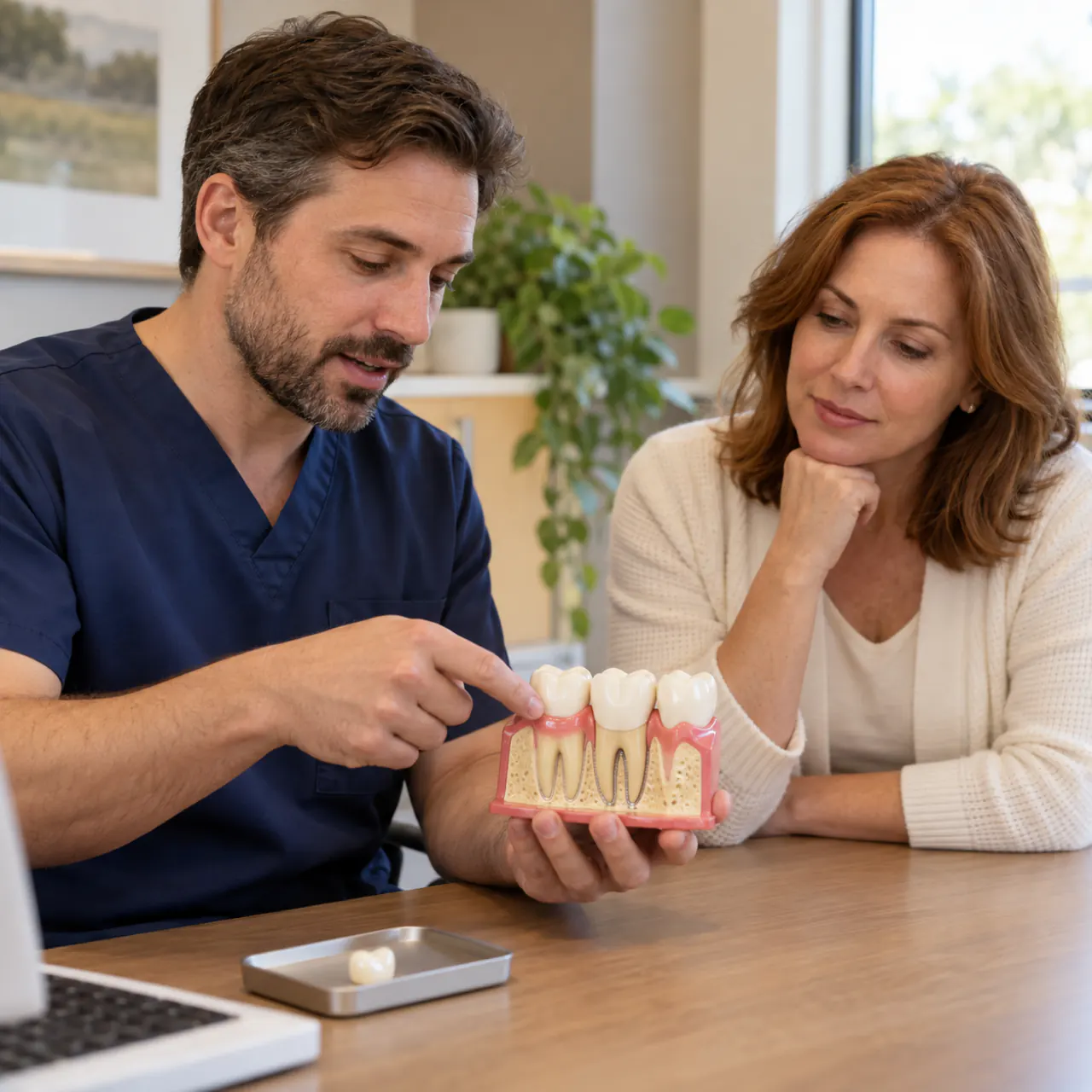
Is it right for you
When crown lengthening is considered, and how recovery usually goes.
Your exam and x-rays determine whether crown lengthening is the right path or whether another approach, such as extraction and replacement, may serve you better.
Situations where it may be considered
- A tooth broken off at or below the gumline
- Decay that extends under the gum
- An old crown that needs replacing but has little tooth left beneath it
- Teeth that are too short to retain a crown securely
- Crown edges that keep the gum chronically inflamed
- Uneven gum heights across the front teeth
- Some gummy smiles caused by excess gum tissue
- Preparing a tooth for a post and core restoration
Recovery and aftercare
- Mild tenderness for a few days is common
- Pain relief recommendations based on your health history
- Soft foods and chewing on the other side at first
- Gentle brushing near the area as instructed
- Rinses or care instructions provided at your visit
- Avoiding smoking, which can slow healing
- A follow-up to check healing and remove stitches if needed
- Waiting for the gum to settle before the final crown
Restorative planning in Guelph
Crown lengthening planned at our Guelph office.
Because crown lengthening and the final crown are closely linked, we coordinate the timing from our Kortright Road West office so you are not left wondering what happens next. When a case is more involved, we may coordinate care with a trusted periodontal specialist and keep your restorative plan here in Guelph.
Related services
Related restorative and gum services
Questions patients ask
Crown lengthening FAQs
Here are answers to the questions patients ask most when crown lengthening comes up in their treatment plan.
Why do I need crown lengthening before a crown?
A crown needs enough healthy tooth above the gum to grip and seal properly. If the tooth has broken or decayed close to or below the gum, crown lengthening can expose that structure. Without it, the crown may loosen or the gum around it may stay inflamed.
Is crown lengthening painful?
The procedure is done with local anaesthetic, so you should feel pressure rather than pain. Afterward, most people have some tenderness for a few days that is usually manageable with the pain relief we recommend for your situation.
How long does crown lengthening take to heal?
Initial healing usually takes a week or two, but the gum line continues to settle for several weeks. Front teeth, where appearance matters most, may need a longer wait before the final crown is made.
What is the difference between crown lengthening and gum contouring?
Gum contouring typically reshapes only soft gum tissue, often for appearance. Crown lengthening may also involve reshaping a small amount of bone so the gum heals at a healthy level. Your exam and x-rays show which one is appropriate.
Will my tooth look longer afterward?
The treated tooth will show more of its surface, which is the goal. For back teeth this is rarely noticeable. For front teeth we plan carefully so the gum line looks balanced with the neighbouring teeth.
Is crown lengthening always possible?
No. If the root is short or there is limited bone, removing more support could weaken the tooth. In those cases, we may discuss other options, such as extraction and replacement with an implant or bridge.
Can I eat normally after crown lengthening?
You can usually eat soft foods the same day, avoiding the treated side. Most people return to a normal diet gradually over a week or two as the area heals.
Is crown lengthening done at Ironwood Dental?
Your care is planned around your needs and the complexity of the tooth. We discuss whether the procedure suits your situation, and more involved cases may be coordinated with a trusted periodontal specialist while your crown is completed with us.