

Crown care in Guelph
Crown recementation that puts your crown back on a healthy, clean foundation.
When a crown comes off whole and the tooth underneath is in good shape, it can often be cleaned and cemented back in place. Recementation is a straightforward procedure, but the key step is checking the tooth first, because a crown usually comes loose for a reason.
Why it matters
Your existing crown may still have years of use left.
A crown that is intact and fits well can often be reused, which saves time and keeps a restoration you are already comfortable with.
Reuse a crown that still fits
If the crown is undamaged and seats well, recementing it avoids making a new one.
Usually a single visit
Most recementations are completed in one appointment once the tooth has been checked.
Protect the exposed tooth
A tooth without its crown is more sensitive and prone to decay or breaking. Covering it again restores protection.
Catch hidden problems
Checking the tooth while the crown is off gives us a clear view of decay or damage that would otherwise be hidden.
Keep your bite familiar
Your original crown already fits your bite, so things usually feel normal right away.
Honest guidance if it should not go back
If the tooth or crown is not suitable, we explain why and what a new crown would involve.
What to expect
Check the tooth, clean the crown, and secure it again.
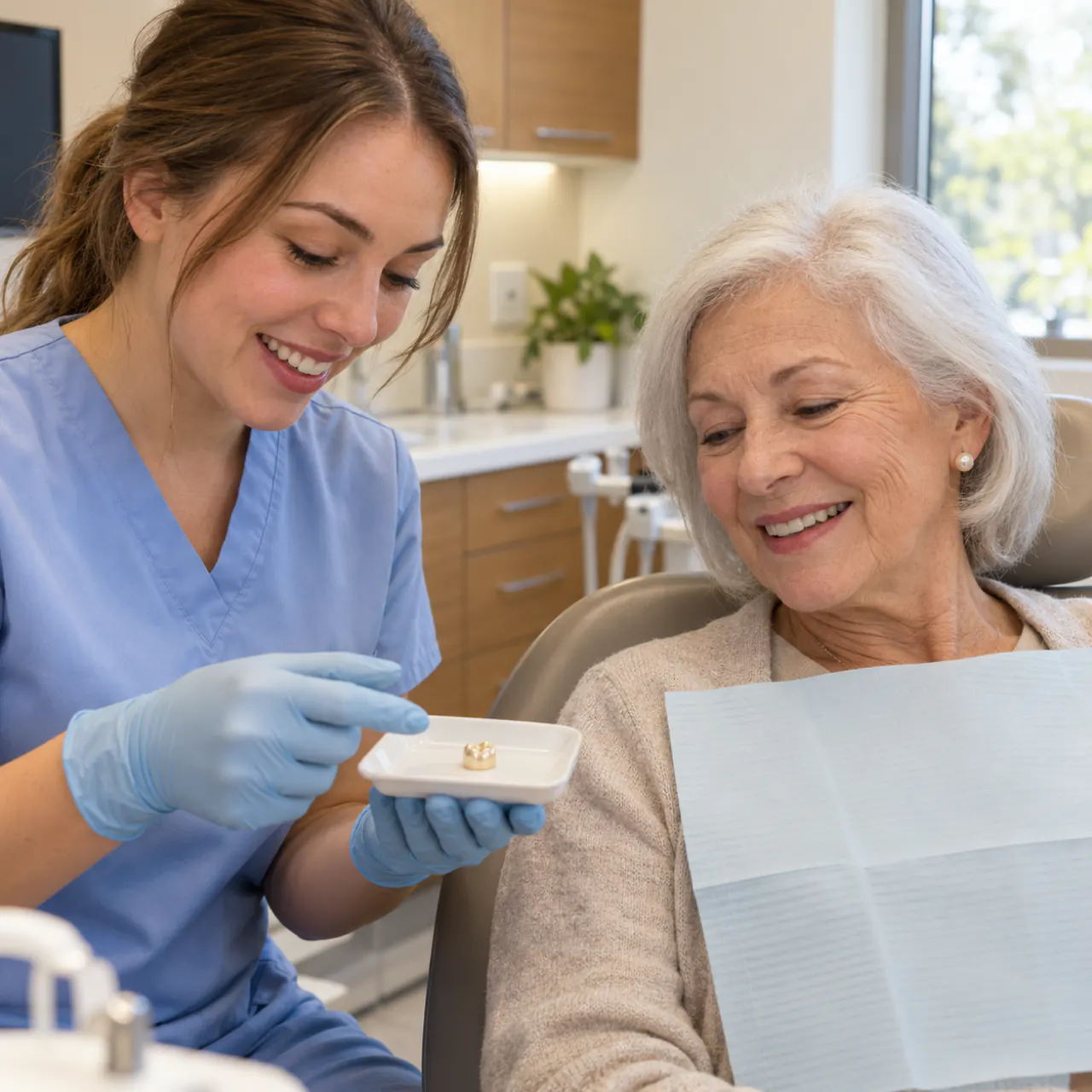
Recementation is usually a single visit. Bring your crown in a small container, and we will look at both the crown and the tooth.
Bring the crown safely
Store the crown in a small container or sealed bag and bring it with you. Avoid trying to glue it back with household products.
Examine the tooth
We check the tooth for decay, breakage, and sensitivity. An x-ray may be taken to look at the root and surrounding bone.
Inspect the crown
The inside and edges of the crown are checked for cracks or wear. We test how well it seats on the tooth.
Clean both surfaces
Old cement is removed from the inside of the crown and from the tooth. A clean surface helps the new cement bond well.
Cement the crown
The crown is seated with fresh dental cement and held in place while it sets. Excess cement is cleaned away from the gumline.
Check your bite
We make sure the crown meets your other teeth comfortably. You receive tips on what to avoid for the rest of the day.
Recementation details
When a crown can be recemented and why crowns come loose.
Not every crown that comes off should go straight back on. These are the checks we make before deciding.
When recementation is usually possible
- The crown came off in one piece with no cracks
- The crown still seats fully and snugly
- The tooth underneath is free of new decay
- Enough tooth structure remains to hold the crown
- The tooth and gums are not infected
- The core or post underneath is still intact
- The edges of the crown still seal well
- Your bite has not shifted while the crown was off
Why crowns commonly come loose
- Cement wearing away after many years
- Decay forming under the edge of the crown
- Sticky foods such as toffee or chewy candy
- Clenching or grinding forces
- A short or tapered tooth that offers less grip
- A broken core or post beneath the crown
- Gum recession exposing the crown edge
- A crown fitted to a tooth that has since changed
Visit us in Guelph
Prompt crown care near the University of Guelph and south end.
Ironwood Dental is on Kortright Road West, easy to reach from the south end and campus area of Guelph. If your crown has come off, call +1 519 763 1488 and we will look for an appointment soon, since a bare tooth is more vulnerable the longer it is uncovered.
Related services
Related crown care
Questions patients ask
Crown recementation FAQs
Answers for patients whose crown has come off or feels loose.
My crown came off. Can it be put back on?
Often, yes, if the crown is intact and the tooth underneath is healthy. We need to examine both before recementing to make sure it will stay secure.
Can I glue my crown back on at home?
We recommend against household glues, which can damage the tooth and crown and make proper recementing difficult. Some pharmacies sell temporary dental cement for short-term use, but you should still see a dentist soon.
How soon should I see a dentist after my crown falls off?
As soon as you can, ideally within a few days. The exposed tooth can become sensitive, decay more easily, or shift slightly, which may stop the crown from fitting.
Does crown recementation hurt?
Most patients find it comfortable. If the tooth is sensitive, we can numb the area before cleaning and cementing.
Why would a crown not be recemented?
A crown may not be reused if it is cracked, no longer fits, or the tooth underneath has new decay or has broken. In those cases a new crown, and sometimes other treatment, is usually needed.
Will a recemented crown come off again?
A crown recemented on a healthy, well-shaped tooth often stays secure. If the tooth is short or the cause was decay, there is a higher chance of it loosening again, and we will discuss whether another option would be more reliable.
What should I avoid after my crown is recemented?
Avoid very sticky or hard foods for the rest of the day while the cement fully sets. After that, caution with sticky candies helps protect the crown long term.
What if I swallowed my crown?
A swallowed crown usually passes without harm, but call us so we can plan a new one. If you have trouble breathing, persistent coughing, or chest pain, seek emergency medical care right away.