

Jaw comfort appliances in Guelph
An occlusal splint designed as part of jaw care, then adjusted with you as your symptoms change.
An occlusal splint is a custom appliance that covers the biting surfaces of your teeth and gives your jaw a smooth, even surface to close on. It looks similar to a nightguard, but it is planned as part of care for jaw muscle or joint discomfort and is followed up and adjusted more closely over time.
How splints may help
A reversible step in caring for a sore, tired jaw.
Occlusal splints do not permanently change your teeth or bite, which is one reason they are often considered early in jaw care.
Even, balanced contact
A splint is adjusted so the teeth on both sides meet it evenly, which may reduce strain on overworked chewing muscles.
Reversible by design
A splint does not grind down or move your teeth. If it does not help, it can simply be set aside without lasting change.
Part of a bigger plan
Splints usually work alongside self-care, habit awareness, and other supports rather than on their own.
Protects teeth at the same time
While the main goal is jaw comfort, a splint also shields enamel and dental work from grinding and clenching.
Adjusted as you improve
Follow-up visits let your dentist refine the splint as your muscles relax and your jaw position settles.
Useful information for your care team
How you respond to a splint can help guide decisions about physiotherapy or a referral to a specialist if needed.
Splint therapy
What splint care looks like over several visits.
Splint therapy is a process rather than a single appointment. Follow-up visits matter as much as the first fitting.
Jaw and bite assessment
Before a splint is recommended, we examine your jaw joints, chewing muscles, range of motion, and bite. This helps confirm whether a splint is a sensible option for your symptoms.
Records for the splint
We take impressions or a digital scan of both arches and a record of your bite. These allow the splint to be made to an accurate model of your mouth.
Fitting and first adjustment
At the fitting visit, your dentist seats the splint and carefully adjusts the surface with marking paper until contacts feel even. We also explain when to wear it, usually at night and sometimes for short periods during the day.
Early follow-up
Within the first few weeks, we check how your jaw feels and whether the contacts have shifted as muscles relax. Small adjustments at this stage are common and expected.
Ongoing review
Further visits track your symptoms, how often you wear the splint, and any changes in your bite. We adjust the plan if things are not improving as hoped.
Long-term direction
Once symptoms settle, we discuss whether to continue nightly wear, wear it as needed, or switch to a protective nightguard. Persistent or complex cases may be coordinated with a trusted specialist.
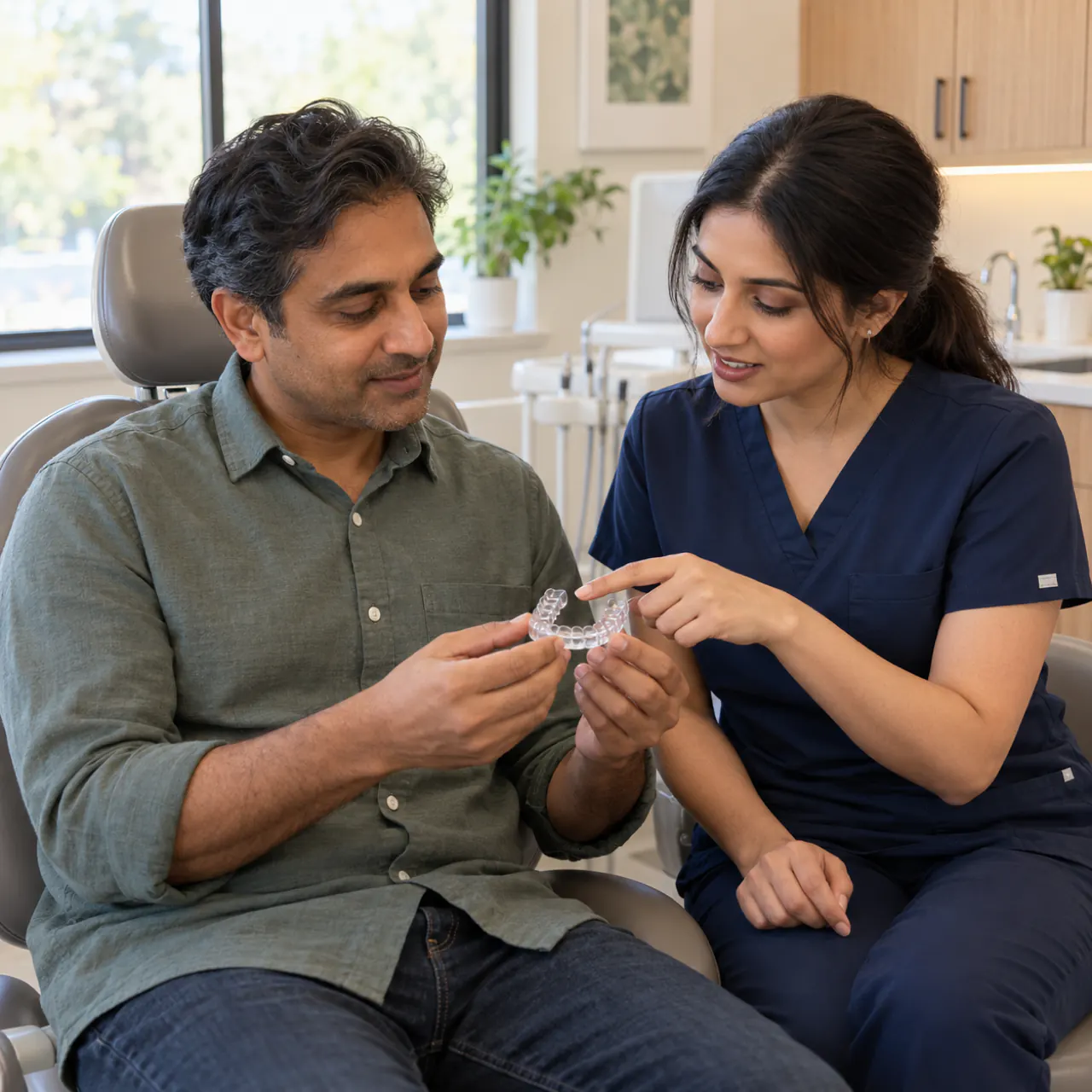
Splint details
How a splint differs from a nightguard, and what we monitor.
Both appliances cover the teeth, but their purpose, design, and follow-up are different.
Splint compared with a nightguard
- Purpose is jaw muscle and joint comfort, not only tooth protection
- Usually made from firm acrylic with a carefully finished surface
- Contacts are adjusted more precisely and more often
- Typically involves several follow-up visits in the first months
- Wear schedule is set by your dentist and may change over time
- Response is tracked alongside your jaw symptoms
- Not designed to permanently reposition the jaw or bite
- May later be replaced by a simpler protective nightguard
What we monitor during splint therapy
- Changes in jaw pain, tension, and morning stiffness
- How wide and how comfortably you can open
- Clicking, catching, or locking of the jaw joints
- Evenness of contacts on the splint surface
- Any change in how your natural teeth meet without the splint
- Wear marks or cracks in the appliance
- Gum and tooth comfort under the splint
- Whether a physician, physiotherapist, or specialist should be involved
Splint care in Guelph
Close follow-up without a long drive.
Splint therapy works best with regular check-ins during the first weeks, which is easier when your dental office is close by. Our Kortright Road West office offers evening and Saturday morning appointments that can make those short adjustment visits easier to fit in.
Related services
Related pages for jaw pain and appliances.
Questions patients ask
Occlusal splint FAQs
Patients considering a splint usually want to know how it differs from a nightguard and how long they will need it.
Is an occlusal splint the same as a nightguard?
They can look similar, but an occlusal splint is usually designed and adjusted specifically to help with jaw muscle or joint symptoms, with more follow-up visits. A nightguard is mainly intended to protect the teeth from grinding.
How long will I need to wear an occlusal splint?
It varies. Some patients use a splint nightly for a period of months and then only as needed, while others continue to wear it long term for protection. Your dentist will review your progress and adjust the plan with you.
Will a splint fix my TMJ problem?
A splint may help reduce muscle tension and discomfort for many people, but it is not a guaranteed fix. Jaw disorders often involve several factors, so splints usually work best alongside self-care, habit changes, and sometimes physiotherapy or specialist input.
Should I wear my splint during the day?
Most splints are worn at night. Your dentist may suggest short daytime wear during flare-ups or periods of heavy clenching, but we generally avoid continuous all-day wear unless it is specifically recommended.
Why does my bite feel strange after taking the splint out?
A brief odd feeling for a few minutes after removing a splint is common as the muscles readjust. If your bite feels different for longer, or your teeth no longer meet the way they used to, stop wearing it and contact us so we can check it.
Can a splint make jaw pain worse?
Occasionally a splint needs adjustment before it feels right, and some patients do not respond to it. If your pain increases or new symptoms appear, call us rather than pushing through, so we can review the fit and the plan.
Why are follow-up visits needed for a splint?
As your jaw muscles relax, the way your teeth contact the splint can change. Follow-up visits let us keep the contacts even and make sure the splint is still helping.
Can I get an occlusal splint without jaw pain?
If your main concern is grinding damage without jaw symptoms, a protective nightguard is often the simpler choice. Your dentist will recommend the appliance that best matches your situation.