

Urgent infection care in Guelph
Dental abscess treatment that deals with the source, not just the symptoms.
An abscess is a pocket of infection that forms at the tip of a tooth root or in the gum beside a tooth. It rarely clears up on its own, even when the pain fades. At Ironwood Dental, we locate where the abscess started, relieve pressure when it is safe to do so, and walk you through the options for treating the tooth itself.
Why treat it promptly
An abscess is a contained infection that still needs a way out.
Pain from an abscess often comes and goes, which can make it tempting to wait. Treating it early usually means simpler care and a better chance of keeping the tooth.
Relieve pressure and pain
When pus builds up, it creates pressure that can make a tooth throb. Draining the area or opening the tooth, when appropriate, can bring meaningful relief.
Find where the infection began
An abscess may start inside the tooth's nerve or in a deep gum pocket. Knowing which one guides the right treatment.
Improve the chance of saving the tooth
Many abscessed teeth can be kept with root canal treatment or gum therapy when the tooth is treated before too much bone or structure is lost.
Limit spread to nearby areas
Untreated abscesses can spread into surrounding bone and soft tissue. Earlier care helps keep the infection contained.
Use antibiotics wisely
Antibiotics may help when infection is spreading or you have certain health conditions, but they do not remove the source. We explain when they are and are not useful.
Understand every option
We explain whether root canal treatment, gum treatment, or extraction makes sense for your tooth, so you can decide with clear information.
Your abscess visit
From finding the source to planning the fix.
Abscess care usually happens in stages. The first visit focuses on diagnosis and relief, and the follow-up focuses on treating the tooth so the infection does not return.
Tell us about your symptoms
We ask when the pain started, whether it throbs or comes and goes, and whether you have swelling, fever, or a bad taste. We also review your medical history and any medications or allergies.
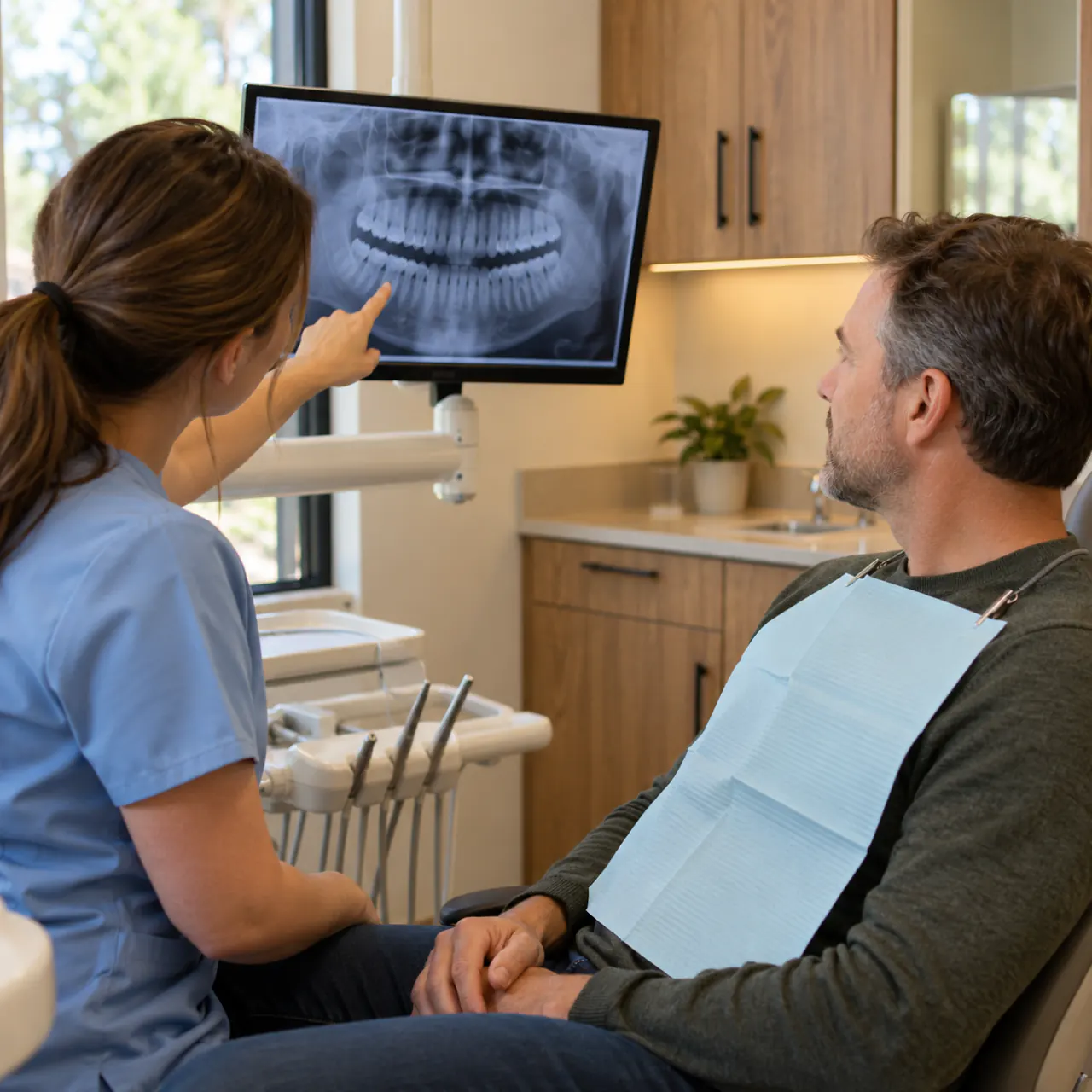
Focused exam and x-rays
Your dentist examines the tooth, gums, and surrounding tissue and usually takes an x-ray of the area. Images help show changes near the root tip or in the bone.
Tooth testing
Gentle tapping, cold testing, and gum measurements help us tell whether the infection started in the nerve or in the gum. This step is quick, and we explain each test as we go.
Relief when it is appropriate
Depending on the findings, we may drain the abscess, open the tooth to release pressure, or clean a gum pocket. Local anaesthetic keeps the area numb while we work.
Medication guidance
If antibiotics or pain relief are appropriate for you, we explain how to take them safely. We also tell you which signs mean you should call us back or seek urgent medical care.
Plan the definitive treatment
Before you leave, we schedule the follow-up treatment that addresses the cause, such as completing a root canal, gum therapy, or extraction. Finishing this step helps prevent the abscess from coming back.
Abscess types and signs
What we look for and what treatment can involve.
Not every abscess starts in the same place, and the type affects which treatment fits best.
Signs that may point to an abscess
- A pimple-like bump on the gum that may drain
- A salty, sour, or bad taste in the mouth
- Throbbing pain that may spread to the ear, jaw, or neck
- Pain when biting or pressing on one tooth
- A tooth that feels slightly raised or loose
- Swelling of the gum, cheek, or jaw
- Sensitivity that has changed or suddenly stopped
- Tender or swollen glands under the jaw
What abscess treatment may involve
- Draining a periapical abscess at the root tip
- Treating a periodontal abscess in a deep gum pocket
- Starting or completing root canal treatment
- Cleaning and smoothing the root surface below the gum
- Removing a tooth that cannot be restored
- Antibiotics when infection is spreading or health factors call for them
- A crown or restoration to protect a treated tooth
- A follow-up x-ray to monitor bone healing
Abscess care in Guelph
Prompt infection care on Kortright Road West.
If you notice a pimple-like bump on your gum, a bad taste, or a tooth that aches when you bite, call our Kortright Road West office and tell us about the symptoms. We set aside time for urgent concerns and will help you understand how soon you should be seen. Ironwood Dental has helped Guelph families through dental infections for more than 25 years.
Related services
Related infection and emergency care
Questions patients ask
Dental abscess FAQs
These are the questions we hear most often from patients who suspect an abscess. If you have facial swelling that affects breathing, swallowing, or vision, or swelling with a high fever, call 911 or go to the nearest emergency department right away.
Will a dental abscess go away on its own?
Usually not. The pain may ease if the abscess drains or the nerve dies, but the infection often remains in the bone. Treatment is needed to remove the source and help prevent the abscess from returning.
Is a dental abscess an emergency?
An abscess should be seen promptly, ideally within a day or two. If you have facial swelling that affects breathing, swallowing, or vision, or swelling with a high fever, call 911 or go to the nearest emergency department right away.
Can antibiotics alone cure a tooth abscess?
Antibiotics may help control spreading infection, but they cannot reach and clean out the source inside the tooth or gum pocket. Once you stop taking them, the infection may come back unless the tooth is treated.
Should I pop the bump on my gum?
Please do not squeeze or pierce it yourself. It can push bacteria deeper or injure the gum. Warm salt-water rinses are fine while you wait, and we can drain the area safely if that is appropriate.
Can an abscessed tooth be saved?
Often, yes. Root canal treatment or gum therapy may allow you to keep the tooth, depending on how much bone and tooth structure remain. If the tooth cannot be restored, we will talk about extraction and replacement options.
Why did my tooth stop hurting even though the bump is still there?
When the nerve inside a tooth dies or the abscess finds a path to drain, pain can fade. The infection may still be active, so it is still important to have the tooth examined.
What is the difference between a tooth abscess and a gum abscess?
A periapical abscess starts inside the tooth and forms at the root tip, while a periodontal abscess starts in a deep gum pocket beside the tooth. They can feel similar, which is why testing and x-rays matter.
How long does it take to recover after abscess treatment?
Many people feel noticeably better within a few days once pressure is relieved and the source is treated. Bone around the root can take months to heal fully, so we may suggest a follow-up x-ray.