

Supportive dentistry in Guelph
Gentle help for your mouth while you focus on getting through treatment.
Chemotherapy and radiation can bring mouth sores, dryness, taste changes, and tender gums. We help you keep your mouth as comfortable and clean as possible during this time, and we work with your oncology team to decide when any dental treatment is safe.
How we can help
Comfort, protection, and quick answers when something changes.
You do not need to manage mouth side effects on your own. Our role is to ease discomfort, prevent new problems, and respond quickly when something comes up.
Relief for sore mouths
We can suggest gentle rinses, cleaning methods, and food choices that may make mouth sores more manageable.
Support for dry mouth
Saliva substitutes, frequent sips of water, and other strategies can help with dryness and protect teeth from decay.
Protect teeth from decay
Fluoride varnish or prescription fluoride toothpaste may be recommended, especially after radiation to the head and neck.
Watch for infection
Fungal infections such as thrush and gum flare-ups are more likely during treatment. We can help spot them early and work with your physician on treatment.
Coordinate safe timing
When dental treatment is needed, we confirm timing with your oncology team based on your blood counts and treatment cycle.
Help for denture wearers
Dentures can rub on tender tissues. We can adjust fit and suggest when to leave them out to give your mouth a rest.
Visits during treatment
How we plan care while you are in active treatment.
Visits during cancer treatment are shorter and more focused than usual. Timing often depends on your blood counts and how you are feeling that week.
Share your current treatment
Let us know your treatment type, cycle schedule, and any recent changes. Your oncology team's contact details help us coordinate.
Check with your care team
Before any procedure, we may ask your oncologist about recent blood counts and any precautions. Routine checks of your mouth can usually go ahead with less coordination.
Gentle exam of the mouth
We look for sores, infection, dryness, and changes in your teeth and gums. We use extra care around tender areas.
Comfort-focused cleaning
If a cleaning is appropriate, we keep it gentle and pause whenever you need. Some patients only need a light polish and check during treatment.
Address urgent problems
A painful tooth or infection is treated as conservatively as possible and in step with your oncology team. Larger elective work is usually postponed until you recover.
Adjust your home routine
We update your brushing, rinsing, and fluoride plan based on what we see that day. You also leave with clear signs that mean you should call us or your care team.
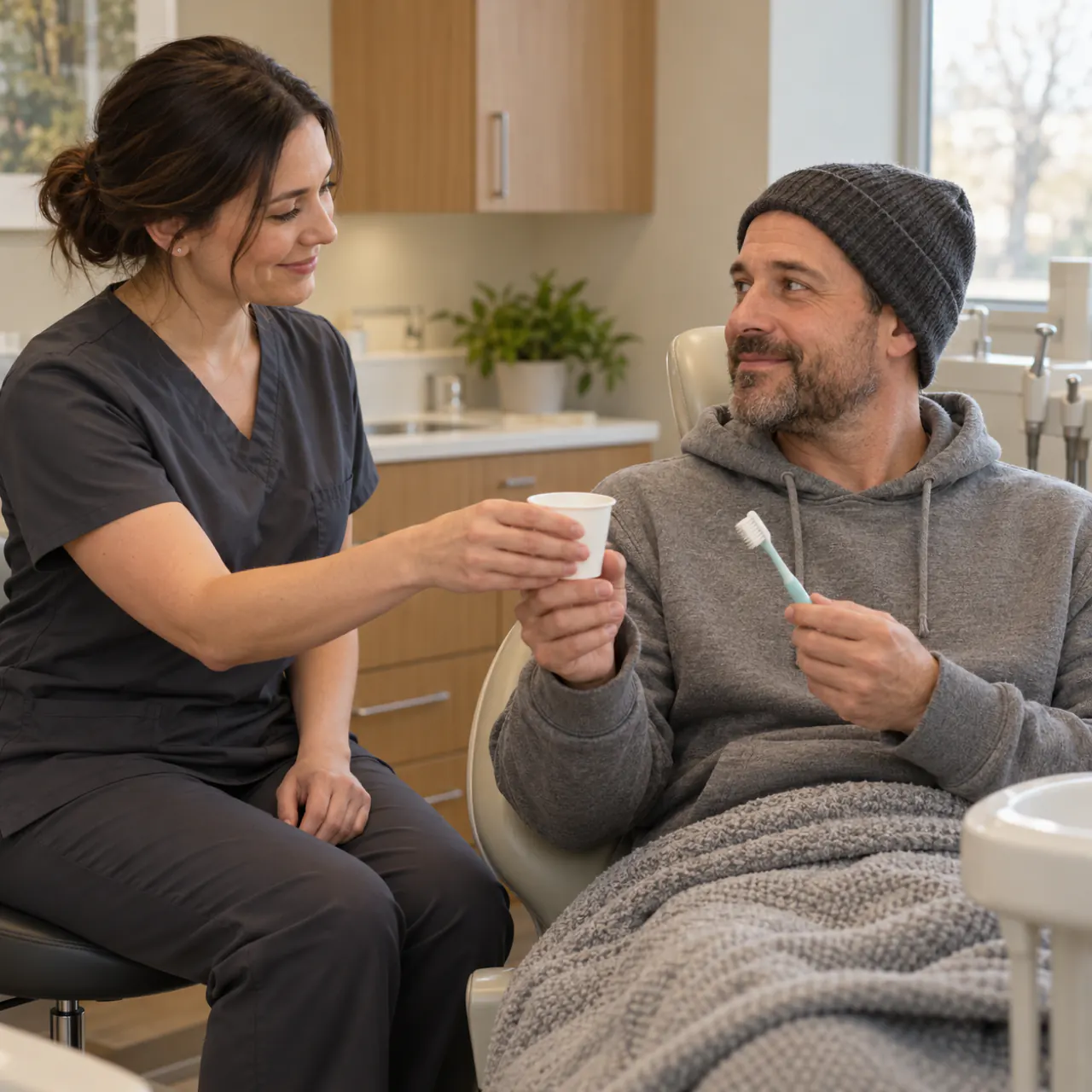
Managing side effects
Common mouth changes and gentle ways to cope.
Not everyone has the same side effects, and they vary with treatment type. These are the concerns we see most often and the general strategies we suggest.
Common mouth changes during treatment
- Mouth sores and inflamed tissues, also called mucositis
- Dry or sticky mouth, especially after head and neck radiation
- Changes in taste or a metallic taste
- Tender or bleeding gums
- White patches that may signal a fungal infection
- Sensitive teeth
- Difficulty wearing dentures comfortably
- Jaw stiffness after radiation in some patients
Gentle strategies we may suggest
- An extra-soft toothbrush, softened in warm water
- Mild, alcohol-free rinses or salt and baking soda rinses as advised
- Frequent sips of water and saliva substitutes
- Fluoride toothpaste or varnish to protect enamel
- Soft, moist, non-spicy foods on sore days
- Removing dentures overnight and cleaning them daily
- Lip balm for dry, cracked lips
- Gentle jaw-stretching exercises if your care team approves
Flexible scheduling
Appointments that bend around your treatment days.
Our Guelph office is open into the evening Monday to Thursday and on Friday and Saturday mornings, which can help when you are fitting dental visits between infusions or radiation sessions. Call +1 519 763 1488 and let us know you are in treatment so we can find a time when you are likely to feel your best.
Related services
Related support before and after treatment.
Questions patients ask
Mouth care during chemotherapy and radiation
Your oncology team is your main source of guidance during treatment. These answers explain how dental care fits alongside their advice.
Can I go to the dentist during chemotherapy?
Yes, and checking in can be helpful. Routine exams and gentle care are often possible, but the timing of procedures may depend on your blood counts. We coordinate with your oncology team before any treatment that could cause bleeding or infection.
How can I ease mouth sores from chemotherapy?
Keeping your mouth clean with an extra-soft brush, using mild rinses your care team approves, and choosing soft, non-spicy foods may help. Avoid alcohol-based mouthwash and tobacco. Tell your oncology team if sores make it hard to eat or drink, as they may offer additional treatment.
Is it safe to floss during cancer treatment?
Many patients can continue gentle flossing, but if your platelet counts are low or your gums bleed easily, your care team may suggest pausing or switching to softer tools. We can suggest an approach that fits your situation.
Why does my mouth feel so dry after radiation?
Radiation to the head and neck can affect the glands that make saliva. Dryness can range from mild to significant and may last beyond treatment. Sipping water, using saliva substitutes, and protecting teeth with fluoride are important steps.
What should I do if I get a toothache during treatment?
Call us promptly and let your oncology team know. A dental infection is more serious when your immune system is lowered. If you have facial swelling affecting breathing, swallowing, or vision, or swelling with a high fever, go to the nearest emergency department or call 911 right away.
Should I keep wearing my dentures?
If dentures rub on sore areas, it may help to wear them only for meals or short periods and leave them out at night. Clean them daily to reduce the risk of fungal infection. We can adjust them if they are causing sore spots.
Can I have dental work like fillings or crowns during treatment?
Elective work is usually postponed until you have recovered. Urgent problems, such as a painful cavity or broken tooth, may be treated with your oncology team's input. We focus on keeping you comfortable and preventing infection.
Do I need to stop any medications before dental care?
No, please do not stop or change any medication without advice from your oncologist or physician. Instead, bring an up-to-date medication list so we can plan care around it.