

Medically aware dentistry in Guelph
Dental care that works with your diabetes management, not against it.
Diabetes and gum health affect each other. Higher blood sugar can make gum disease more likely and slower to heal, and inflamed gums may make blood sugar harder to manage. Our team pays close attention to your gums, plans visits around meals and medications, and works alongside your physician and diabetes educator.
Why it matters
Healthy gums are part of managing diabetes well.
People with diabetes are more prone to gum disease, dry mouth, and slower healing. Regular, attentive dental care helps keep these problems small.
Closer watch on gum health
We measure gum pockets and bleeding carefully, so early gum disease is found and treated before it advances.
A recall schedule that fits
Some patients with diabetes benefit from more frequent hygiene visits to keep inflammation under control.
Help with dry mouth
Dry mouth is common with diabetes and some medications. We suggest ways to ease it and protect teeth from decay.
Thoughtful treatment planning
When surgery or extractions are needed, we consider your blood sugar control and healing so treatment goes as smoothly as possible.
Safe appointment timing
We plan around meals and medications to lower the chance of low blood sugar during your visit.
Working with your care team
With your permission, we can share relevant dental findings with your physician, since gum inflammation and blood sugar may influence each other.
Your visit
A visit planned around your blood sugar and routine.
A few small adjustments make dental visits easier and safer when you live with diabetes. Here is what to expect.
Update your health information
We ask about your type of diabetes, medications, recent A1C if you know it, and any complications. Changes since your last visit are important too.
Eat and take medications as usual
Unless your physician advises otherwise, have your normal meal and medication before the appointment. Bring your meter and a fast-acting sugar source.
Quick check on how you feel
We ask how your blood sugar has been today and whether you feel well. If you feel shaky, sweaty, or unwell during the visit, tell us right away.
Detailed gum and tooth exam
Your dentist and hygienist check gum pockets, bleeding, recession, decay, and any slow-healing sores. X-rays may help assess bone around the teeth.
Cleaning tailored to your gums
Your hygienist removes plaque and tartar, and may recommend a deeper cleaning if gum pockets are deeper. Comfort options are always available.
Plan home care and follow-up
We review brushing, interdental cleaning, and dry mouth care, and recommend how often to return. You leave knowing which mouth changes to report.
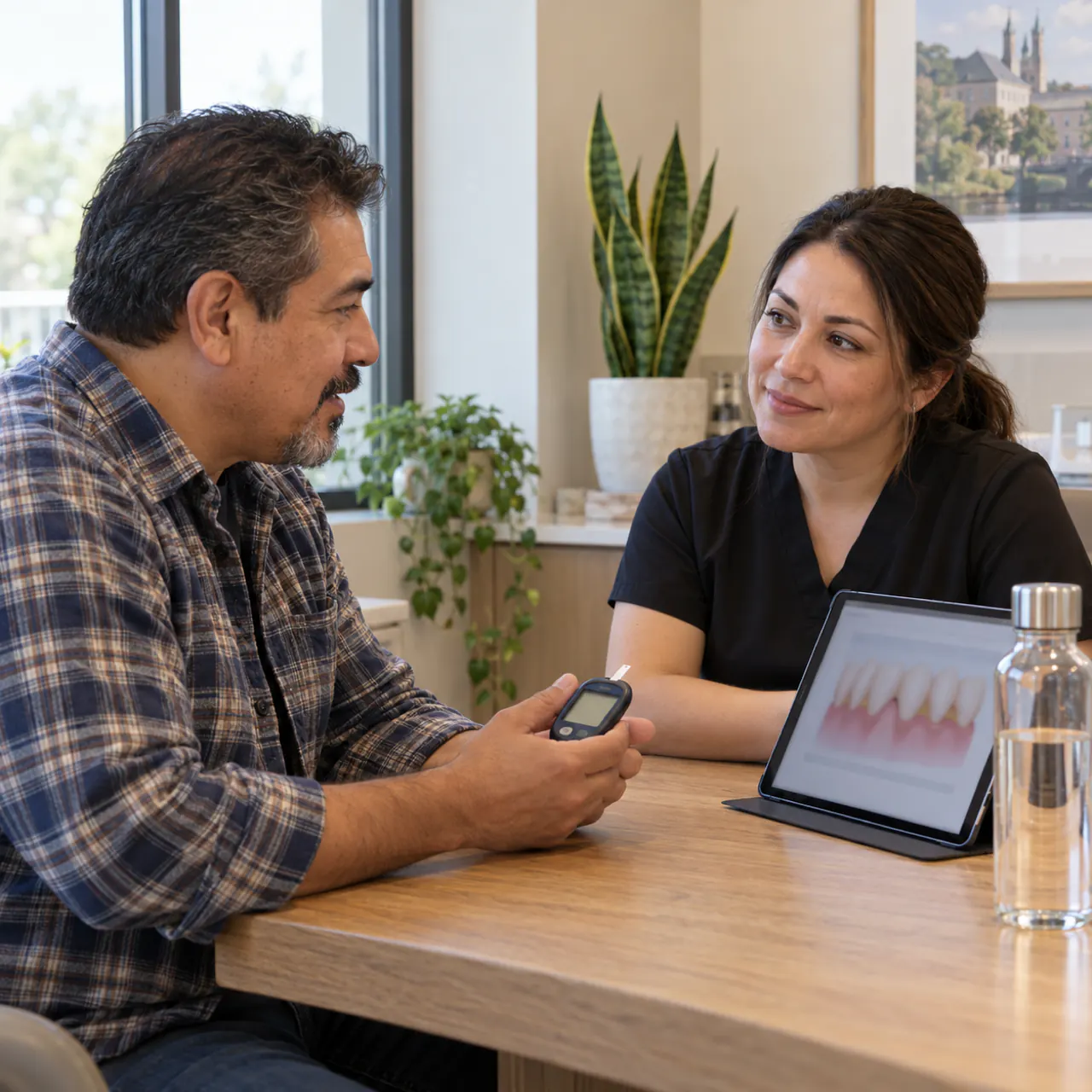
What we watch
Mouth changes linked to diabetes and how we help.
Not everyone with diabetes develops these problems, especially when blood sugar is well controlled. These are the areas we monitor and the care we may suggest.
Mouth changes we watch for
- Bleeding, swollen, or receding gums
- Deepening gum pockets and bone loss
- Loose teeth or changes in your bite
- Dry mouth and related cavities
- Fungal infections such as thrush
- Slow-healing sores or extraction sites
- Burning mouth or taste changes
- Infections around wisdom teeth or dental work
Care and advice we may offer
- More frequent hygiene visits when helpful
- Scaling and root planing for deeper pockets
- Interdental brushes or water flossers suited to your gums
- Fluoride to protect teeth from decay related to dry mouth
- Sugar-free options for treating dry mouth
- Planning surgery around good blood sugar control
- Denture fit checks to prevent sore spots
- Sharing gum health updates with your physician when you agree
Guelph appointments
Morning visits and steady routines.
Many patients with diabetes prefer morning appointments after a usual breakfast and medication, and our Kortright Road West office opens at 8 AM six days a week. Booking the same time of day for each visit can make it easier to keep your routine steady.
Related services
Care that supports gum health with diabetes.
Questions patients ask
Diabetes and dental health FAQs
These are common questions from patients with type 1 and type 2 diabetes. Your physician remains your main guide for diabetes management.
Does diabetes affect my teeth and gums?
It can. People with diabetes, especially when blood sugar is higher, are more likely to develop gum disease, dry mouth, and infections, and may heal more slowly. Good blood sugar control and regular dental care help reduce these risks.
Can gum disease make my diabetes harder to control?
Research suggests that gum inflammation and blood sugar can influence each other. Treating gum disease is a sensible part of overall health, and some patients find it supports their diabetes management. Your physician remains your main guide for blood sugar targets.
Should I eat before my dental appointment?
In most cases, yes. Have your usual meal and take your medications as prescribed so your blood sugar stays steady. If a procedure requires special instructions, we will tell you ahead of time and you can check with your physician.
What if my blood sugar drops during the visit?
Tell us right away if you feel shaky, sweaty, confused, or lightheaded. We will stop and help you take a fast-acting sugar. Bringing your meter and a sugar source to each appointment is a good habit.
Do I need more frequent cleanings with diabetes?
Not always, but many patients with diabetes benefit from hygiene visits more often than every six months, especially if they have had gum disease. We recommend an interval based on your gum health.
Is it safe to have a tooth pulled if I have diabetes?
Yes, extractions are commonly done for patients with diabetes. We consider your recent blood sugar control and may adjust timing to support healing. Complex surgical cases may be coordinated with a trusted specialist.
Why is my mouth always dry?
Higher blood sugar and some diabetes medications can reduce saliva. Dry mouth raises the risk of cavities and infections. Sipping water, using sugar-free gum or lozenges, and fluoride toothpaste may help, and we can suggest other options.
Should I stop my diabetes medication before dental surgery?
No, never stop or change your diabetes medication without advice from your physician. If a procedure requires fasting or other changes, we will coordinate with you and your physician ahead of time.