

Inclusive dentistry in Guelph
Dental care that adjusts to the patient, not the other way around.
Autism, intellectual and developmental disabilities, sensory processing differences, epilepsy, complex medical conditions, and many other needs can make a typical dental visit overwhelming. We get to know each patient, plan with families and care teams, and build up care gradually so visits can become more familiar and manageable over time.
Our approach
Every patient deserves care that fits who they are.
There is no single way to make dental visits work for everyone. We listen first, then adjust the environment, the pace, and the plan.
Plans built with families
Parents, caregivers, and support workers know what helps. We use that knowledge to shape every visit.
Sensory-aware care
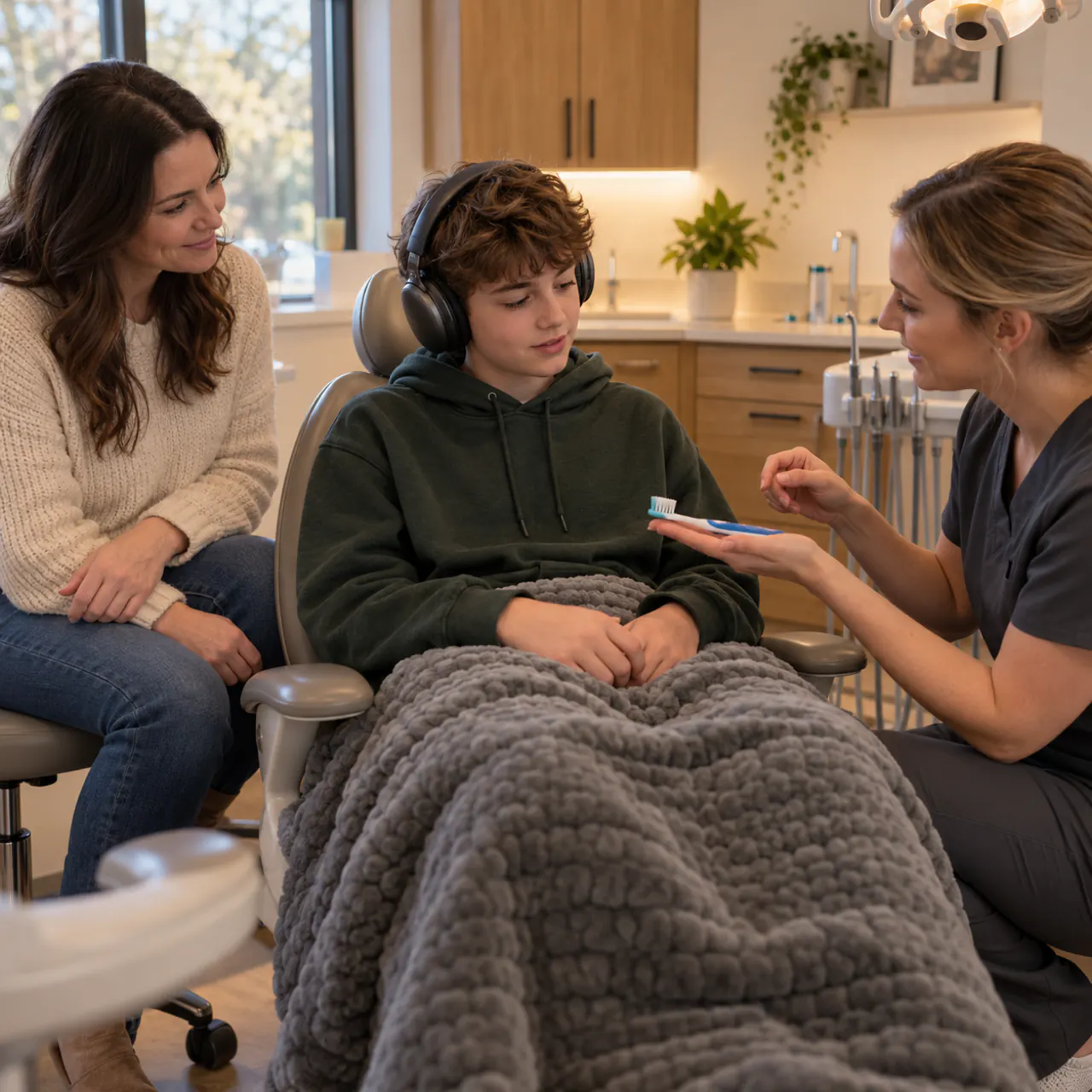
We can dim lights, reduce noise, explain sounds before they happen, and welcome headphones or comfort items.
Gradual desensitization
Short familiarization visits help some patients get used to the office, the chair, and the tools before treatment begins.
Prevention first
Fluoride, sealants, and frequent hygiene visits help reduce the need for more involved treatment later.
Medical coordination
For patients with heart conditions, seizures, bleeding disorders, or other medical needs, we work with physicians to plan safely.
Referral when it helps
When care under sedation or in a hospital setting would be safer, we can coordinate with a trusted specialist.
Building comfort
How we plan and pace visits.
For many patients, the first goal is simply a positive experience. Treatment follows as trust and familiarity grow.
Talk with us before the visit
We ask about the patient's communication style, triggers, comforts, and medical history. A pre-visit questionnaire or phone call helps us prepare.
Prepare with a preview
Some families find it helps to share photos of the office or practise opening wide at home. We can suggest simple steps to try.
A short, positive first visit
The first appointment may focus on meeting the team and sitting in the chair. If the patient is ready, we may count teeth or do a quick check.
Build up step by step
Over several visits, we work toward a full exam, cleaning, and x-rays if needed. We move at the patient's pace and celebrate progress.
Plan treatment thoughtfully
If treatment is needed, we explain options to the patient and family, including staged care or referral. Complex cases may be coordinated with a trusted specialist.
Keep a routine going
We set a regular recall schedule and record what worked. Consistency helps visits become easier over time.
Adaptations
Ways we adjust visits and plan treatment.
These are adaptations families often find helpful. We choose what fits each patient and update the plan as we learn more.
Visit adaptations we can offer
- Quieter appointment times
- Dimmed lights or sunglasses for light sensitivity
- Tell-show-do explanations before each step
- Headphones, weighted blankets, or comfort items from home
- Visual schedules or simple picture cards
- Shorter visits with frequent breaks
- The same team members when possible
- Caregivers present for reassurance
Planning considerations we review
- Seizure history and triggers
- Heart conditions and any antibiotic recommendations from physicians
- Bleeding or clotting disorders
- Medications that cause dry mouth or gum changes
- Swallowing difficulties or gag reflex concerns
- Feeding tubes or special diets
- Consent and substitute decision-maker arrangements
- Whether sedation or hospital-based care should be explored with a specialist
Guelph family dentistry
A consistent team, visit after visit.
Familiar faces and a predictable routine can make a real difference. When you book at our Kortright Road West office, we try to schedule the same team members and a similar time of day for each visit, and we keep notes about what helps so nobody has to explain it twice.
Related services
Related care for patients who need extra support.
Questions patients ask
Special healthcare needs dentistry FAQs
Families and caregivers often have questions about how visits work. Here are answers to the ones we hear most.
Do you see patients with autism?
Yes. We welcome children and adults on the autism spectrum and adapt visits to sensory needs and communication styles. Talking with us before the first visit helps us prepare.
What if my child or family member will not sit in the chair?
That is okay. Early visits may simply involve getting familiar with the room and team. Some patients sit on a parent's lap or start with an exam in a regular chair. We build up gradually.
Can a parent or caregiver stay in the room?
Yes, caregivers are welcome and often help the patient feel safe. You can also help us understand cues the patient uses to communicate discomfort.
Is sedation available?
For some patients, sedation or treatment under general anaesthetic may be the safest way to complete care. This is planned around the patient's needs, and complex cases may be coordinated with a trusted specialist or hospital dental program.
How can we prepare at home?
Practise opening wide, counting teeth, or brushing for a short time each day. Looking at photos of a dental office or reading a simple social story about the visit can also help.
My family member has a heart condition. Are antibiotics needed?
Only certain heart conditions call for antibiotics before some dental procedures. We will review the medical history and confirm with the patient's physician or cardiologist.
How often should visits be scheduled?
Many patients with special healthcare needs benefit from more frequent preventive visits, both for oral health and to keep visits familiar. We recommend a schedule after getting to know the patient.
What should I bring to the first appointment?
Bring a medication list, physician contact details, consent documents if applicable, and any comfort items. Notes about what works well and what to avoid are very helpful.