

Implant candidacy in Guelph
An honest answer to the question: are dental implants right for me?
Before anyone talks about implant brands, timelines, or crowns, we need to know whether your mouth and health can support an implant. An implant assessment at Ironwood Dental looks at the foundation first, so the answer you get is based on your exam rather than a sales pitch.
Why assess first
Knowing where you stand saves time, worry, and guesswork.
An implant can only be as stable as the bone, gums, and overall health around it. A dedicated assessment helps us spot what is ready, what needs attention, and what other options deserve a look.
A clear starting point
You leave knowing whether implants look possible now, possible after preparation, or less suitable than another option.
Hidden issues found early
Gum inflammation, active decay, or infection near the gap can affect implant success, so we look for them before planning anything.
Bone checked, not assumed
Bone often shrinks after a tooth is lost. Imaging helps us see whether there is enough height and width or whether grafting may need to be discussed.
Your health in the picture
Smoking, diabetes, certain medications, and past treatments can influence healing. We talk through these openly so nothing surprises you later.
Alternatives on the table
Bridges, partial dentures, and complete dentures are reviewed alongside implants so you can compare fairly.
No pressure to decide
The assessment gives you information to take home, think about, and discuss with family before choosing a path.
Your assessment visit
What happens during an implant assessment.
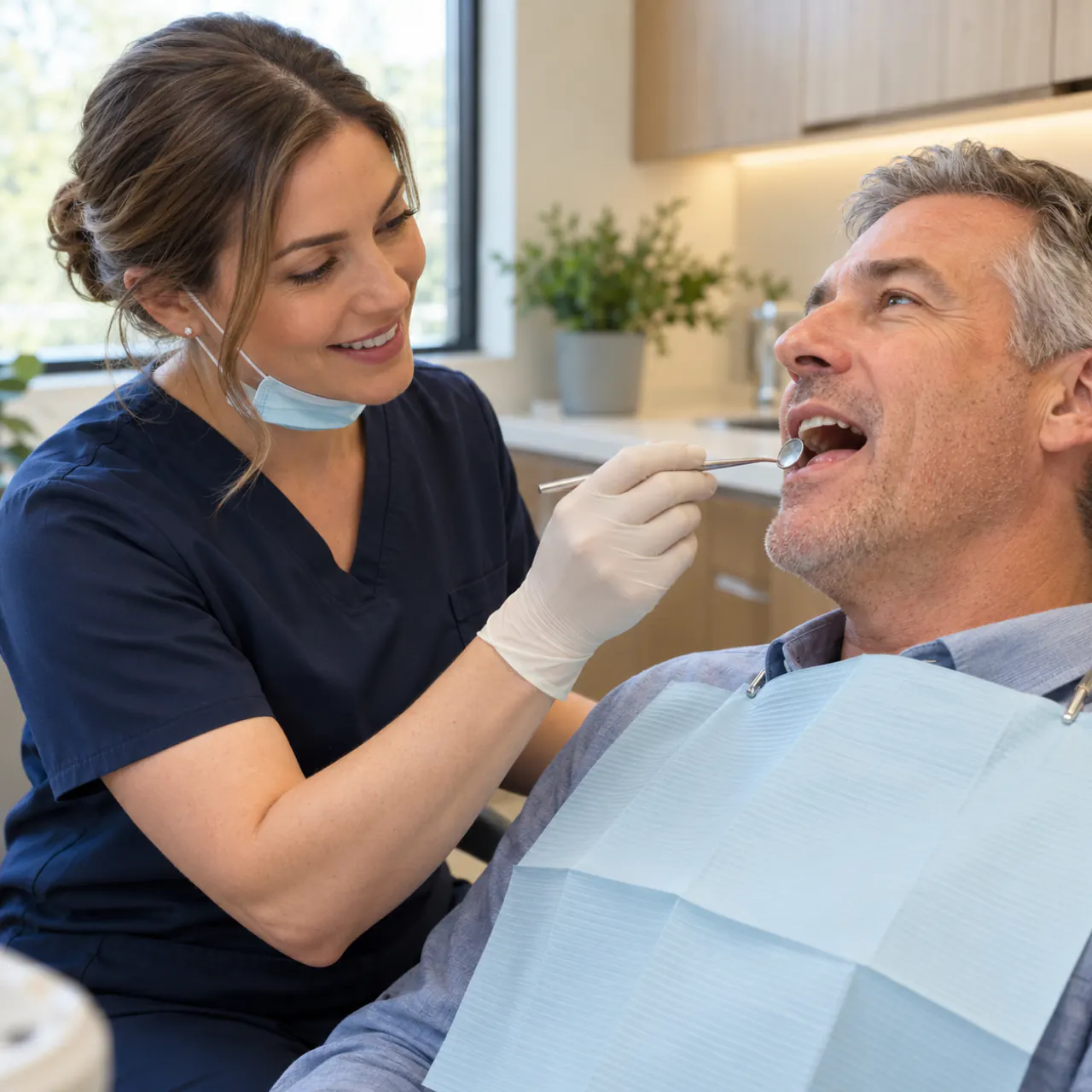
This appointment is about gathering information and talking it through. No implant is placed, and you are never asked to commit on the spot.
Talk about the missing tooth
We start by asking how the tooth was lost, how long the space has been there, and what bothers you most about it. Your goals for chewing, appearance, and comfort guide the rest of the visit.
Review medical history
Your dentist reviews medications, health conditions, and habits such as smoking or clenching. If anything may affect healing, we explain why and whether input from your physician would help.
Examine teeth and gums
We check the neighbouring teeth, gum health, and the soft tissue over the gap. Gum disease or decay elsewhere is noted, since it is usually treated before implant work begins.
Look at your bite
We check how your upper and lower teeth meet and how much room there is for a future crown. Heavy grinding or a crowded bite can change which option makes sense.
Imaging when needed
Dental x-rays, and a 3D CBCT scan when appropriate, show bone height, width, and nearby structures such as nerves and sinuses. We only recommend imaging that helps answer the candidacy question.
Your findings and options
We explain what we found in plain language and outline the realistic routes forward. If implants look suitable, the next step is a detailed treatment plan; if not yet, we explain what would need to change first.
What we look at
The factors that shape implant candidacy.
Candidacy is rarely a simple yes or no. These are the areas your dentist reviews before giving a recommendation.
Mouth and jaw factors
- Bone height and width at the missing-tooth site
- Gum thickness and health around the space
- Condition of the teeth on either side of the gap
- Signs of active gum disease or past bone loss
- Distance to the sinus or lower jaw nerve
- Space available for a future crown or bridge
- Bite forces, grinding, and clenching patterns
- How long the tooth has been missing
Health and lifestyle factors
- Smoking or vaping habits
- Diabetes and how well it is managed
- Medications that affect bone or healing
- History of radiation to the head or neck
- Ability to clean around an implant at home
- Willingness to keep regular maintenance visits
- Comfort with a staged treatment timeline
- Personal goals and priorities for the space
Close to home
Implant assessments on Kortright Road West.
Our office at 570 Kortright Rd W is an easy drive from the south end, the University of Guelph area, and the Hanlon. Evening appointments Monday to Thursday make it easier to book an assessment without missing a full workday.
Related services
Where an implant assessment can lead.
Questions patients ask
Dental implant assessment FAQs
Patients often have these questions before they book. Your own answers will depend on your exam and imaging.
How do I know if I am a candidate for dental implants?
Most healthy adults with enough jawbone and healthy gums can be considered, but the only way to know is an exam with imaging. Factors such as bone loss, gum disease, smoking, and some medical conditions may mean extra steps or a different option.
Am I too old for dental implants?
Age alone does not rule out implants. What matters more is your general health, bone quality, healing ability, and whether you can care for the implant over time. Many older adults are assessed and treated successfully.
Can I get an implant if a tooth has been missing for years?
Often yes, but bone usually shrinks after a tooth is lost, so long-standing gaps are more likely to need grafting or a modified plan. Imaging shows us how much bone remains.
Do I need a CBCT scan for an implant assessment?
Not every assessment requires one. A 3D scan is usually recommended when we need precise measurements of bone and nearby structures, which is common once implant treatment looks likely.
Can smokers get dental implants?
Smoking can slow healing and raise the risk of implant problems, but it does not automatically exclude you. We discuss the risks honestly and may recommend reducing or stopping smoking before and after treatment.
I have diabetes. Can I still have an implant?
Many people with well-managed diabetes can be considered for implants. We may ask about your recent blood sugar control and coordinate with your physician so healing is as predictable as possible.
What if the assessment says implants are not right for me?
We explain why and what alternatives may work, such as a bridge or a partial or complete denture. Sometimes the answer is not yet, and treating gum disease or rebuilding bone first can change the picture.
Does an implant assessment commit me to treatment?
No. The assessment is for information and planning. You can take the findings home, ask questions, and decide on your own timeline.