

Implant foundations in Guelph
When there is not enough bone for an implant, grafting may help rebuild the foundation.
Jawbone naturally shrinks after a tooth is lost, and gum disease or infection can wear it down further. Bone grafting adds material to areas that are too thin or too short so an implant can be placed with better support. We explain whether you need it, which type fits your situation, and how it changes your timeline.
Why grafting matters
A stronger base can open the door to implant treatment.
Grafting is not needed for everyone. When it is, it can turn a site that would not hold an implant into one that may.
More patients may qualify
Grafting can make implants possible for people who were told their bone was too thin or had shrunk too far.
Better implant positioning
With enough bone, an implant can be placed where the final crown needs it, rather than wherever bone happens to remain.
Support for the gums
Restoring bone volume helps the gum line sit more naturally around the final tooth, which matters most in visible areas.
Protects a fresh socket
A graft placed when a tooth is removed may help limit the bone shrinkage that usually follows an extraction.
Room in the upper jaw
In the back of the upper jaw, the sinus can limit bone height. A sinus graft may create the space an implant needs.
A longer-lasting foundation
An implant surrounded by healthy bone is generally better supported over time than one placed in a borderline site.
The grafting process
How bone grafting fits into implant care.
Grafting can happen before implant placement, at the same visit, or when a tooth is removed. Your plan depends on how much bone is missing and where.
Measure the bone
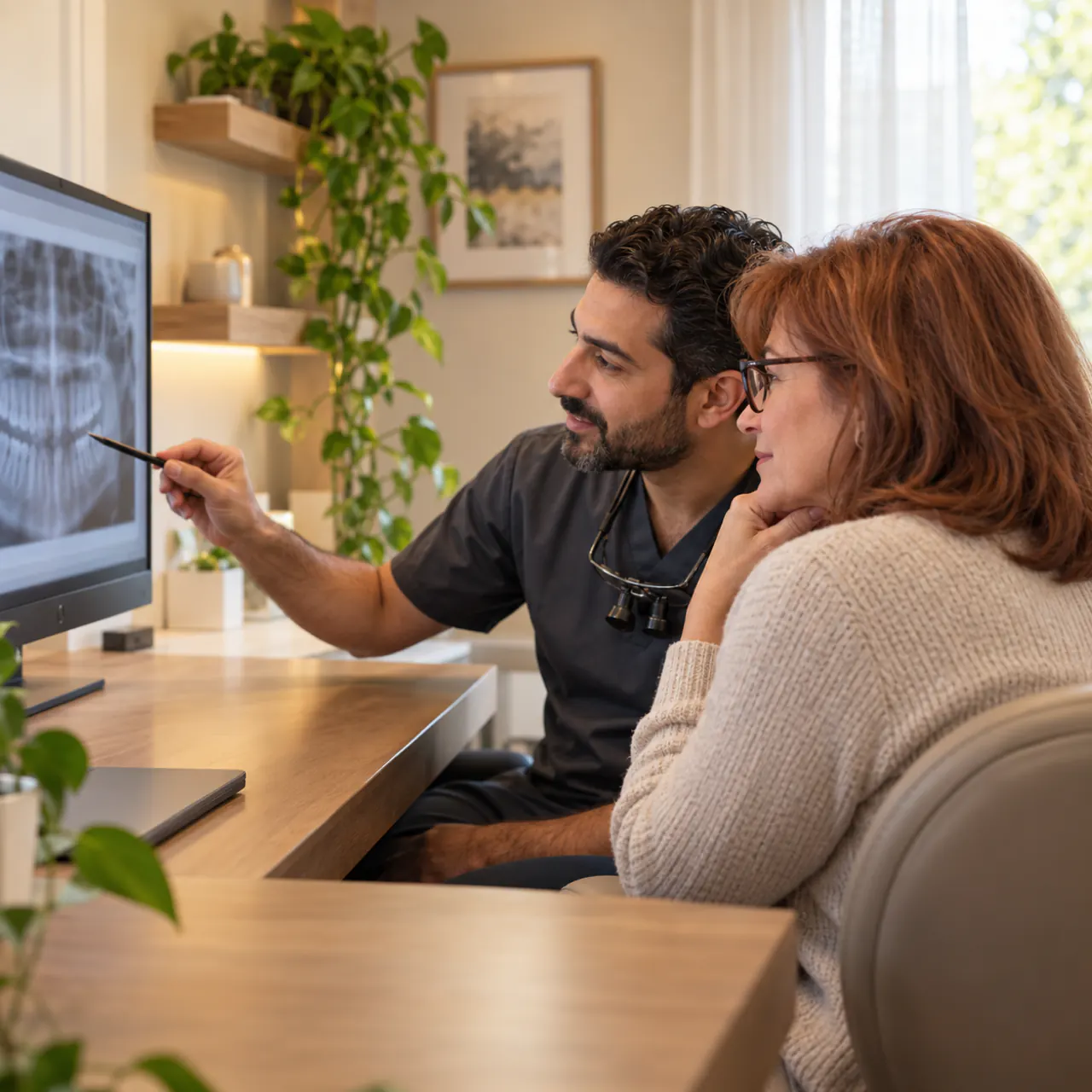
We review x-rays and usually a 3D CBCT scan to see bone height, width, and density. This shows whether grafting is needed and how much.
Choose the approach
Your dentist explains the type of graft that suits the site and the material options. If the case is complex, we discuss coordinating with a specialist.
Prepare for the procedure
We review your medications, health conditions, and any pre-procedure instructions. If you take blood thinners or have medical concerns, we coordinate with your physician rather than changing anything on your own.
Graft placement
The area is numbed and the graft material is placed and covered so it can heal undisturbed. Comfort options are discussed ahead of time.
Healing and check-ins
Grafts usually need several months to mature into bone that can hold an implant. We check healing at follow-up visits and let you know what is normal.
Move to implant placement
Once imaging shows the graft has matured, the implant stage is scheduled. In some cases a small graft and the implant can be placed at the same visit.
Types and healing
Common grafting approaches and what recovery looks like.
Your dentist will explain which approach suits your site. Larger or more complex grafts may be coordinated with a trusted specialist.
Grafting approaches we may discuss
- Socket grafting at the time of extraction
- Ridge grafting to add width to a narrow jaw
- Vertical grafting to add height in shrunken areas
- Sinus floor grafting in the upper back jaw
- Small grafts placed alongside an implant
- Protective membranes over graft material
- Bone substitute or donor-sourced graft materials
- Specialist coordination for larger reconstructions
What healing usually involves
- Mild swelling or tenderness for a few days
- Soft foods and chewing away from the site
- Avoiding smoking, which can slow graft healing
- Gentle rinsing as directed, without vigorous spitting
- Not blowing your nose forcefully after a sinus graft
- Small graft granules that may feel gritty early on
- A follow-up to check the gums and stitches
- A waiting period of several months before the implant
Planned in Guelph
Grafting decisions made with your whole plan in mind.
Because grafting adds healing time, we map it out with you at our Kortright Road West office so you understand each stage before it starts. When a case calls for specialist surgical care, we coordinate referrals and stay involved in the restorative side close to home.
Related services
Related implant and bone services.
Questions patients ask
Dental bone grafting FAQs
General answers to common grafting questions. Your dentist will tailor advice to your imaging and health.
Why do I need a bone graft before getting an implant?
An implant needs enough surrounding bone to hold it firmly. If your jaw has shrunk after a tooth loss or been damaged by gum disease or infection, a graft may rebuild the area so the implant has proper support.
Is bone grafting painful?
The area is numbed during the procedure, and most patients describe soreness afterward rather than sharp pain. Discomfort and swelling are usually manageable with the aftercare we recommend, and we review comfort options before treatment.
How long does a bone graft take to heal before an implant?
Healing time depends on the graft size and location, but it often takes several months. Small grafts placed with an implant follow the implant's healing schedule, while larger grafts usually need to mature first.
Where does the graft material come from?
Graft materials may be bone substitutes, donor-sourced bone that is processed for safety, or occasionally your own bone. Your dentist explains which options suit your site and why.
What is a sinus lift?
A sinus lift adds bone beneath the floor of the sinus in the upper back jaw, where bone height is often limited. It may be needed before an implant can be placed in that area, and complex sinus cases may be coordinated with a specialist.
Can the graft and implant be done at the same time?
Sometimes. If only a small amount of bone is missing and the implant can still be stable, both may be done together. Larger defects usually need to heal first.
What can I eat after a bone graft?
Soft, cool, or lukewarm foods are usually best for the first several days, and you should chew away from the graft site. We give you specific instructions based on your procedure.
Can a bone graft fail?
Most grafts heal as planned, but smoking, infection, pressure on the site, or certain health conditions can interfere. Following aftercare instructions and attending follow-up visits help us catch any concerns early.