

Denture refurbishing in Guelph
Rebasing keeps the denture teeth you know and gives them a completely new foundation.
Sometimes the teeth on a denture still look and bite well, but the pink base has become stained, porous, cracked, or no longer fits. A rebase replaces the entire base material while keeping the original teeth in their positions. It sits between a reline, which only resurfaces the inside, and a full replacement.
When rebasing makes sense
A middle path between a reline and a brand new denture.
Rebasing works best when you like your denture teeth and bite, but the material holding them has reached the end of its life.
Keep a bite you are used to
Your existing teeth stay in the same positions, so the denture still looks and chews the way you are accustomed to.
A completely new base
Old, porous base material that holds stains and odours is replaced, rather than just being covered over.
A better fit to your gums
The new base is made from an up-to-date impression of your mouth, so it can match how your gums have changed.
Address a weakened base
Bases that have been repaired many times or show fatigue cracks can be renewed, which may reduce the risk of another break.
Often simpler than a new denture
Because the teeth are already set, rebasing can involve fewer appointments than making a new denture from the start.
Freshen the appearance
A new pink base can look healthier and more natural next to your gums than one that has yellowed or darkened.
The rebasing process
How a denture gets a new base without losing its teeth.
Rebasing requires lab time, so your denture is usually away for part of a day or longer. We plan around that so you are not caught without teeth unexpectedly.
Assess the denture
We check the teeth for wear, the base for cracks and staining, and how the denture fits and bites. If the teeth are badly worn, a new denture may be a better option.
Prepare the inside
The fitting surface is prepared so it can take an accurate impression. Any sharp or overextended edges are adjusted first.
Take the impression
Impression material is placed in the denture and you close gently while it sets. This captures the current shape of your gums with the teeth in their correct bite.
Lab rebasing
In the lab, the old base is removed and new base material is processed around the original teeth. The teeth stay in the same relationship to each other.
Fit and bite check
When the denture returns, we try it in, check pressure areas, and adjust the bite as needed. We make sure it feels comfortable before you leave.
Follow-up visit
A short follow-up lets us refine any spots that become tender as you wear it. Most patients settle in quickly since the teeth are familiar.
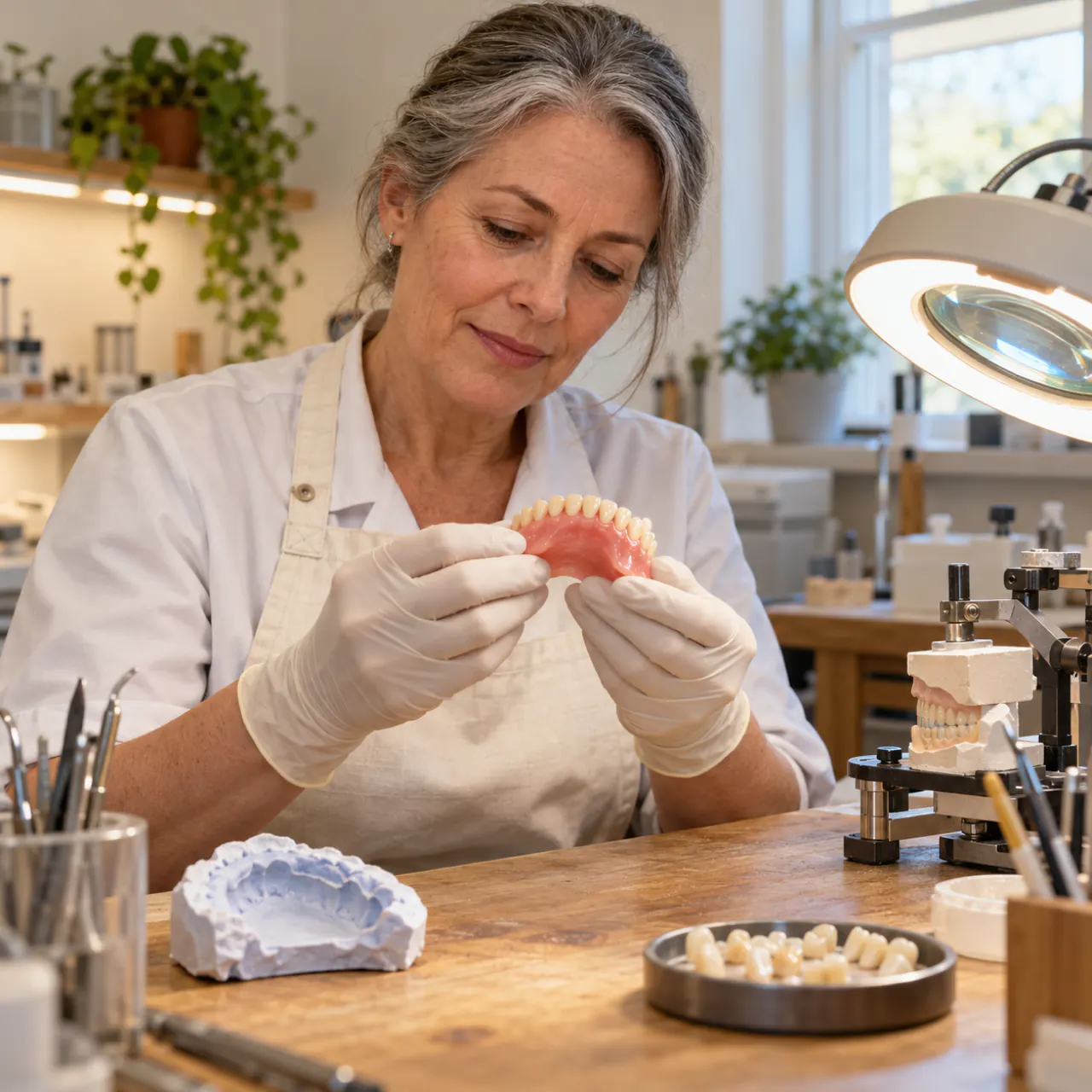
Rebase, reline, or replace?
Signs a rebase may help, and how it compares.
We examine the teeth, the base, and the fit together before recommending which approach makes the most sense.
Signs your denture may need a rebase
- The base has darkened or become blotchy over the years
- Odour or staining remains even after professional cleaning
- The base has been repaired more than once
- Small fatigue cracks are appearing in the base
- The fit has loosened and earlier relines are layered up
- The base feels rough or porous to your tongue
- Your teeth still look good and your bite feels right
- You want to keep the look of your current denture
How rebasing compares with other options
- A reline adds new material to the inside surface only
- A soft reline adds a cushioning layer for tender gums
- A rebase replaces the entire pink base around the teeth
- A rebase keeps the original teeth and their positions
- Worn or chipped teeth may need replacing at the same time
- A new denture is usually better if the teeth are very worn
- A new denture may also be better if the bite has collapsed
- Your exam determines which option fits your denture
Planning around your schedule
Rebasing appointments at our Guelph office.
Because a rebase means time without your denture, we work with you to choose a day that suits your routine, such as a morning appointment with pickup later. Our Kortright Road West office is open early Friday and Saturday, which many patients find convenient for denture lab work. Let us know about any events coming up so we can schedule around them.
Related services
Related denture services
Questions patients ask
Denture rebasing FAQs
What patients ask when they are told a rebase might be an option.
What is the difference between a rebase and a reline?
A reline adds a new layer of material to the inside of the denture where it touches your gums. A rebase replaces the entire pink base, keeping only the original teeth. Rebasing is usually chosen when the base itself is worn out, not just the fit.
How long will I be without my denture?
Rebasing involves lab processing, so the denture may be away for several hours or longer depending on the lab schedule. We discuss the timing in advance so you can plan for it.
Will my denture look different after rebasing?
The teeth stay the same, so your smile should look familiar. The pink base will look fresher, and the fit should feel snugger against your gums.
Can any denture be rebased?
Not every denture is a good candidate. If the teeth are heavily worn, the bite has collapsed, or the denture no longer suits your face, a new denture is usually a better investment. We assess this first.
Is rebasing cheaper than a new denture?
Rebasing often involves less lab work than a new denture because the teeth are reused. The difference depends on your situation, and we can review the options and estimates with you before deciding.
Can a partial denture be rebased?
Some acrylic partial dentures can be rebased. Partials with metal frameworks are different, and a reline of the acrylic areas may be more appropriate. We check which applies to yours.
Will I need adjustments after a rebase?
A short follow-up visit is common to adjust any pressure spots. Because the teeth and bite are familiar, most patients settle in faster than with a brand new denture.
How often can a denture be rebased?
There is no strict rule, but each rebase depends on the teeth still being in good condition. Over time the teeth wear and the denture is better replaced, which we monitor at your checkups.