

Denture refitting in Guelph
Your gums change shape over the years, and a reline brings your denture back in step with them.
After teeth are lost, the bone and gums under a denture slowly shrink. A denture that fit snugly when it was made can gradually start to rock, lift, or trap food underneath. A reline adds fresh material to the fitting surface so it matches the current shape of your mouth, often restoring much of the original hold.
Why reline
A snugger fit without starting over.
Relining is one of the most common ways to extend the life of a denture. It is especially useful when the teeth and appearance are still good.
Less rocking and lifting
Matching the denture to your current gum shape can reduce the movement that makes eating and speaking difficult.
Fewer food traps
Gaps between the denture and gums let food slip underneath. A reline closes those gaps.
More even pressure
A well-fitting denture spreads chewing force across the ridge rather than concentrating it in a few spots.
Less reliance on adhesive
Many patients find they need less adhesive once the denture fits closely again.
Extends denture life
When the teeth and base are in good condition, relining can keep a denture in service for longer.
Helps protect the ridge
A loose denture can create uneven pressure that may contribute to irritation and bone changes. Restoring the fit helps distribute force more gently.
The reline visit
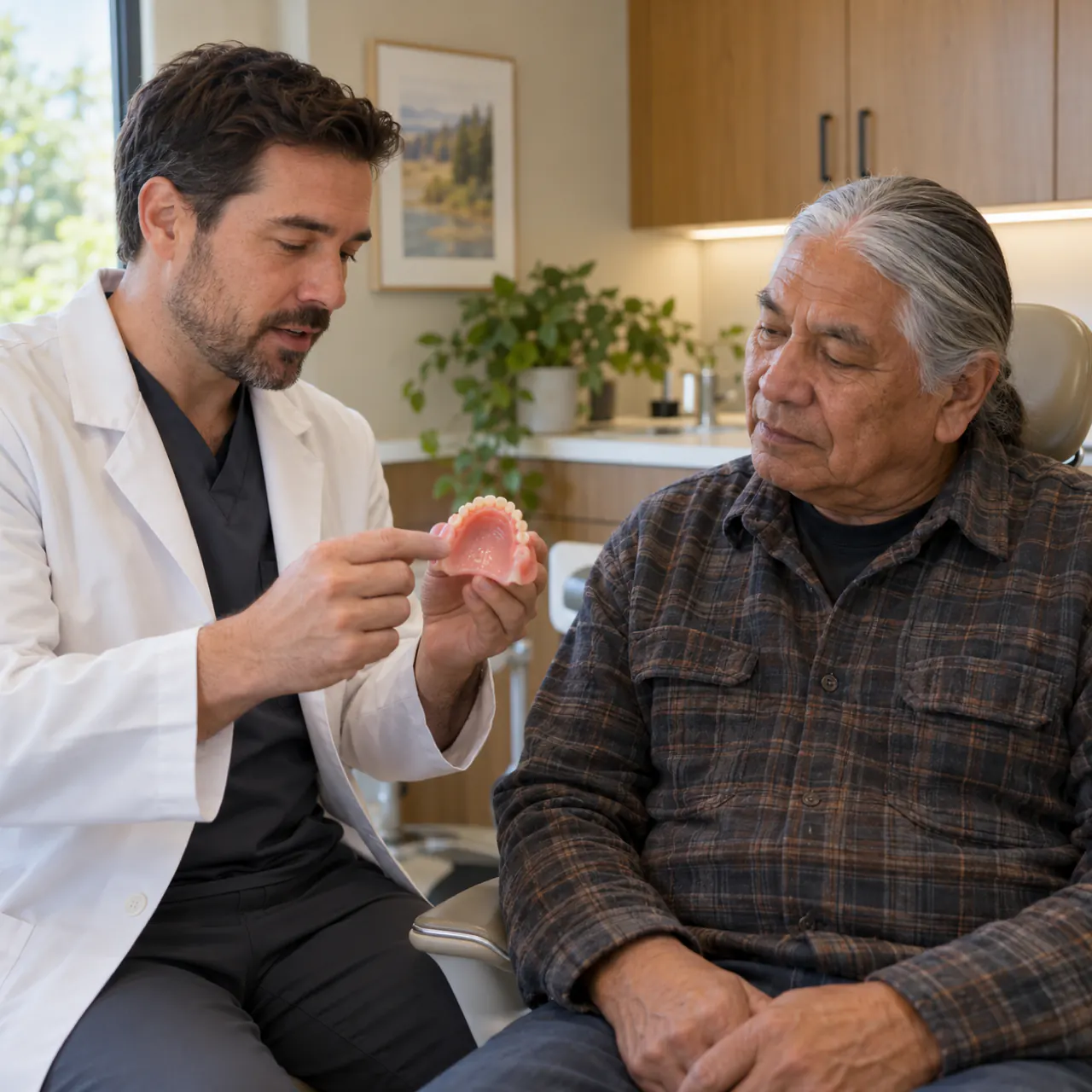
How a hard reline is done.
Relines can be done chairside, while you wait, or through a lab for a more durable result. We explain which approach suits your denture.
Check the fit
We examine how the denture sits, where it moves, and the condition of your gums. Sore areas are allowed to settle first if needed.
Decide on chairside or lab
A chairside reline can be done in one visit while you wait. A lab reline takes longer but often uses a more durable material.
Prepare the denture
The fitting surface is roughened slightly and any overextended edges are trimmed. This helps the new material bond well.
Record your gum shape
Reline material or an impression material is placed inside the denture, and you close gently in your normal bite. It captures the current shape of your ridges.
Finish and polish
For a chairside reline, the material sets and is trimmed and polished. For a lab reline, the denture goes to the lab and returns later with the new lining processed in.
Try in and adjust
We check comfort and bite and adjust any pressure spots. A follow-up visit may be suggested as your gums adapt to the closer fit.
Timing and types
When to reline and which kind fits your situation.
Regular fit checks at your exams help us recommend a reline before looseness causes sore spots or bone pressure.
Signs your denture may need a reline
- The denture rocks when you chew on one side
- Food keeps getting trapped underneath
- You need more adhesive than you used to
- The lower denture lifts when you talk
- The upper denture drops when you laugh or cough
- Sore spots appear in new places
- It has been several years since the last reline
- You have lost or gained significant weight
Types of relines and when they are used
- Chairside hard reline for a quick fit improvement in one visit
- Lab-processed hard reline for a longer-lasting result
- Soft reline for thin or tender gums that need cushioning
- Temporary tissue conditioner while inflamed gums heal
- Relines after healing from immediate dentures
- Relines after implant placement under an existing denture
- Partial denture relines in acrylic areas
- Rebasing when the whole base, not just the fit, needs renewing
Refits near you
Denture relines at our Kortright Road West office in Guelph.
Many patients in Guelph wear the same denture for years, relining it as needed rather than replacing it. Keeping track of when your last reline was done is part of our routine checkups. If your denture has suddenly become loose, call us and we will try to see you soon.
Related services
Related denture fit services
Questions patients ask
Denture reline FAQs
Common questions about refitting a denture.
How often should dentures be relined?
Many dentures benefit from a reline every few years, but it varies with how quickly your gums change. We check the fit at your regular exams and recommend a reline when it would help.
Can I be without my denture during a reline?
A chairside reline is usually done while you wait. A lab reline may mean being without the denture for part of a day or longer, and we plan that timing with you.
What is the difference between a hard and soft reline?
A hard reline uses a firm material similar to the denture base and is the standard choice for most people. A soft reline uses a cushioning material for tender or thin gums, but it tends to need replacing more often.
Why not just use more adhesive?
Adhesive can help hold a denture, but it does not fix the gaps that make a denture loose. Using large amounts can hide an ill-fitting denture that may irritate the gums. A reline addresses the fit directly.
Can home reline kits work?
We advise against home reline kits. They can make the fit uneven, change your bite, and be difficult to remove later, sometimes making a professional reline harder.
Will my denture feel different after a reline?
It should feel snugger. Some patients notice slight pressure at first as the gums get used to closer contact, and a quick adjustment can help if a spot feels tender.
When is a reline not enough?
If the denture teeth are badly worn, the base is cracked, or the denture no longer suits your face or bite, a rebase or new denture may be more effective. We will explain which option fits best.
Do immediate dentures need relining?
Usually yes. Gums shrink considerably in the months after extractions, so immediate dentures often need a reline once healing settles, and sometimes a temporary soft lining in the meantime.