

Denture tooth work in Guelph
One missing denture tooth can usually be replaced without remaking the whole denture.
A denture tooth can chip, wear flat, or pop off the base, and a partial denture may need a new tooth added when a natural tooth is lost. In many cases we can replace or add that single tooth, matching its shade and shape to the teeth around it, so your denture looks complete again and your bite stays balanced.
Why replace a single tooth
Restore your smile and bite without starting over.
A gap in a denture affects more than looks. It can change how you chew and put extra stress on the remaining denture teeth.
A complete smile again
A matched replacement tooth fills the gap so your denture looks natural when you talk and smile.
Balanced chewing
Restoring the missing tooth helps your upper and lower teeth meet evenly, which keeps the denture stable.
Keep a denture you like
If the rest of your denture fits and looks good, replacing one tooth preserves what is already working.
Adapt a partial as your mouth changes
When a natural tooth is lost, adding it to your partial can often be simpler than making a new partial.
Protect the neighbouring teeth
A gap can let opposing teeth over-erupt or put extra load on nearby denture teeth. Filling it helps prevent that.
Faster than a remake
Replacing a single tooth usually involves fewer steps and less time than making a whole new denture.
How tooth replacement works
From a gap in your denture to a matched, secure tooth.
The steps depend on whether you are replacing a denture tooth or adding a tooth to a partial after losing a natural one.
Look at what happened
We examine the denture and, if the tooth came off, the tooth itself. Knowing why it came off helps prevent it happening again.
Check the bite
We look at how your teeth meet. A tooth that pops off repeatedly may be taking too much force from the opposing teeth.
Impression for partial additions
If a natural tooth was lost, we take an impression with your partial in place. This lets the new tooth be positioned exactly in the space.
Choose the match
We select a tooth of matching shade, size, and shape. For front teeth, we may take extra care to blend it with its neighbours.
Bond the tooth
The new tooth is secured into the denture base with denture repair material, either in the office or through a lab. Any clasp changes are made at the same time.
Fit and adjust
You try the denture in, and we check that the new tooth looks right and meets the opposing teeth evenly. Small adjustments finish the job.
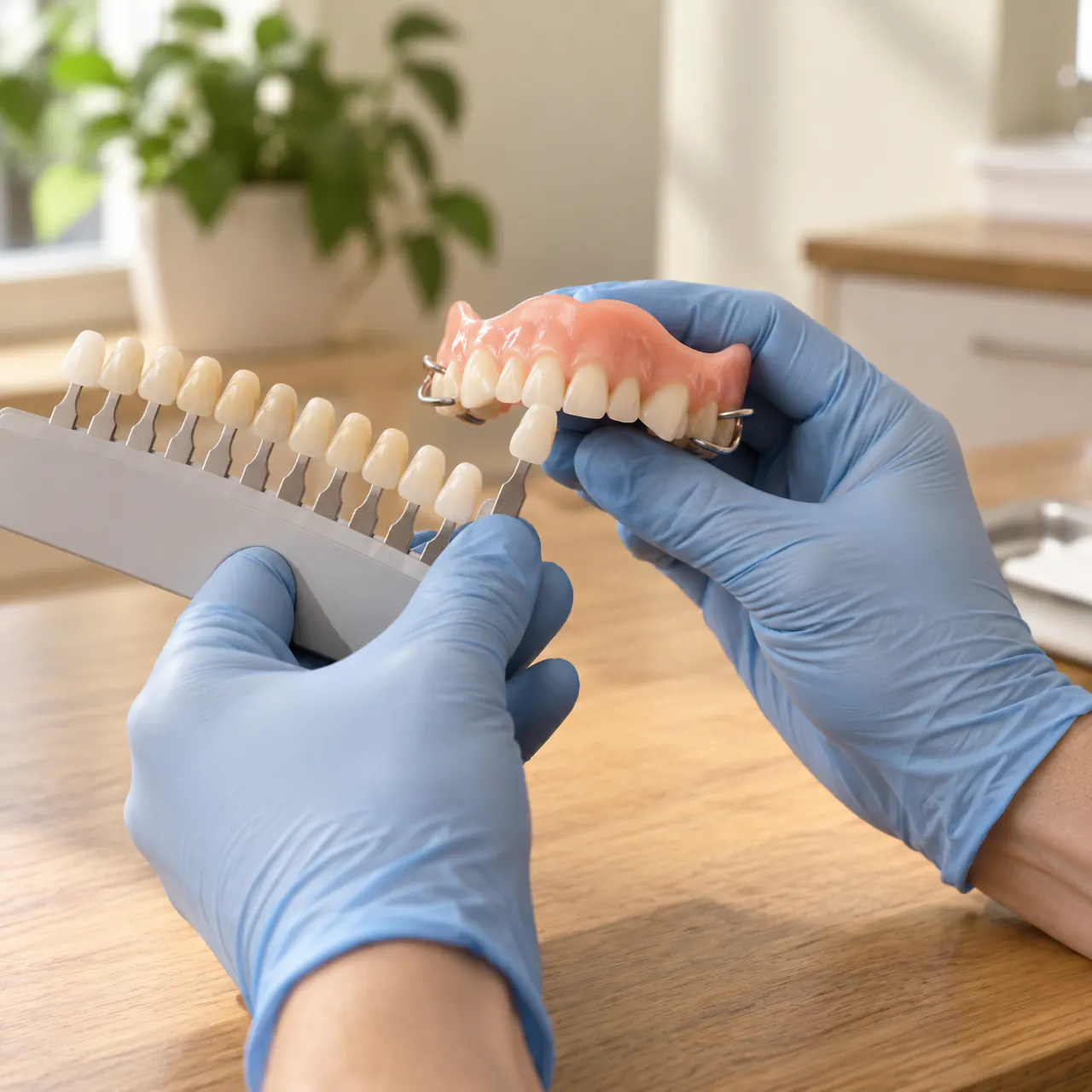
When it helps
Situations we see, and what a good match takes.
Shade, shape, and bite all need to line up for a replacement tooth to blend in.
Common situations
- A front denture tooth that popped off while biting
- A back denture tooth that chipped on something hard
- Teeth worn flat after years of use
- A natural tooth extracted next to a partial denture
- A tooth that broke under a clasp on a partial
- A denture tooth that has darkened or stained deeply
- A tooth that keeps coming loose in the same spot
- Adding a tooth after a bridge or crown failed nearby
What makes a good replacement
- A shade that blends with the other denture teeth
- A shape and size that match the tooth on the other side
- Correct position so the bite stays balanced
- A strong bond to the denture base
- Smooth margins with no rough edges at the gum
- Clasp changes when a partial needs a new grip point
- A check that wear on other teeth is not the real issue
- Advice on whether a rebase or new denture would be better long term
Smile repairs in Guelph
Denture tooth work at our Kortright Road West office.
Losing a front denture tooth before a family event or job interview is stressful, and we understand the urgency. Call our Guelph office and let us know when you need it back, and we will tell you what timing is realistic. If you have the tooth that came off, bring it with you.
Related services
Related denture services
Questions patients ask
Denture tooth replacement FAQs
Questions about replacing or adding teeth on a denture.
Can a tooth that fell off my denture be put back?
Sometimes the original tooth can be re-attached if it is intact. If it is chipped or lost, a new matching tooth is used. Bring the tooth with you if you have it.
Can you add a tooth to my partial denture?
Often, yes. When a natural tooth is lost next to a partial, a new tooth can usually be added to the existing partial, depending on its design. Partials with metal frameworks may need lab work to add a tooth.
Will the new tooth match the others?
We choose a replacement that matches the shade and shape of your existing denture teeth as closely as possible. Very old dentures with heavy staining or wear can be harder to match perfectly, and we will let you know.
How long does it take to replace a denture tooth?
Simple replacements can sometimes be done quickly, while additions to partials that need an impression or lab work take longer. We will give you an estimate when you call.
Why do my denture teeth keep coming off?
Repeated loss often points to heavy bite forces, a loose fit that lets the denture flex, or wear in the base. We look at these causes so the repair lasts.
Should I glue the tooth back on myself?
Please do not. Household glues are not safe for use in the mouth and can prevent a proper repair. Keep the tooth safe and bring it to us.
Is it worth replacing one tooth on an old denture?
If the denture still fits well and the other teeth are in good shape, replacing one tooth can be very worthwhile. If many teeth are worn or the fit is poor, a rebase or new denture might serve you better.
I just had a tooth extracted. Can I wear my partial?
Often you can, but the partial will have a gap until the new tooth is added. We may be able to add the tooth soon after the extraction, and we will advise you on timing as the area heals.