

Digital denture workflow in Guelph
Digital dentures use scans and computer design to plan your new teeth, with a stored record for the future.
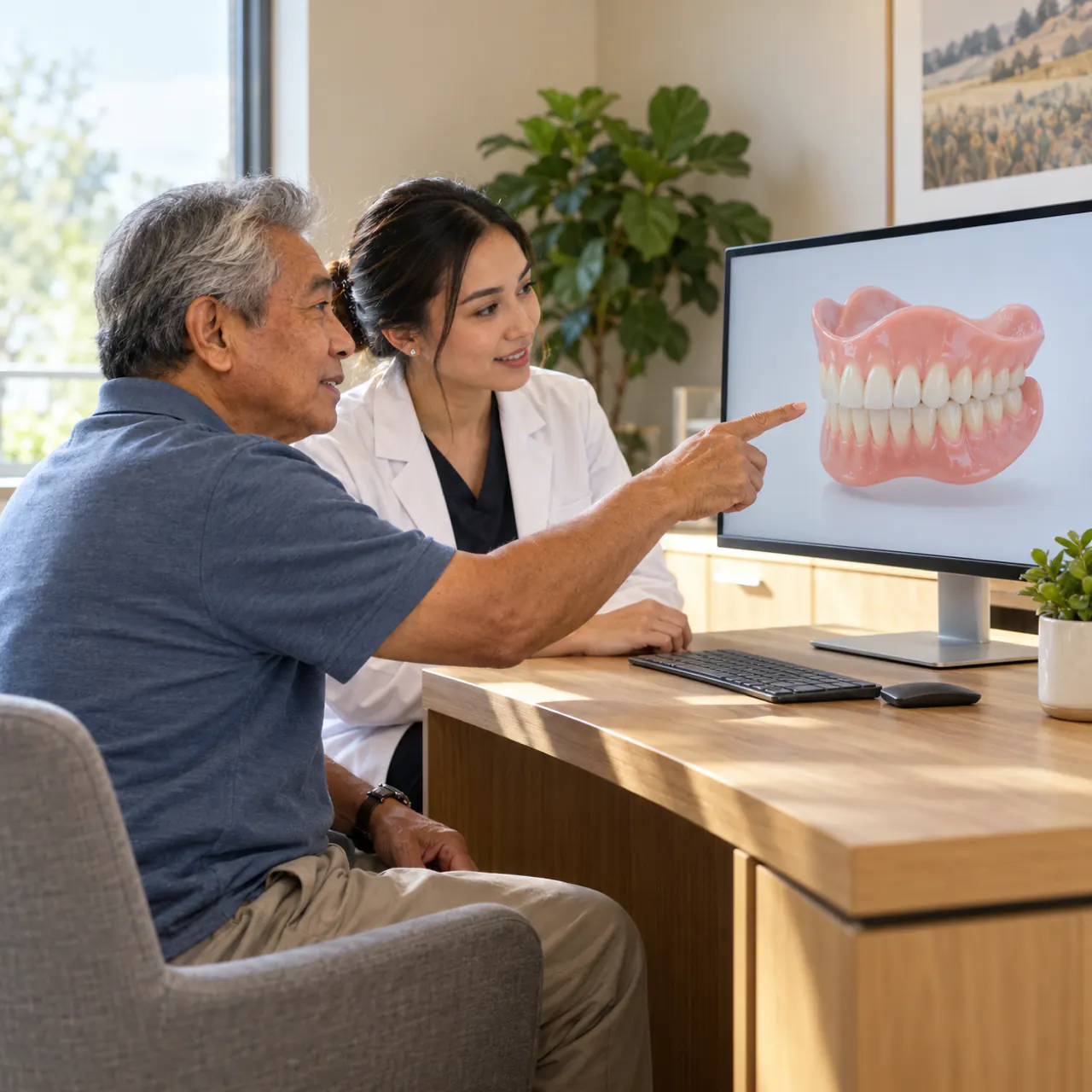
With digital dentures, some or all of the steps that were once done by hand, such as recording your mouth, setting the teeth, and making the denture, are carried out using digital scans and computer-aided design. The goal is the same as any denture: a comfortable fit, a natural look, and a good bite. Whether a digital approach suits you depends on your mouth and your denture needs.
What digital can add
Planning on screen, with a record you can return to.
Digital dentures are a different way of getting to a well-made denture. Here are the advantages that patients tend to appreciate.
A digital record of your denture
Your denture design can be stored, which may make it easier to produce a spare or replacement if your denture is lost or broken.
Preview the design
Digital planning lets the tooth arrangement be reviewed on screen before the denture is made, so changes can be discussed early.
Potentially fewer visits
Depending on the workflow and your case, a digital approach may combine some steps and reduce the number of appointments.
Consistent materials
Digitally manufactured denture bases are made from materials designed for dental use, produced in a controlled process.
Comfortable records
For some patients, an intraoral scan can replace part of the traditional impression process, which may be easier for those with a strong gag reflex.
Easy to copy a denture you like
If you are happy with your current denture, it may be scanned and used as a starting point for the new design.
How it works
The steps of a digital denture, from scan to fitting.
The exact steps vary with each case. Some dentures blend digital and traditional techniques, and we choose what will give you a comfortable, accurate fit.
Consultation and exam
We examine your mouth and any existing denture and talk about your goals. This helps decide whether a fully digital, partly digital, or traditional approach makes sense.
Scans and records
Your gums and bite are recorded using intraoral scans, impressions that are then scanned, or a scan of your current denture. Bite and facial measurements are taken as well.
Digital design
The denture is designed on a computer, with teeth arranged to suit your face, bite, and preferences. Tooth shade and shape are chosen with you.
Try-in
A trial version may be produced so you can see and feel the design in your mouth. Adjustments to look and bite are made before the final denture.
Manufacturing and delivery
The final denture is produced through digital fabrication and finished by hand. We fit it, check pressure spots, and adjust the bite.
Follow-up and stored file
As with any denture, you come back for adjustments as your gums settle. The digital design is kept on file for future reference.
Who it suits
Where digital dentures can help, and what stays the same.
Digital design changes how a denture is made, not the fundamentals of a good denture or the need for careful adjustment.
Where a digital approach may help
- Patients who want a backup copy of their denture
- Copying an existing denture that you like the look of
- Patients with a strong gag reflex during impressions
- Previewing tooth arrangement before committing
- Replacing a lost denture when a design is on file
- Implant dentures that need precise attachment positions
- Patients who prefer fewer appointments, when the case allows
- Combining digital records with traditional try-ins
What stays the same
- A thorough exam of your gums, tissues, and jaw
- Careful bite recording and choice of tooth shade
- A try-in so you can approve the look
- Adjustment visits after delivery
- An adaptation period for eating and speaking
- Daily cleaning and overnight removal
- Relines as your gums change over time
- Regular checkups and oral tissue screening
Denture planning in Guelph
Ask about digital dentures at our Kortright Road West office.
Guelph patients often ask us whether a digital denture is right for them after hearing about it from friends. We are happy to explain how the process works and whether it fits your situation during a denture consultation at our office. If a traditional approach would serve you better, we will tell you why.
Related services
Related denture options
Questions patients ask
Digital denture FAQs
Questions patients ask about how digital dentures are made.
What are digital dentures?
Digital dentures are dentures planned and made using digital scans and computer-aided design, and often digital manufacturing. They replace some manual steps in the traditional process while aiming for the same fit and appearance.
Are digital dentures better than traditional dentures?
Not automatically. Both approaches can produce excellent dentures. Digital workflows offer advantages such as stored records and design previews, while some cases are better suited to traditional techniques. We recommend what fits your mouth.
Are digital dentures 3D printed?
Some digital dentures are 3D printed and others are milled from a solid block of material. The method depends on the materials and workflow used for your case.
Do digital dentures fit better?
Fit depends on accurate records, good design, and careful adjustment, whether the denture is made digitally or traditionally. Digital methods can be very precise, but every denture still needs fine-tuning after delivery.
Can you make a copy of my current denture digitally?
Often, yes. If you are happy with your denture's look and feel, it can be scanned and used as a reference for a new or spare denture, with refinements where needed.
Will I still need impressions?
You may. Some cases use intraoral scans, while others need impressions that are then scanned, especially to capture the edges of the denture accurately. We choose what gives an accurate record of your mouth.
Can digital dentures be relined or repaired?
Yes. Like traditional dentures, they can be adjusted, relined, and repaired. If a design is on file, a replacement may also be made from it if the fit is still suitable.
Do digital dentures work with implants?
They can. Digital design is often used with implant dentures because it helps position attachments precisely. We plan the approach together with any implant treatment.