

Emergency diagnosis in Guelph
Finding the real source of the problem is the first step to fixing it.
Dental pain can be surprisingly hard to place. A sore upper tooth may actually be a lower one, sinus pressure can mimic a toothache, and a cracked tooth may look perfectly normal. An emergency dental examination at Ironwood Dental uses careful questions, targeted tests, and x-rays to track down what is causing your symptoms, so treatment is aimed at the right place.
Why the exam matters
A clear diagnosis prevents guesswork.
Treating the wrong tooth, or only masking the pain, can lead to repeat visits. A focused diagnostic exam gives you and your dentist confidence in the next step.
Pinpoint the right tooth
Pain can travel along nerves to nearby teeth or the opposite jaw. Testing helps us identify the tooth that is actually involved.
Separate dental from non-dental pain
Sinus congestion, jaw muscle strain, and some nerve conditions can feel like a toothache. We look for these too and refer you when needed.
Find hidden cracks and decay
Some problems sit between teeth, under fillings, or along fine crack lines. Targeted tests and x-rays help reveal them.
Judge how urgent it is
The exam tells us whether you need treatment today, a scheduled visit soon, or simple monitoring.
Understand your options
Once we know the cause, we explain the choices, from a simple filling to root canal treatment or extraction, along with what happens if you wait.
Leave with a plan
Even if treatment is booked for another day, you will know what is happening and how to stay comfortable in the meantime.
How the exam works
A methodical process, explained as we go.
We combine your description of the symptoms with hands-on tests and imaging. Each step narrows down the possibilities.
Talk through your symptoms
We ask when the pain started, what triggers it, how long it lasts, and whether anything helps. Your answers often point us toward the likely cause before any test.
Review your health history
We go over your medications, allergies, and medical conditions. This keeps any treatment or prescription safe for you.
Look and feel
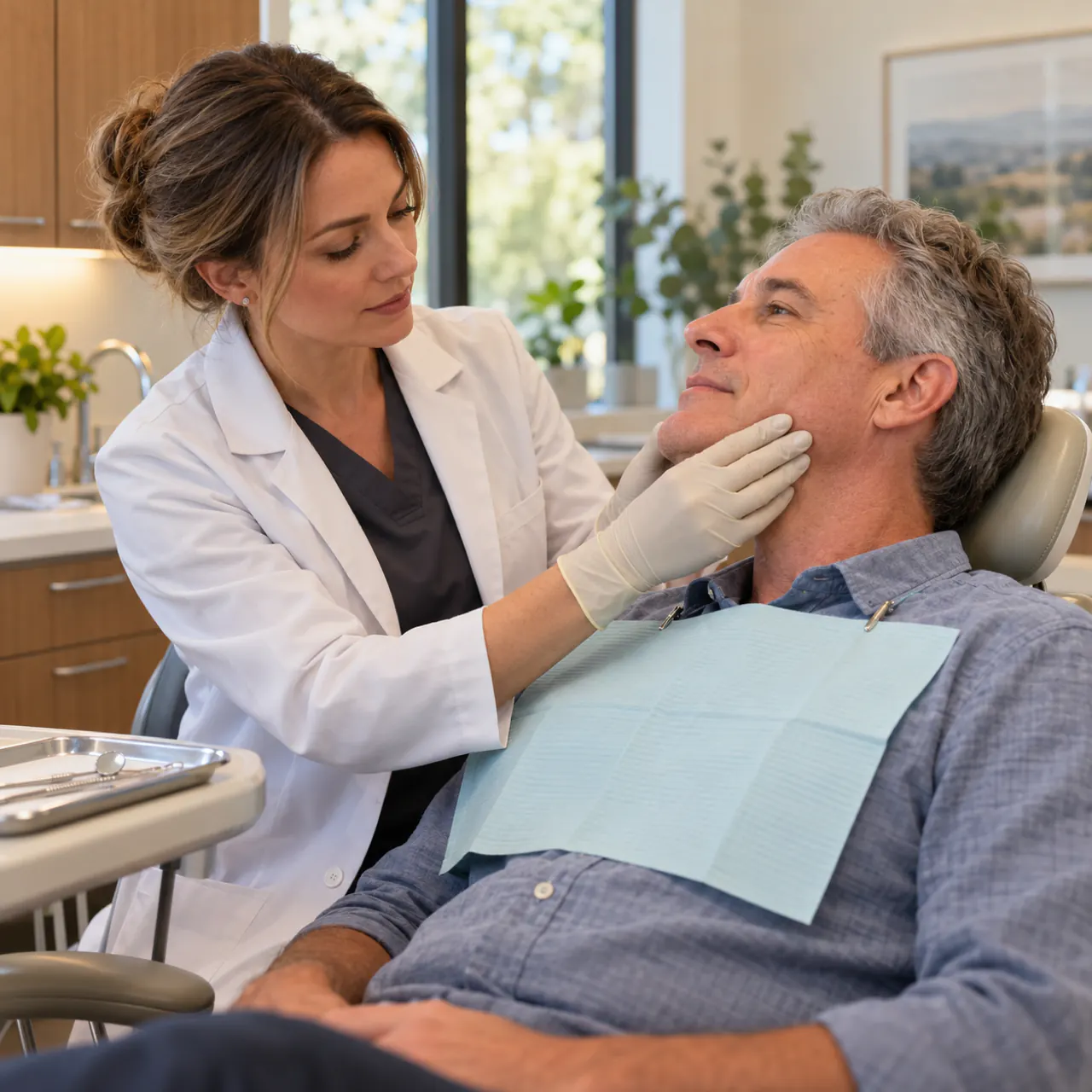
Your dentist examines the teeth, gums, cheeks, and jaw, checking for swelling, tenderness, cracks, and broken fillings. The muscles of the jaw may be checked if clenching is suspected.
Targeted tests
Cold tests, gentle tapping, and a bite test on a small instrument help show which tooth reacts and how the nerve is responding. We stop between tests so you are not overwhelmed.
X-rays of the area
Images help reveal decay under fillings, infection near root tips, and bone changes. We take only the images needed to answer the question at hand.
Explain the diagnosis
We share what we found, show you the x-ray, and outline the treatment choices. If relief can be provided at the same visit, we discuss that with you before starting.
What we check
The clues that help us locate the problem.
These are the questions and tests that most often lead us to the source of an urgent dental concern.
Questions that help us diagnose
- Is the pain sharp, dull, throbbing, or aching?
- Does cold or heat trigger it, and does it linger?
- Does it hurt to bite, or only when you release?
- Does it wake you up at night?
- Is it worse when you lie down or bend over?
- Have you had recent dental work in the area?
- Is there swelling, a bad taste, or a fever?
- Have you had a recent cold or sinus congestion?
Tests and findings we use
- Cold testing to check how the nerve responds
- Percussion, or gentle tapping, to detect inflammation
- Bite testing to reveal cracked cusps
- Gum probing to find deep pockets
- Transillumination with light to highlight crack lines
- Periapical x-rays of the root tips
- Bitewing x-rays to find decay between teeth
- Checking jaw muscles and joints for referred pain
Emergency exams in Guelph
Diagnosis close to home, with evening hours.
Our Kortright Road West office is open until 8 PM Monday to Thursday, which helps when pain flares up after the work day. When you call, let us know your symptoms and how long they have lasted so we can book the right length of visit. New patients are welcome for emergency exams.
Related services
Related emergency services
Questions patients ask
Emergency dental exam FAQs
What to expect from an emergency exam and how to prepare. If you have facial swelling that affects breathing, swallowing, or vision, or swelling with a high fever, call 911 or go to the nearest emergency department right away rather than waiting for a dental visit.
What happens at an emergency dental examination?
We discuss your symptoms, examine the area, run simple tests on the teeth, and usually take x-rays. Then we explain what we found and your options for treatment.
Why can't I tell which tooth is hurting?
Tooth nerves share pathways, so pain can feel like it is coming from a neighbouring tooth or even the opposite jaw. Cold, tapping, and bite tests help us find the actual source.
Will you treat the problem at the same visit?
Often we can provide relief the same day, such as starting a root canal, smoothing a broken tooth, or placing a temporary filling. If more time is needed, we book the treatment and help you stay comfortable until then.
Could my toothache actually be a sinus problem?
Yes. Upper back teeth sit close to the sinuses, and congestion can cause pressure that feels like a toothache. If the teeth test normally and your symptoms fit, we may suggest seeing your physician.
Do I need x-rays for an emergency exam?
In most cases, yes. X-rays show what cannot be seen by looking, such as infection at the root tip or decay under a filling. We take only the images needed for your concern.
When should I go to the hospital instead?
Call 911 or go to the nearest emergency department if facial swelling affects breathing, swallowing, or vision, if swelling comes with a high fever, or if you have a head injury or uncontrolled bleeding.
What should I bring to an emergency exam?
Bring a list of your medications and allergies, your insurance details if applicable, and any broken pieces of tooth or dental work. Notes about when the pain started can also help.
Can I book an emergency exam if I am not a patient yet?
Yes. New patients are welcome for emergency exams at our Guelph office. We will gather your health history at the visit and focus on getting you comfortable.