

Urgent endodontic care in Guelph
When the nerve is the problem, starting a root canal can bring real relief.
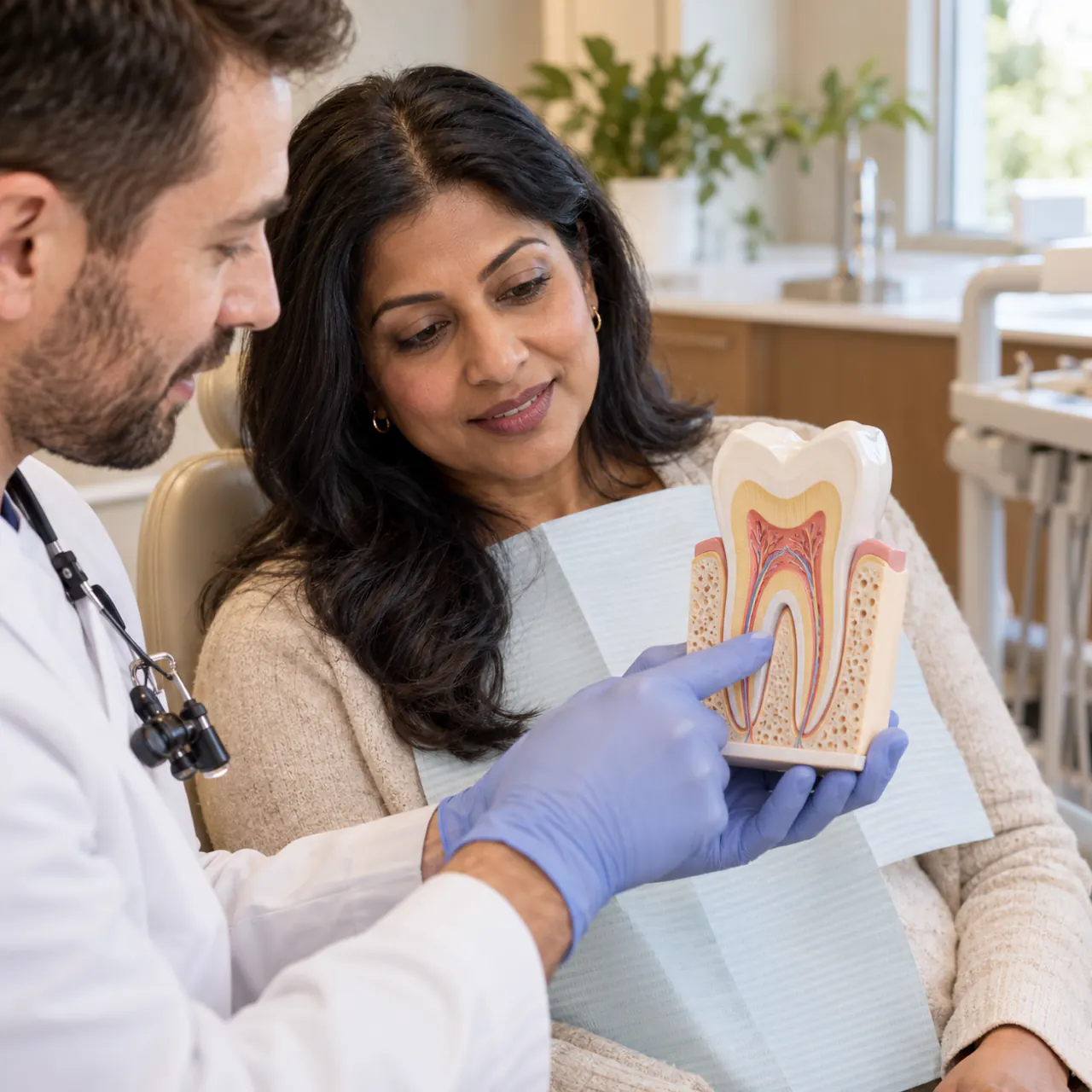
Pain that lingers after cold, throbs on its own, or keeps you awake often means the nerve inside the tooth is inflamed beyond recovery or infected. In those cases, an emergency root canal starts by removing the irritated pulp and relieving pressure inside the tooth. At Ironwood Dental, we often begin this first stage urgently and complete the treatment at a planned follow-up visit.
Why start urgently
Relieve the pain and keep the tooth.
An emergency root canal is often the most direct way to calm a painful nerve while saving your natural tooth.
Treats the cause of nerve pain
Removing the inflamed or infected pulp addresses the source of the pain rather than masking it.
Releases pressure
Opening the tooth can release built-up pressure from infection, which often eases throbbing quickly.
Keeps your natural tooth
A root canal allows you to keep the tooth, its root, and the bone around it, which can be simpler than replacing it later.
Comfortable with local anaesthetic
Modern root canal treatment feels similar to having a filling for many patients, and we take extra steps when a tooth is hard to numb.
Lowers the need for repeat antibiotics
Because the source is removed, the tooth is less likely to keep flaring up between courses of medication.
A clear path to completion
We book the completion visit and explain the crown or restoration that may be needed afterward.
Your urgent root canal visit
Relief first, then completion.
Urgent root canal care is usually done in two stages. The emergency visit focuses on relief, and the second visit cleans, shapes, and seals the canals.
Confirm the diagnosis
We ask about your pain and test the tooth with cold and gentle tapping, then take an x-ray. Root canal treatment is recommended only when the findings support it.
Discuss your options
We explain the root canal, extraction as an alternative, and what each means for the future. You decide which path is right for you.
Thorough numbing
Inflamed teeth can be harder to freeze, so we take our time and may use additional anaesthetic. We check that the tooth is numb before starting.
Remove the inflamed pulp
A small opening is made in the tooth, and the irritated or infected nerve tissue is removed from the pulp chamber and canals. The canals are rinsed with a disinfecting solution.
Medicate and seal temporarily
A soothing medication may be placed inside, and the tooth is sealed with a temporary filling. This protects the tooth until the completion visit.
Complete and restore
At a follow-up visit, the canals are cleaned, shaped, and permanently sealed. Many back teeth then need a crown to protect them from breaking.
Signs and stages
Recognizing nerve pain and what treatment involves.
Not every toothache needs a root canal. These details show when it may be recommended and what each stage includes.
Signs a root canal may be needed
- Pain that lingers after hot or cold drinks
- Spontaneous throbbing without a trigger
- Toothache that wakes you up at night
- Pain when lying down or bending over
- Tenderness when biting or tapping the tooth
- A darkening tooth after an old injury
- A gum bump or abscess near one tooth
- Deep decay or a large crack seen on x-ray
What the stages include
- Testing to confirm the nerve is irreversibly inflamed or infected
- Local anaesthetic, with extra steps for hard-to-numb teeth
- A rubber dam to keep the tooth clean and dry
- Removing pulp tissue from the chamber and canals
- Disinfecting rinses and medication between visits
- A temporary filling to seal the tooth
- Final cleaning, shaping, and sealing of the canals
- A crown or core restoration to protect the tooth
Root canal relief in Guelph
Evening appointments help when nerve pain won't wait.
Nerve pain often gets worse at night, and our Kortright Road West office stays open until 8 PM Monday to Thursday. If you are dealing with throbbing pain or pain that lingers after a drink, call us and describe it. When a tooth is complex, care is planned around your needs and may be coordinated with a trusted specialist.
Related services
Related root canal and emergency care
Questions patients ask
Emergency root canal FAQs
Questions patients ask when an urgent root canal is recommended. If you have facial swelling that affects breathing, swallowing, or vision, or swelling with a high fever, call 911 or go to the nearest emergency department right away.
How do I know if I need an emergency root canal?
Pain that lingers after cold, throbs on its own, or wakes you at night often suggests the nerve is inflamed beyond recovery. An exam with testing and x-rays is needed to confirm it.
Will the pain stop right after the first visit?
Many patients feel significant relief once the inflamed nerve is removed. The tooth may stay tender to biting for a few days, especially if there was infection.
Why is the root canal done in two visits?
The emergency visit focuses on relief, which may be all that time allows. A second visit lets us thoroughly clean, shape, and seal the canals, and allows any infection to settle.
Does a root canal hurt?
For most patients, the treatment feels much like a filling once the tooth is numb. Inflamed teeth can be harder to freeze, so we take extra time to make sure you are comfortable.
Can I just take antibiotics instead?
Antibiotics do not treat an inflamed nerve and cannot clean out an infected canal. They may be used alongside treatment in some cases, but they are not a substitute for removing the source.
What if I don't finish the root canal?
A temporary filling is not designed to last, and the tooth can become reinfected or break. Completing the treatment and placing the recommended restoration helps protect the tooth long-term.
Is extraction a better option?
It depends on the tooth. Keeping a natural tooth is often preferable, but if a tooth is badly broken or cannot be restored, extraction may make more sense. We explain both options so you can decide.
Will I need a crown afterward?
Back teeth that have had root canal treatment often need a crown to prevent fractures. Front teeth may do well with a filling, depending on how much structure remains.