

Cosmetic dentistry in Guelph
Enamel recontouring in Guelph, planned around how much enamel you can safely spare.
Enamel recontouring removes a very small amount of outer enamel to smooth a bump, soften a sharp corner, or level a slightly uneven edge. Because enamel does not grow back, our focus is on careful planning: checking thickness, bite contacts, and whether recontouring alone will give the change you are hoping for.
Why plan carefully
Tiny changes, measured precisely.
Recontouring works best for subtle corrections. A careful assessment helps make sure the change is safe for the tooth and worth doing.
A safety check before any change
We look at enamel thickness and sensitivity so we only recommend recontouring when there is enough enamel to spare.
Bite-aware planning
Marking where your teeth touch helps us avoid removing enamel from areas that guide your bite.
Honest about limits
If recontouring alone will not give the change you want, we tell you and explain what might work better.
Small, natural refinements
When it fits, recontouring can soften a pointed tooth or level a tiny step between edges without adding material.
No ongoing upkeep
Unlike bonding or veneers, recontoured enamel has nothing to stain, chip, or replace later.
Fits into a regular visit
Because the change is small, it can often be done in a short appointment once the plan is agreed.
What to expect
Assessment first, so recontouring stays conservative.
This page focuses on how we decide whether recontouring suits you. If it does, the smoothing itself is usually quick and often done the same day.
Point out what bothers you
We ask you to show us the edge, bump, or corner you notice in the mirror. Sometimes the concern is clearer in photos, which we can take together.
Check enamel and tooth health
Your dentist looks for thin enamel, wear, cracks, decay, or sensitivity in the teeth involved. X-rays may be suggested if there are concerns about the tooth beneath.
Mark your bite
Thin marking paper shows where your teeth meet when you bite and slide. This tells us which areas can be adjusted and which should be left alone.
Preview the change
We may sketch the change on a photo or mark the tooth lightly so you can see the outline. You decide whether the amount of change is right.
Gentle smoothing when agreed
If you go ahead, a fine polishing instrument removes a small amount of enamel in stages. Freezing is not usually needed because the work stays in the outer enamel.
Polish and recheck
We polish the area smooth and check your bite again. We may suggest a fluoride application to support the treated surface.
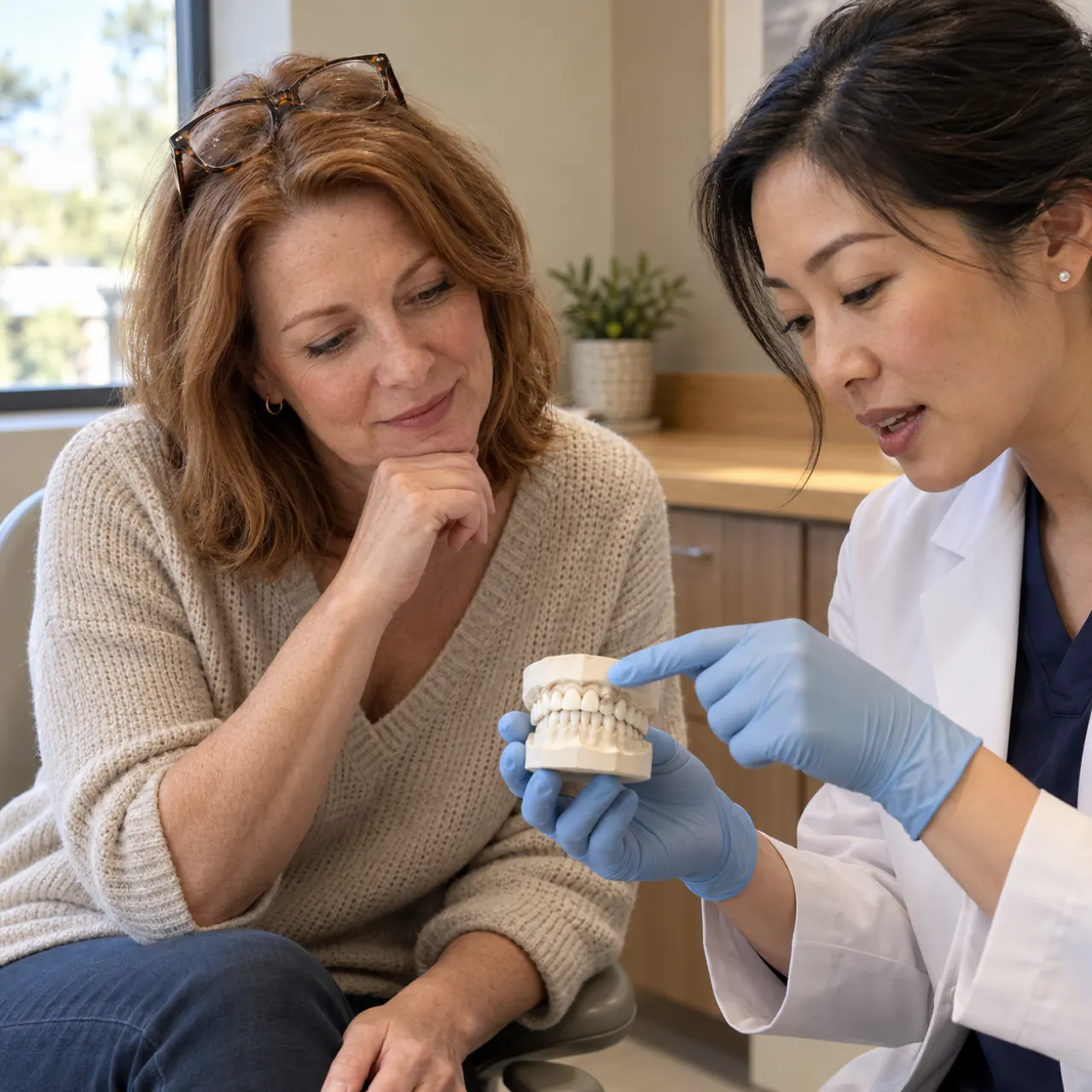
Recontouring details
Who is a good candidate, and when another option may be wiser.
Recontouring is not right for every tooth. These are the signs that it may help, and the signs that we should consider something else.
Signs recontouring may help
- A small, sharp corner that catches your lip or tongue
- A slight step between the edges of neighbouring teeth
- A minor bump or ridge on the front of a tooth
- A canine that looks a little more pointed than you like
- Tiny chips that can be smoothed rather than rebuilt
- Healthy, thick enamel with no sensitivity
- Edges that do not carry heavy bite forces
- Finishing touches after orthodontic treatment
When we may suggest another approach
- Thin or worn enamel from grinding or erosion
- Teeth that are already sensitive
- Edges that guide your bite when you slide your jaw
- Unevenness caused by tooth position rather than shape
- Chips large enough to need bonding
- Teeth that are short and would look shorter after smoothing
- Uneven gum heights rather than uneven teeth
- Larger shape or colour changes better suited to veneers
Care close to home
Careful cosmetic assessments in Guelph.
At our office on Kortright Road West, recontouring often happens at the end of a regular checkup once we have agreed on a plan. If you would rather think it over, we can book the smoothing for another day that suits you.
Related services
Related reshaping options
Questions patients ask
Enamel recontouring FAQs
These answers cover the planning questions patients ask most before deciding on recontouring.
What is enamel recontouring?
Enamel recontouring is the careful removal of a very small amount of outer enamel to improve a tooth's shape. It is used for subtle changes, such as smoothing a sharp corner or levelling a slight difference between edges.
How do you know if I have enough enamel for recontouring?
Your dentist looks at wear patterns, translucency at the edges, sensitivity, and x-rays when needed. Teeth that already look thin, see-through, or worn are usually not good candidates.
Is enamel recontouring permanent?
Yes. Enamel does not grow back, so the change is permanent. That is why we plan the amount carefully and keep it small.
Will recontouring make my teeth sensitive?
Most patients do not notice sensitivity when only a small amount of outer enamel is smoothed. If a tooth already feels sensitive, we may recommend a different option.
Can recontouring change my bite?
It can if enamel is removed from an area your teeth rely on when biting or sliding. Marking your bite before treatment helps us avoid those areas.
Is recontouring better than bonding?
Neither is better in every case. Recontouring removes a little enamel and needs no upkeep, while bonding adds material and can build up short or chipped teeth. Many patients benefit from a combination.
Can I see what the change will look like first?
Yes. We can mark the tooth or adjust a photo to show the planned outline. You decide whether to go ahead once you have seen it.
Is enamel recontouring suitable for teenagers?
It may be, depending on the tooth and the concern. Teen teeth have larger nerves and are still settling, so we are especially cautious and may suggest waiting or using a different approach.