

Facial pain assessment in Guelph
When your face aches, we help work out whether the muscles, the teeth, or something else is behind it.
The muscles that move your jaw run across your cheeks, temples, and the sides of your head. When they are overworked from clenching or tension, they can ache in ways that feel like a toothache, an earache, or sinus pressure. A facial muscle pain assessment focuses on these muscles and helps sort out where the pain is really coming from.
Why this assessment matters
Muscle pain is easy to mistake for something else.
Pain in the face often travels. A careful assessment helps avoid treating a healthy tooth for pain that is really coming from a muscle.
Avoid treating the wrong tooth
Muscle pain can feel like a toothache. Confirming the source helps prevent unnecessary fillings, root canals, or extractions.
Understand referred pain
Tender spots in a muscle can send pain to the teeth, ear, or temple. Mapping those spots makes confusing symptoms easier to understand.
Connect pain to daily habits
Clenching at a desk, chewing gum, or sleeping with heavy grinding can all tire the muscles. The assessment helps link symptoms to habits you can change.
Check the jaw joints too
Muscle and joint problems often appear together. We check both so your plan addresses the whole picture.
Flag non-dental causes
Some facial pain comes from sinuses, nerves, or other medical conditions. When something does not fit a dental or muscle pattern, we let you know and suggest seeing your physician.
A practical starting plan
You leave with clear next steps, which may include self-care, an appliance, or coordination with a physiotherapist or physician.
The assessment
A hands-on look at the muscles of your jaw and face.
This visit is mostly conversation and gentle examination. We are looking for patterns, tender spots, and the kind of pain you feel.
Describe your pain
We ask where it hurts, when it started, what it feels like, and what makes it better or worse. Morning versus evening patterns are especially useful.
Review your health history
We go over medical conditions, recent illness, injuries, medications, and stress or sleep changes. These can all influence how muscles behave.
Feel the muscles
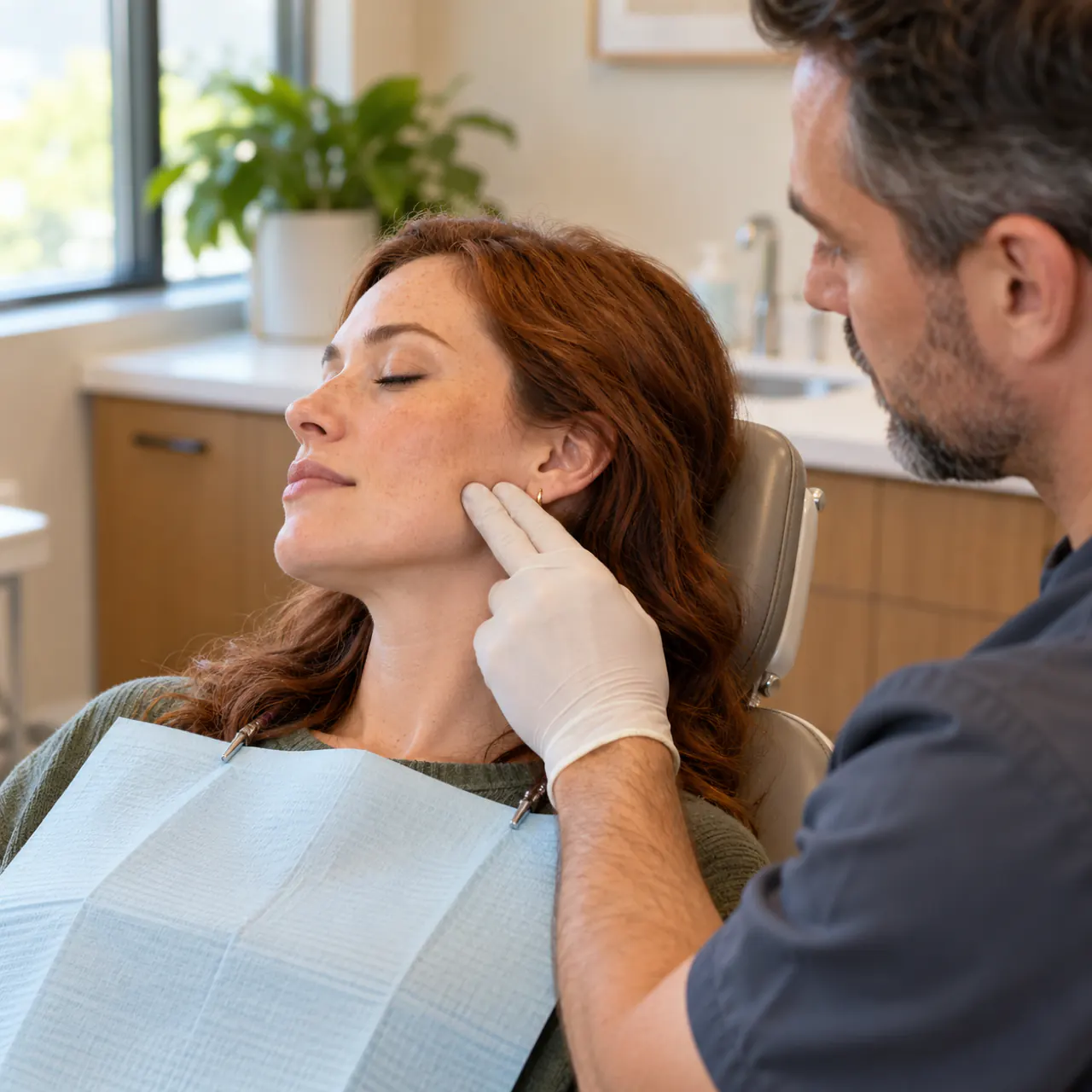
Your dentist gently presses on the chewing muscles in your cheeks, temples, under the jaw, and along the neck. You tell us where it is tender and whether pressing reproduces your usual pain.
Watch jaw movement
We measure how far you can open and move side to side, and note any pain, deviation, or joint sounds. This helps separate muscle pain from joint problems.
Check the teeth
We examine teeth and gums in the painful area and may take x-rays if a dental cause needs to be ruled out. This step is important before concluding the pain is muscular.
Explain and plan
We share what the findings suggest and outline next steps, such as muscle self-care, a splint, habit changes, or a referral. If anything suggests a medical concern, we encourage you to see your physician promptly.
What we consider
Signs of muscle pain and other sources we rule out.
Muscle pain has a typical feel, but we always consider other causes before drawing conclusions.
Signs that often point to muscle pain
- A dull, aching pain rather than a sharp, pinpoint pain
- Soreness that is worse in the morning or after a stressful day
- Tenderness when pressing on the cheeks or temples
- Fatigue when chewing tough foods
- Pain that seems to spread to the ear, teeth, or head
- Tightness that eases with warmth or gentle stretching
- Pain on both sides of the face
- A history of clenching or grinding
Other causes we consider
- Tooth decay, cracks, or an infected tooth
- Gum infection or erupting wisdom teeth
- Jaw joint inflammation or disc problems
- Sinus congestion affecting upper back teeth
- Nerve-related facial pain that needs medical assessment
- Ear problems that can feel like jaw pain
- Neck and posture strain referring pain upward
- Symptoms such as numbness or weakness that need prompt medical care
Facial pain care in Guelph
Thoughtful pain assessment from your Guelph dental team.
Facial pain can be worrying, especially when it does not have an obvious cause. At our Kortright Road West office, we take the time to listen, examine carefully, and explain what we find, and we will tell you plainly when a physician or another professional is better placed to help.
Related services
Related pages for jaw and facial discomfort.
Questions patients ask
Facial muscle pain FAQs
Answers for patients with aching cheeks, temples, or jaw muscles who are not sure what is going on.
Can jaw muscles cause pain that feels like a toothache?
Yes. Tender spots in the chewing muscles can refer pain to nearby teeth, making a healthy tooth feel sore. This is one reason we check the muscles before recommending dental treatment for unexplained tooth pain.
Why do my cheeks ache when I wake up?
Morning cheek aching is often linked to clenching or grinding during sleep, which tires the masseter muscles. An assessment can confirm whether this is the likely cause and whether protection or other steps may help.
What is myofascial pain?
Myofascial pain is discomfort that comes from muscles and the tissue around them, often with tender spots that cause pain when pressed. In the face, it commonly affects the chewing muscles and may be linked to clenching, stress, or posture.
Can stress cause facial muscle pain?
Stress can lead to clenching and muscle tension, which may cause facial aching. It is usually one factor among several, along with sleep, habits, and posture.
Should I see a dentist or a doctor for face pain?
A dentist is a good starting point when pain involves the jaw, teeth, or chewing muscles. If your pain comes with numbness, weakness, vision changes, fever, or other symptoms outside the mouth, please see your physician or seek medical care promptly.
Will I need x-rays for facial muscle pain?
Not always. X-rays may be recommended if we need to rule out a dental cause such as decay, infection, or a cracked tooth, but many muscle concerns are assessed through history and examination.
Can physiotherapy help facial muscle pain?
Some patients benefit from physiotherapy that focuses on the jaw, neck, and posture. If we think it may help, we can suggest you look into it and share relevant findings with your care team.
What can I do at home while I wait for my appointment?
Soft foods, avoiding gum, gentle warmth on sore muscles, and noticing when you clench during the day may help. If pain becomes severe or you develop swelling or fever, contact us or seek medical care right away.