

Gum restoration in Guelph
Gum grafting can rebuild a protective band of gum where recession has left roots exposed.
When gums recede, the root surface underneath is left without its natural protection. Roots can become sensitive, more prone to decay, and the recession may continue. A gum graft adds healthy tissue to the area. At Ironwood Dental we help you understand whether grafting is worth considering, and when it is, we plan your care around your needs and coordinate with a trusted periodontal specialist where appropriate.
Why it matters
Grafting protects roots, comfort, and the long-term stability of the gum line.
Not all recession needs a graft. But when gums are thin, recession is progressing, or roots are sensitive, grafting may offer real benefits.
Covers exposed roots
Depending on the type of recession, a graft may cover part or all of an exposed root surface.
Reduces sensitivity
Exposed roots often react to cold and brushing. Covering them may make eating, drinking, and cleaning more comfortable.
Strengthens thin gums
Thicker, firmer gum tissue is more resistant to further recession, especially before orthodontic treatment or around crowns.
Helps protect against root decay
Root surfaces are softer than enamel and more likely to decay. Covering them with gum tissue offers added protection.
Improves gum line appearance
When recession makes teeth look long or uneven, a graft may help create a more balanced, natural gum line.
Supports implants and dental work
A healthy band of firm gum around implants and crowns makes them easier to clean and may help them stay stable.
The grafting journey
What happens from consultation to healed gums.
Gum grafting is a surgical procedure, so planning and aftercare are just as important as the day itself. Here is the typical sequence.
Recession assessment
We measure how far the gum has receded, how thick the tissue is, and whether the bone underneath is affected. Photos may be taken to track change over time.
Address the cause first
Before any graft, we look at what caused the recession, such as brushing force, grinding, or gum disease, so the new tissue is not put under the same stress.
Specialist planning when needed
Gum grafting is planned around your needs and the complexity of the area. Many cases are coordinated with a trusted periodontal specialist, and we share your records so planning is seamless.
The grafting procedure
Under local anaesthetic, healthy tissue, often from the roof of the mouth or a donor material, is placed and secured over the area of recession. Sedation options may be discussed for some patients.
Healing at home
You receive detailed instructions on eating, cleaning, and protecting the area. The first week or two is when the graft is most delicate.
Follow-up and maintenance
Follow-up visits check that the graft is healing and integrating well. Once healed, you return to regular cleanings with a gentler brushing technique to protect the result.
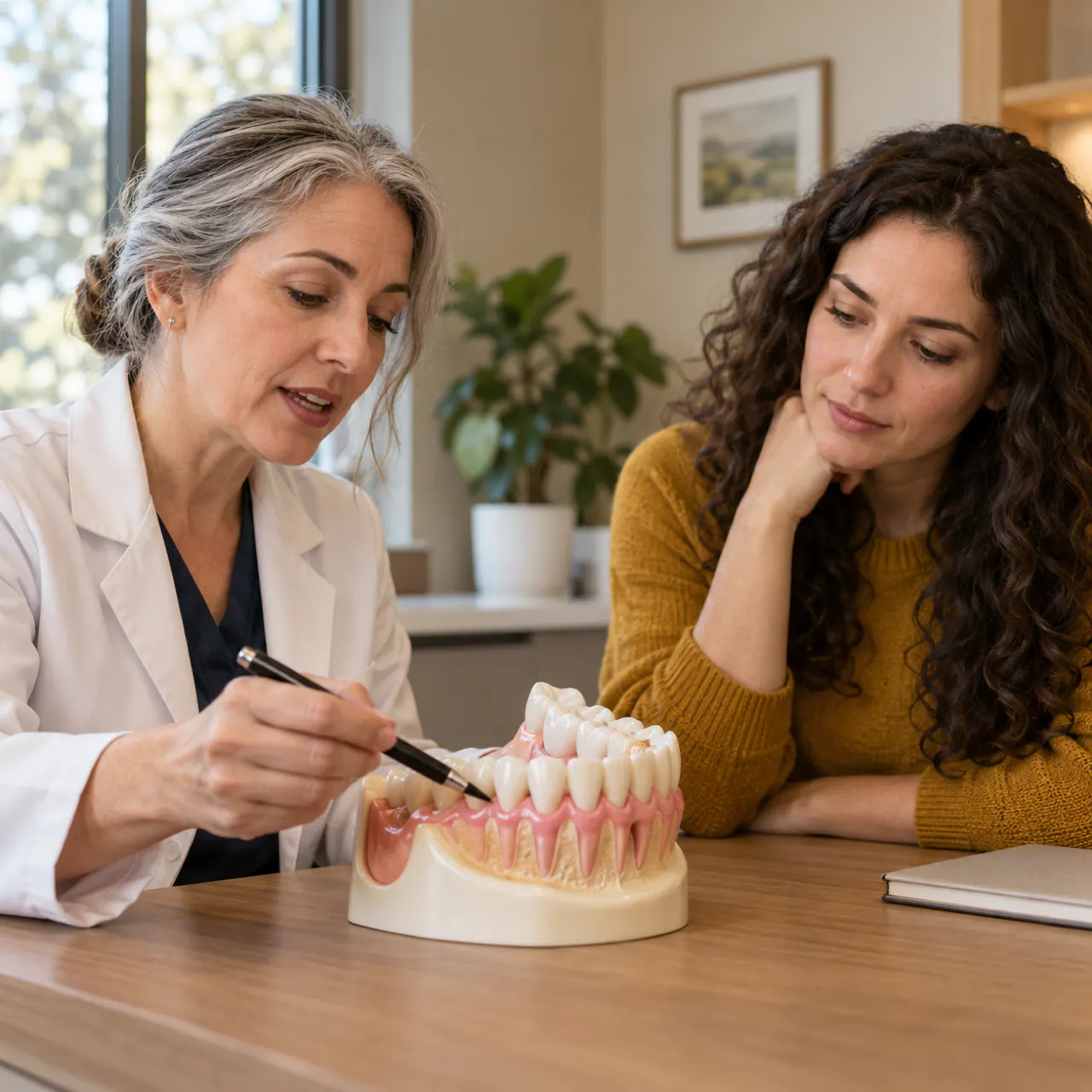
Graft options and healing
Types of gum grafts, and what recovery usually involves.
The right type of graft depends on the amount of recession, the thickness of your gums, and your goals.
Common types of gum grafts
- Connective tissue grafts using tissue from beneath the palate surface
- Free gingival grafts to thicken thin gum tissue
- Pedicle grafts that move nearby gum over the recession
- Donor tissue grafts that avoid a second site in the mouth
- Grafts covering one tooth or several teeth in one area
- Grafts before orthodontic treatment when gums are thin
- Grafts around dental implants to improve soft tissue
- Combined approaches chosen by the treating clinician
What recovery usually involves
- Soft, cool foods for the first several days
- Avoiding brushing directly on the graft until advised
- Using any prescribed rinse as directed
- Some tenderness, especially if tissue came from the palate
- Avoiding hard, crunchy, or spicy foods for a while
- No smoking, which can affect how the graft heals
- Stitch removal or checks at follow-up visits
- A gradual return to gentle brushing as healing allows
Coordinated care in Guelph
Gum grafting planned with you in Guelph.
Many patients first learn about recession during a routine visit at our Kortright Road West office. We assess it here in Guelph, explain your options, and coordinate any specialist involvement so your follow-up care and regular cleanings continue with the team you know.
Related services
Related gum services
Questions patients ask
Gum grafting FAQs
Gum grafting can sound intimidating. These answers explain what it involves and what recovery is usually like.
Do I need a gum graft for receding gums?
Not always. Mild, stable recession is often monitored. A graft may be recommended if recession is progressing, the gum is very thin, roots are sensitive, or you are about to start orthodontic treatment.
Is gum grafting painful?
The procedure is done with local anaesthetic, so you should feel pressure rather than pain. Afterward, tenderness is common for several days, particularly if tissue was taken from the roof of the mouth. Your care team will recommend pain relief suited to your health.
Where does the graft tissue come from?
Tissue is often taken from the roof of your mouth or moved from nearby gum. In some cases, a donor tissue material may be used so a second site is not needed. The clinician will recommend the option that fits your situation.
How long does a gum graft take to heal?
The surface usually heals within a couple of weeks, while the graft continues to mature for several weeks to a few months. Following aftercare instructions closely helps the graft settle well.
Will the gum graft cover my root completely?
That depends on the type and severity of the recession and the bone between your teeth. Some areas can be fully covered while others may be partly covered or simply thickened to prevent further recession.
Can receding gums grow back on their own?
Gum tissue that has receded does not usually grow back on its own. Treating the cause can stop it from getting worse, and a graft is the main way to rebuild tissue that has been lost.
What can I eat after a gum graft?
Soft, cool foods such as yogurt, eggs, soups that are not hot, and smoothies are usually recommended at first. Avoid chewing near the graft and steer clear of crunchy, sharp, or spicy foods until you are cleared to return to normal eating.
Is gum grafting done at Ironwood Dental?
Gum grafting is planned around your needs and the complexity of the recession. We assess and discuss your options, and many grafting cases are coordinated with a trusted periodontal specialist while your ongoing care continues with us.