

Wisdom tooth surgery in Guelph
Impacted wisdom teeth removal, planned carefully so the surgery day and recovery feel predictable.
An impacted wisdom tooth is one that cannot come in fully because it is blocked by bone, gum tissue, or the tooth in front of it. When removal is the right choice, our team plans the procedure around your x-rays, health history, and comfort, and complex cases may be coordinated with a trusted oral surgeon.
Why removal may be recommended
Removing an impacted tooth can protect the teeth and gums around it.
Not every impacted wisdom tooth needs to come out. When one is causing problems or is likely to, removal may prevent repeated flare-ups and damage to neighbouring teeth.
Stop repeated gum infections
A partly erupted wisdom tooth can trap food and bacteria under a gum flap. Removing it may end the cycle of swelling and tenderness that keeps coming back.
Protect the second molar
A wisdom tooth angled into the molar in front of it can cause decay or root damage that is hard to see and hard to clean. Removal can take that pressure away.
Make the back of the mouth easier to clean
With the impacted tooth gone, brushing and flossing the last molar becomes far more manageable for the long term.
Reduce the risk of cysts
Occasionally a sac around an impacted tooth can enlarge into a cyst. Removing the tooth when x-rays suggest this risk can help protect the surrounding bone.
Plan on your schedule
Removing an impacted tooth before it becomes an emergency lets you choose a time that works around exams, work, or travel.
Clear guidance on comfort options
We discuss local anaesthetic and, where appropriate, sedation or specialist referral so you know what to expect before the day arrives.
From consult to recovery
What happens before, during, and after impacted wisdom tooth removal.
Impacted teeth take more planning than a routine extraction. Here is how we usually move from the first conversation to your follow-up check.
Review your x-rays together
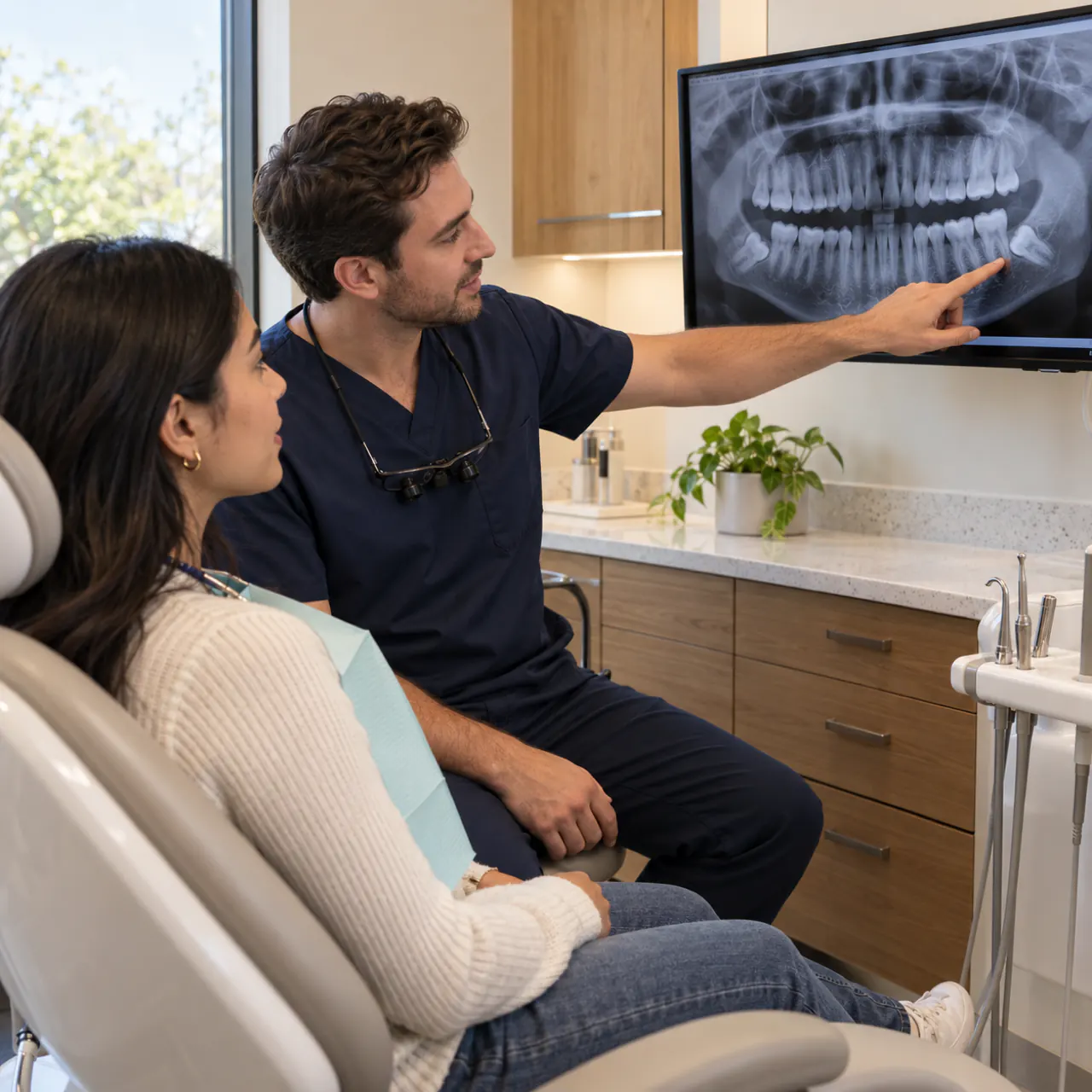
We look at a panoramic x-ray, and sometimes a 3D scan, to see the tooth angle, root shape, and how close it sits to the nerve. You can see the images yourself and ask questions as we go.
Check your health history
We review medications, medical conditions, and past experiences with dental work. If you take blood thinners or have a medical condition, we may coordinate with your physician, and you should never stop a medication without medical advice.
Decide on comfort and setting
Together we discuss whether local anaesthetic alone is suitable, whether sedation may help, or whether a referral to an oral surgeon is the safer choice. Complex impactions near the nerve or sinus are often coordinated with a trusted specialist.
Prepare for the procedure day
You receive written instructions about eating beforehand, arranging a ride if sedation is planned, and having soft foods ready at home. We also confirm the plan for any prescriptions.
Gentle removal of the tooth
The area is numbed thoroughly, and the tooth is accessed through the gum and sometimes divided into smaller pieces so it can be lifted out with less force. The site is cleaned and usually closed with stitches.
Recovery and follow-up
We go over bleeding control, swelling, pain management, and how to keep the site clean. A follow-up visit lets us confirm healing is on track and remove stitches if needed.
Impaction details
Types of impaction and what recovery usually involves.
The way a tooth is impacted shapes how it is removed and how long healing may take, so we explain both before you decide.
Common types of impaction
- Soft-tissue impaction, where the crown is covered only by gum
- Partial bony impaction, where bone covers part of the tooth
- Full bony impaction, where the tooth is completely encased in bone
- Mesial angulation, with the tooth tilted toward the front molar
- Horizontal impaction, with the tooth lying on its side
- Vertical impaction that is blocked by lack of space
- Distal angulation, with the tooth tilted toward the back of the jaw
- Roots that sit close to the lower jaw nerve or upper sinus
What recovery usually looks like
- Some oozing on the first day, managed with gauze pressure
- Swelling that often peaks around the second or third day
- Cold compresses early, then gentle warmth as swelling settles
- Soft, cool foods for the first few days
- No straws, smoking, or vaping while the clot forms
- Careful rinsing with warm salt water when instructed
- Pain relief as directed by your dentist or pharmacist
- A call to our office if pain worsens after improving
Close to home in Guelph
Wisdom tooth care from a familiar Guelph team.
Our Kortright Road West office has helped Guelph families through wisdom tooth decisions for more than 25 years. Many University of Guelph students and young professionals find our weekday evening and Saturday morning hours helpful for planning the procedure around classes, shifts, and a few quiet recovery days.
Related services
Related care for wisdom teeth and extraction recovery.
Questions patients ask
Impacted wisdom teeth removal FAQs
These answers are general. Your dentist will explain what your own x-rays show and which approach suits your situation.
How do I know if my wisdom teeth are impacted?
You may notice a tooth that has only partly come through, a sore gum flap at the back of the mouth, or pressure behind your last molar. Many impacted teeth cause no symptoms at all, so an x-ray is the only reliable way to confirm their position.
Do all impacted wisdom teeth need to be removed?
No. Some impacted teeth sit quietly and can be monitored with periodic x-rays. Removal is usually recommended when a tooth is causing infection, decay, damage to the neighbouring molar, or changes in the surrounding bone.
Will I be asleep for impacted wisdom tooth removal?
Many impacted teeth can be removed with local anaesthetic, and some patients add oral sedation to feel more relaxed. Deeper sedation or general anaesthetic is typically provided by an oral surgeon, and we can arrange a referral if that suits your case better.
How long does recovery from impacted wisdom teeth take?
Most people feel noticeably better within a few days to a week, though the gum and bone continue healing for several weeks. Recovery depends on how deeply the teeth were impacted and how many were removed at once.
What is the risk of nerve injury?
Lower wisdom teeth sometimes sit close to the nerve that gives feeling to the lip and chin. If your x-rays show this, we explain the risk clearly, may recommend 3D imaging, and may refer you to an oral surgeon for removal.
Is there an ideal age to remove impacted wisdom teeth?
Removal is often easier in the late teens or early twenties, when roots are not fully formed and the bone is more flexible. That said, the decision is based on your x-rays and symptoms rather than age alone.
What can I eat after impacted wisdom teeth removal?
Start with cool, soft foods such as yogurt, smoothies eaten with a spoon, applesauce, and mashed potatoes. Avoid crunchy, spicy, or very hot foods until the sites feel comfortable, and chew away from the healing areas.
How much time should I take off work or school?
Many patients plan for two or three quiet days at home, especially if lower teeth were impacted in bone. If sedation is used, you will need someone to drive you home and stay with you for the rest of the day.