

Snap-in denture upkeep in Guelph
When your implant denture stops clicking into place, worn attachments are often the reason.
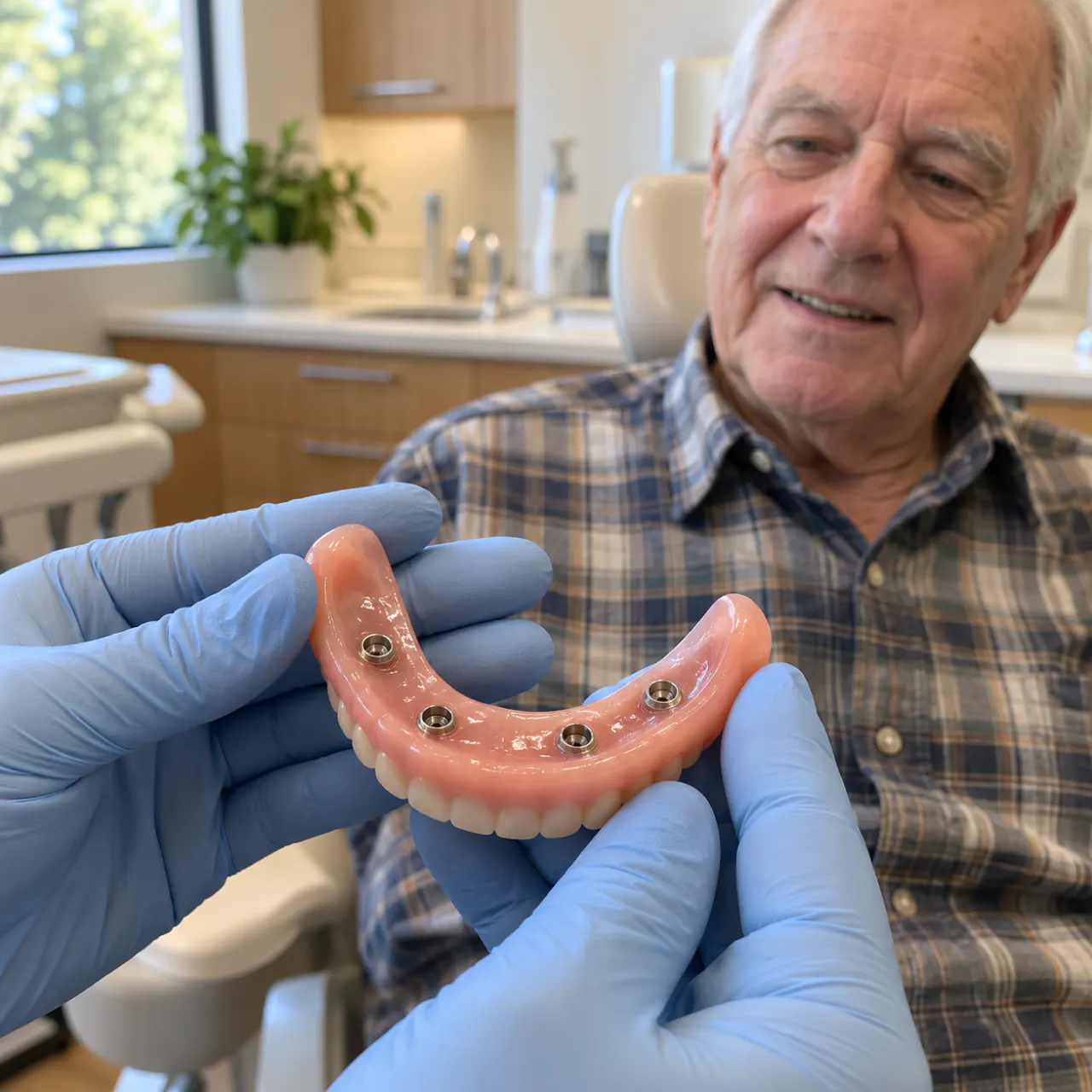
Removable implant dentures stay put thanks to small attachments: a part on each implant and a matching insert inside the denture. Every time you take the denture in and out, the inserts wear a little. Over months, the snap weakens and the denture starts to lift or rock. Replacing these parts is a routine visit that can bring back a secure fit.
Why it matters
Fresh attachments help your denture feel secure again.
Worn inserts are expected wear, not a sign that something went wrong. Replacing them on schedule keeps the denture working as designed.
A firmer click
New inserts restore the snap you felt when the denture was first fitted.
Less lifting when you eat
Secure attachments help keep the denture down when chewing sticky or firm foods.
Fewer sore spots
A denture that rocks can rub the gums. Restoring retention may reduce that movement.
Protects the implants
Uneven or loose attachments can place odd forces on the implants. Balanced parts help distribute the load.
Adjustable strength
Inserts come in different retention levels, so we can choose one that holds well but is still manageable for your hands.
A chance to check fit
While the denture is in, we also look at how it sits on the gums and whether a reline may soon be needed.
Your visit
What happens when attachments are replaced.
Many insert changes are short appointments. If the housings or implant-side parts also need replacing, it may take a little longer.
Check the denture and implants
We look at the inserts, the housings in the denture, and the attachments on the implants. Gum health around each implant is checked too.
Identify what is worn
Most often only the inserts need changing. If the implant-side attachments are worn or loose, we discuss replacing them as well.
Remove the old inserts
Worn inserts are removed from the denture using a dedicated tool. This is done outside the mouth and is not uncomfortable.
Place new inserts
New inserts are pressed into the housings. We choose a retention strength that balances security with ease of removal.
Test the fit
You place and remove the denture yourself while we watch. If it is too tight or too loose, we can change the insert strength.
Review home care
We remind you how to seat the denture evenly and clean around the attachments. A schedule for the next check is suggested.
Signs and parts
How to tell your attachments are worn, and which parts may be changed.
Recognizing the early signs helps you book before the denture becomes uncomfortable or causes sore spots.
Signs your attachments are worn
- The denture no longer clicks into place
- It lifts when you eat sticky foods
- One side seats while the other floats
- Food slips under the denture more often
- You have started reaching for adhesive
- New sore spots on the gums
- Visible wear or tearing on the inserts
- The denture rocks when you press on it
Parts we may replace
- Nylon or plastic retention inserts
- Metal housings inside the denture
- Attachments threaded onto the implants
- Bars or clips on bar-retained dentures
- O-rings on ball-style attachments
- Block-out spacers used during pick-up
- Housings that have loosened in the acrylic
- Inserts with a different retention strength
Quick visits in Guelph
Keeping your snap-in denture secure, close to home.
Attachment changes often fit into a morning or evening slot at our Kortright Road West office. If you rely on someone for rides, let us know when you call so we can find a time that works for you both.
Related services
More implant denture care.
Questions patients ask
Implant denture attachment FAQs
Common questions from patients with snap-in or implant-retained dentures. Your dentist will check the parts specific to your system.
Why is my snap-in denture getting loose?
The inserts inside the denture wear with each removal and placement. Over time the grip weakens. Other causes include worn implant attachments or changes in the gums under the denture.
How often do implant denture inserts need replacing?
Many patients need new inserts somewhere between several months and a year or so, depending on how often the denture is removed, cleaning habits, and grinding. We check them at your regular visits.
Does replacing attachments hurt?
Insert changes are done on the denture outside your mouth, so they are not uncomfortable. Replacing the attachments on the implants may involve some pressure but is usually well tolerated.
Can I replace the inserts myself?
We do not recommend it. The inserts need the correct tool and strength, and the implant attachments should be checked at the same time.
Should I use denture adhesive if my implant denture is loose?
Adhesive can clog the attachments and is usually a sign that the inserts need replacing. Book a visit instead so we can restore the fit properly.
What if the new inserts are too tight to remove?
Inserts come in different strengths. If you struggle to remove the denture, especially with arthritis, we can switch to a lighter retention insert.
My implant denture was made elsewhere. Can you replace the attachments?
Usually yes. We identify the attachment system during the exam. Any records from your original office help speed things up.
Is a loose implant denture always the inserts?
Not always. A loose implant attachment, a cracked housing, gum changes, or, rarely, a problem with an implant can also be involved. That is why we examine everything, not just the inserts.