

Gum health around implants in Guelph
The gum around an implant is its first line of defence, and it needs steady attention.
Natural teeth are attached to the gums and bone by fibres that help resist bacteria. Implants do not have those fibres, so the gum seal around them can be more vulnerable once plaque builds up. Implant gum-care maintenance focuses on that seal: spotting early inflammation, reversing it where possible, and helping you protect it at home.
Why gum care matters
Inflammation caught early is far easier to manage.
Gum inflammation around an implant, known as peri-implant mucositis, can often be reversed. Left alone, it may progress to bone loss around the implant.
Early signs spotted
Measuring and comparing the tissue at each visit helps reveal changes that you may not feel.
Inflammation reversed sooner
Early gum inflammation around implants often settles with thorough cleaning and better home care.
Bone protected
Keeping inflammation in check lowers the chance it spreads to the bone that holds the implant.
A routine that fits your mouth
We recommend tools based on your spaces, dexterity, and the type of restoration on your implant.
Risk factors addressed
Smoking, diabetes, and dry mouth can all affect implant gums. We talk through what you can influence.
Natural teeth included
Gum disease around natural teeth can affect implants too, so the whole mouth is part of the plan.
Gum-care visits
How we monitor and protect the gums around implants.
These visits combine careful measurement, focused cleaning, and coaching. They are often recommended more frequently for people with a history of gum disease.
Ask about symptoms
We ask whether you have noticed bleeding, tenderness, a bad taste, or changes in how the gum looks. Even small details help.
Measure the tissue
Your hygienist gently probes around the implant and notes bleeding and pocket depth. These measurements are compared with earlier visits.
Check for plaque and deposits
We look closely at where plaque and tartar collect around the implant and its crown, bridge, or denture. These areas guide your home care.
Clean below the gumline gently
Deposits are removed with implant-appropriate instruments, and the area may be irrigated. Numbing is available if the tissue is tender.
Coach your home routine
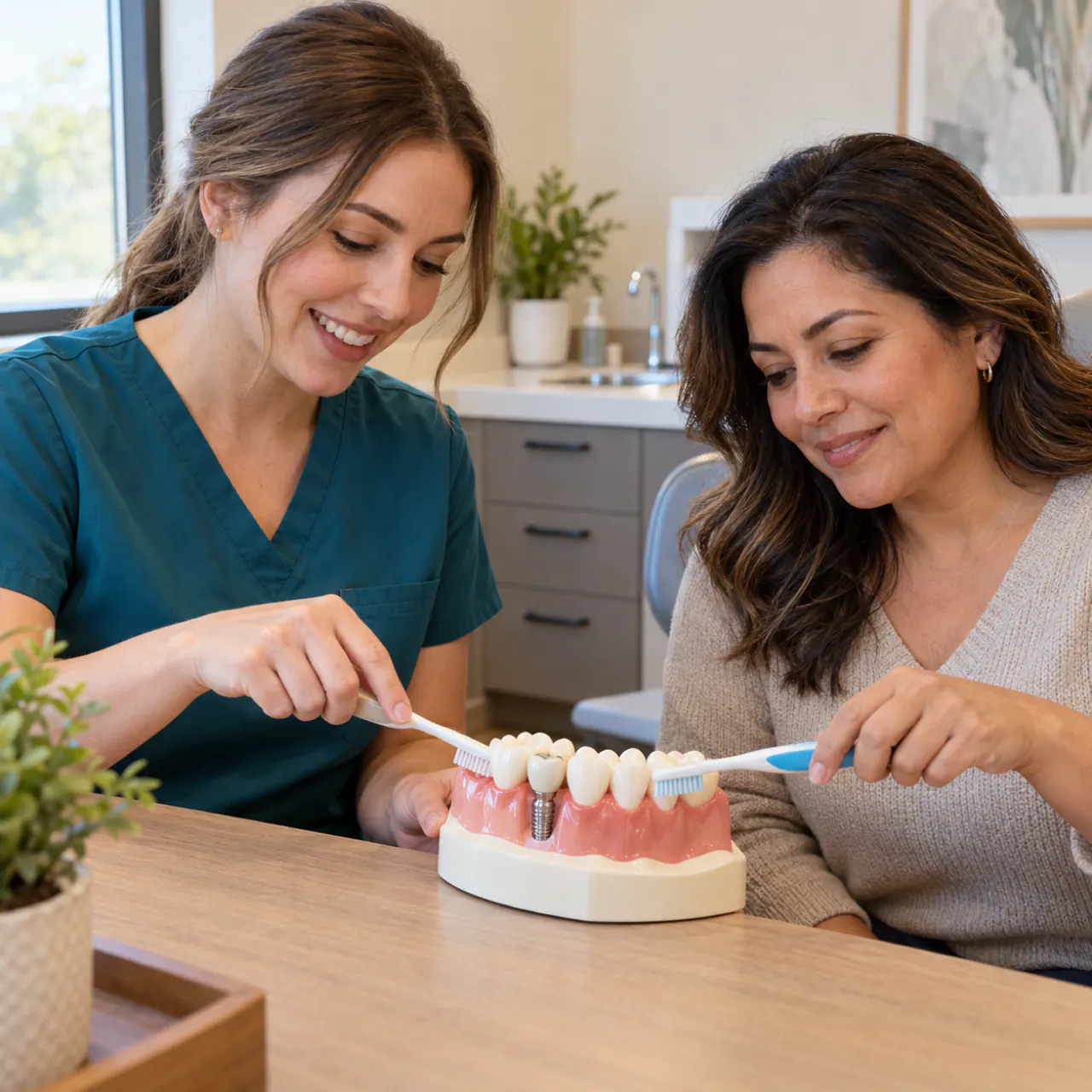
We demonstrate the brushing angle, interdental brush size, or water flosser technique that fits your implant. You practise while we watch.
Plan your follow-up
If inflammation was present, a short re-check may be booked to confirm it has settled. If signs of bone loss appear, we recommend a peri-implantitis assessment.
Risks and tools
Who needs extra gum care, and what helps at home.
Some people are more prone to implant gum problems. Knowing your risk helps set the right care routine.
Higher-risk situations
- A history of gum disease around natural teeth
- Smoking or vaping
- Diabetes, especially if not well controlled
- Dry mouth from medications
- Crowns or bridges that are hard to clean under
- Thin gum tissue around the implant
- Infrequent maintenance visits
- Limited hand dexterity for home care
Home tools that may help
- A soft manual or powered toothbrush
- Interdental brushes sized for your spaces
- A water flosser for bridges and fixed dentures
- Floss threaders or tufted implant floss
- Single-tuft brushes for tight corners
- A non-abrasive toothpaste
- Antimicrobial rinse if your dentist recommends it
- A mirror and good light to check your gumline
Gum care in Guelph
Steady support between your regular visits.
If you notice bleeding or tenderness around an implant, you do not have to wait for your next recall. Call our Kortright Road West office and we can arrange a sooner check, often within our early-morning or evening hours.
Related services
Related gum and implant services.
Questions patients ask
Implant gum-care questions
Answers for patients who want to keep the gums around their implants healthy. Your hygienist can tailor advice to your mouth.
Why do the gums around my implant bleed?
Bleeding is usually a sign of inflammation caused by plaque at the gumline. It can often be reversed with professional cleaning and better home care, but it should be checked rather than ignored.
What is peri-implant mucositis?
It is inflammation of the gum around an implant without bone loss. It is similar to gingivitis around a natural tooth and is often reversible when caught early.
How is it different from peri-implantitis?
Peri-implantitis involves inflammation plus loss of the bone that supports the implant. It is more serious and usually needs more involved treatment, so early gum care aims to prevent it.
Can I use a water flosser around my implants?
Many patients find a water flosser helpful, especially around bridges and fixed dentures. Your hygienist can show you the right angle and pressure.
Are implants more likely to get gum problems than teeth?
The gum seal around implants can be more vulnerable to bacteria, and people with past gum disease may be at higher risk. Regular checks and good home care help reduce that risk.
Does smoking affect the gums around implants?
Yes. Smoking can reduce blood flow to the gums, mask bleeding, and increase the risk of implant gum and bone problems. We can talk about ways to reduce that risk.
My gum has receded and I can see metal. Is that a problem?
It may be a sign of tissue change around the implant, or simply thin gum. It is worth having it examined so we can check for inflammation or bone loss.
How often should implant gums be checked?
Many implant patients are seen every three to six months. If you have a history of gum disease or recent inflammation, we may recommend closer intervals.