

Infection-related extractions in Guelph
Removing an infected tooth can be the step that finally clears the infection.
When an infected tooth is too broken, decayed, or loose to save, removing it takes away the source of the infection. Patients often ask whether a tooth can be pulled while it is infected, whether antibiotics come first, and why an infected area can be harder to numb. At Ironwood Dental, we answer those questions for your specific tooth and plan a removal that keeps you comfortable and supports healing.
Why remove the tooth
Taking out the source lets the area heal.
When a tooth cannot be saved, extraction removes the bacteria living inside it and allows the bone and gum to recover.
Removes the source of infection
Once the infected tooth is gone, the bacteria inside it are removed and the surrounding tissue can begin to heal.
Pressure and pain relief
Extraction often allows the infected area to drain, which can ease throbbing and pressure.
Thoughtful antibiotic timing
Antibiotics may be used before or after removal when infection is spreading or health factors call for them. Many extractions do not need them.
Extra care with numbing
Infected tissue can make local anaesthetic less effective. We allow extra time and may use different techniques to keep you comfortable.
Cleaning the socket
After removal, the socket can be gently cleaned of infected tissue to support healing.
Planning what comes next
We discuss implants, bridges, and partials, and whether bone needs time to heal before replacement is placed.
Your extraction visit
Planned with the infection in mind.
An infected tooth calls for a few extra considerations, from timing to numbing to aftercare. We explain each one before we begin.
Confirm extraction is the best option
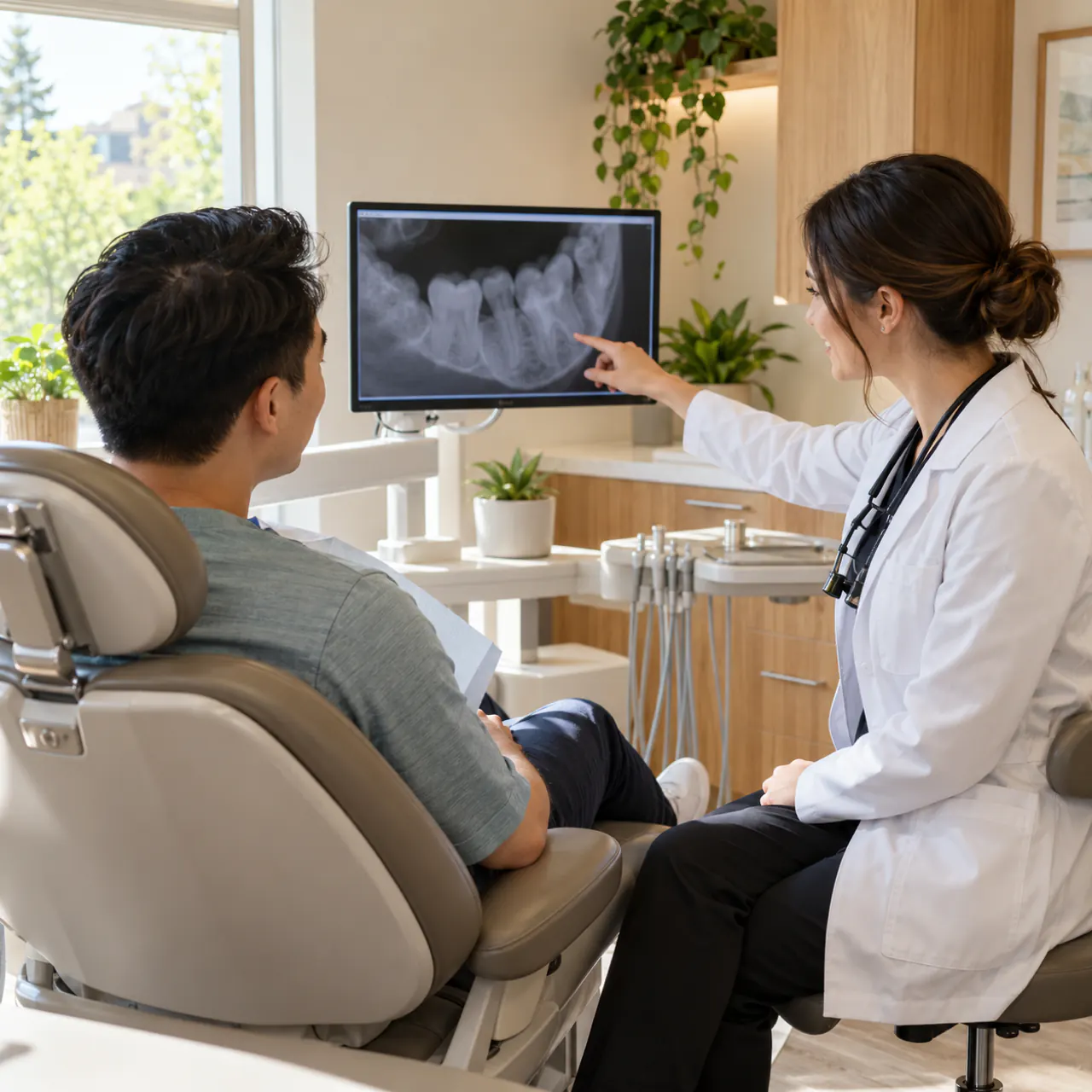
We review x-rays and examine the tooth to see whether a root canal or gum treatment could still save it. If removal is recommended, we explain why.
Review health and timing
We go over medical conditions, medications, and any antibiotics you have taken. Sometimes we remove the tooth right away, and sometimes we let swelling settle first.
Thorough numbing
Local anaesthetic is placed and given extra time to work. We check carefully that the area is numb before beginning.
Careful removal
The tooth is gently loosened and removed, protecting the surrounding bone. Teeth with curved or broken roots may need a surgical approach.
Clean and protect the socket
Infected tissue may be cleaned from the socket, and gauze is placed to help a clot form. Stitches may be used in some cases.
Aftercare and follow-up
We explain how to care for the site, which medications to take, and what normal healing looks like. A follow-up visit may be booked to confirm the infection has cleared.
Planning and healing
What changes when the tooth is infected.
These are the factors we weigh when planning the removal of an infected tooth, and the signs that healing is on track.
What we consider when the tooth is infected
- Whether the tooth could still be saved with a root canal
- The extent of swelling and infection in the bone
- Whether antibiotics are helpful before or after removal
- How well the area is likely to numb
- Medical conditions that affect healing
- Medications such as blood thinners or bone medications
- The shape of the roots and nearby structures on x-ray
- Whether socket preservation or later bone grafting may help
Signs of healing and signs to call
- Pain and swelling easing over the first few days is normal
- Mild oozing in the first day is expected
- A bad taste fading as the socket heals is a good sign
- Call if pain worsens after day two or three
- Call if swelling increases instead of decreasing
- Call if pus or a foul taste returns
- Seek emergency care for swelling affecting breathing, swallowing, or vision
- Seek emergency care for swelling with a high fever
Infected extractions in Guelph
Careful planning for routine and complex cases.
Many infected teeth can be removed at our Kortright Road West office. When infection is widespread, the tooth is impacted, or medical factors add complexity, care is planned around your needs and may be coordinated with a trusted specialist or your physician. We will explain which path fits your situation.
Related services
Related extraction and infection care
Questions patients ask
Infected tooth extraction FAQs
Answers about removing an infected tooth. If you have facial swelling that affects breathing, swallowing, or vision, or swelling with a high fever, call 911 or go to the nearest emergency department right away rather than waiting for an extraction appointment.
Can a tooth be pulled while it is infected?
Often, yes. Removing the tooth is sometimes the fastest way to clear the infection. In other cases, we may let swelling settle first, depending on your exam and health history.
Do I need antibiotics before an infected tooth is removed?
Not always. Antibiotics may be recommended when infection is spreading, there is swelling or fever, or your health calls for them. Many infected teeth can be removed without them.
Why is an infected tooth harder to numb?
Infection makes the surrounding tissue more acidic, which can reduce how well local anaesthetic works. We allow extra time and may use different numbing techniques to keep you comfortable.
Will the infection go away after the tooth is removed?
In most cases, removing the tooth removes the source, and the infection resolves as the area heals. We may check the site at a follow-up visit to make sure.
Is healing slower after an infected extraction?
It can take a little longer, especially if bone was affected. Following aftercare instructions closely and keeping the area clean helps the socket heal well.
Can I get an implant after an infected tooth is removed?
Often, yes, though the area may need time to heal first. In some cases, socket preservation or bone grafting may be recommended, depending on your exam.
What if my face is swollen?
If swelling affects breathing, swallowing, or vision, or comes with a high fever, call 911 or go to the nearest emergency department right away. Mild swelling can usually be assessed at an urgent dental visit.
Should I finish the antibiotics after the extraction?
If antibiotics were prescribed, take them exactly as directed and finish the course unless your dentist or physician tells you otherwise. Let us know right away if you have side effects.