

Cosmetic dentistry in Guelph
Internal tooth bleaching in Guelph for one dark tooth that regular whitening cannot reach.
A tooth that has had a root canal or an old injury can slowly turn grey or brown from the inside. Regular whitening works on the outer surface, so it often cannot lighten this kind of darkening. Internal bleaching places a whitening material inside the tooth, where the colour change starts, to brighten it gradually.
Why internal bleaching
A conservative first step for a single darkened tooth.
Internal bleaching can often improve the colour of a dark tooth without covering it with a crown or veneer, which helps keep natural tooth structure.
Targets the source of the colour
Darkening after a root canal often comes from inside the tooth, which is where internal bleaching works.
Keeps the natural tooth
If the colour improves enough, the tooth may not need a crown or veneer to look natural.
Gradual, controlled change
The tooth lightens over a series of visits, so we can stop when it is close to the teeth beside it.
Works with other cosmetic plans
Internal bleaching can be combined with regular whitening so the dark tooth and the rest of your smile match.
A better base for later work
Even if a veneer or crown is needed later, a lighter tooth underneath can make it easier to get a natural shade.
A check of the root canal
Before bleaching, we review the root canal on x-ray and make sure the tooth is healthy and sealed.
What to expect
A few short visits to lighten the tooth step by step.
Internal bleaching usually takes more than one appointment. The material is left inside the tooth between visits and refreshed until the shade is close to its neighbours.
Exam and x-ray
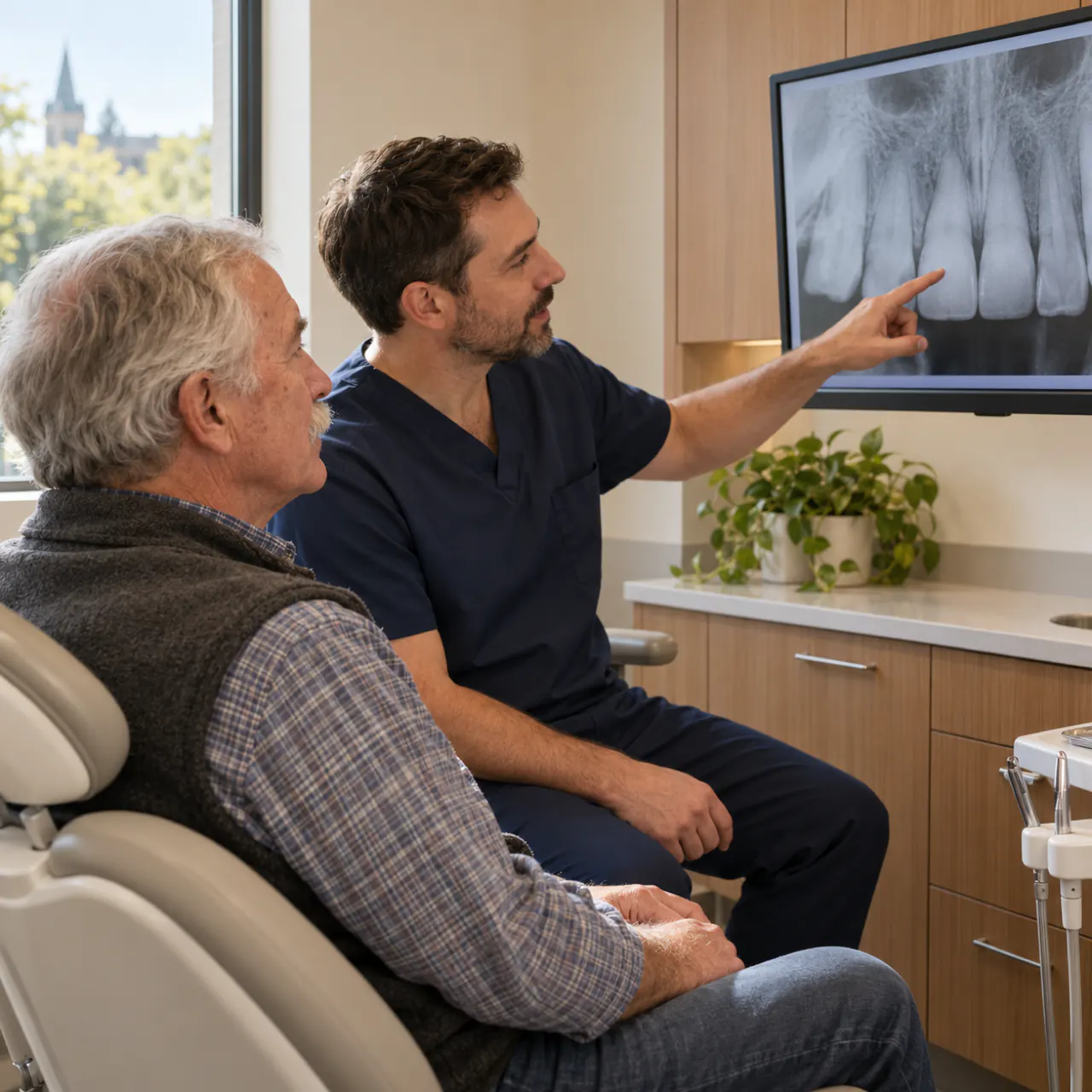
Your dentist examines the dark tooth and takes an x-ray to check the root canal filling and the bone around the root. If the root canal needs attention, that comes first.
Record the starting shade
We take photos and note the tooth's shade alongside its neighbours. This helps us see the progress between visits.
Open and seal the tooth
A small opening is made in the back of the tooth, usually where the root canal access was. A protective seal is placed over the root canal filling to keep the bleaching material in the crown of the tooth.
Place the bleaching material
Whitening material is placed inside the tooth and covered with a temporary filling. You go home with it in place, and it keeps working between visits.
Review and refresh
After several days, we check the shade and replace the material if more lightening is needed. This step may be repeated a few times.
Final filling
Once the shade is close to the neighbouring teeth, the material is removed and the opening is sealed with a tooth-coloured filling. We review the result and how to look after the tooth.
Internal bleaching details
Who it suits, and what to watch for.
Internal bleaching is only for teeth that have had root canal treatment. A careful check of the root canal seal comes first.
When internal bleaching may help
- A front tooth that darkened after root canal treatment
- Grey or brown colour from an old injury that later needed a root canal
- A single dark tooth among otherwise lighter teeth
- Teeth with a sound, well-sealed root canal filling
- Patients who want to avoid a crown when possible
- Before a veneer, to give a lighter base
- Alongside regular whitening for an even smile
- Teeth without large fillings or cracks
Things to know and watch for
- Only teeth with root canal treatment can be bleached internally
- The tooth may need several visits to reach the target shade
- Some teeth respond less than others, depending on the cause of the colour
- The colour can slowly darken again over the years
- Avoid biting hard foods on the tooth while the temporary filling is in place
- Call us if the temporary filling feels loose or falls out
- Regular x-rays may be suggested to check the root afterward
- A veneer or crown may still be recommended if colour does not improve enough
Care close to home
Single-tooth colour care in Guelph.
Internal bleaching involves a series of short visits, so having a nearby office matters. Our Kortright Road West location in south Guelph, with evening and Saturday hours, makes those check-ins easier to fit into your week.
Related services
Related care for dark teeth
Questions patients ask
Internal bleaching FAQs
Patients with one dark tooth often have the same questions. Here are the answers we give most.
Why did my tooth turn dark after a root canal?
A tooth can darken after a root canal or an injury because of changes inside the tooth, such as breakdown of the old nerve tissue or materials used during treatment. The colour comes from inside, so surface whitening often does not help much.
What is internal tooth bleaching?
Internal bleaching places whitening material inside a root canal treated tooth, sealed in with a temporary filling. It lightens the tooth from the inside over a few days and may be repeated until the shade improves.
Can internal bleaching be done on a tooth without a root canal?
No. Internal bleaching is only for teeth that have had root canal treatment. If a dark tooth has not had a root canal, your dentist will first check whether the nerve is healthy.
How many visits does internal bleaching take?
It often takes a few visits spaced several days apart. The number depends on how dark the tooth is and how it responds to the material.
Is internal bleaching uncomfortable?
Because the tooth has had a root canal, it usually has no nerve feeling inside. Most patients feel comfortable during treatment, though the gums nearby may feel slightly tender.
Will the tooth stay white after internal bleaching?
Many teeth hold their improved shade for years, but some darken gradually over time. A touch-up may be possible, and we monitor the tooth at your regular checkups.
Are there risks with internal bleaching?
Like any treatment, internal bleaching has some risks. In rare cases, changes to the root can occur, which is why we seal the root canal before bleaching and may recommend follow-up x-rays.
Is internal bleaching better than a crown for a dark tooth?
Internal bleaching is more conservative and keeps the natural tooth. A crown may be a better choice if the tooth is heavily filled, cracked, or does not lighten enough.