

Adult orthodontics in Guelph
It is not too late to straighten your teeth, and adult treatment has its own considerations.
Many adults choose Invisalign because they never had braces, their teeth have shifted over the years, or crowding has made cleaning harder. Adult teeth can move well, but gums, bone, existing dental work, and a busy life all shape how we plan treatment.
Why adults choose aligners
Discreet treatment that respects your work, family, and health.
Adults often want results without the look of braces or a long list of food rules. Aligners can offer that when they suit the case.
Discreet at work and in photos
Clear aligners are difficult for others to spot, which many adults appreciate in meetings, presentations, and family events.
Easier cleaning around gums
Because aligners come out, you can brush and floss normally, which is especially important for adults with gum concerns.
May reduce uneven wear
Improving how teeth meet may help spread biting forces more evenly, depending on your bite and the movements planned.
Can make cleaning easier long term
Straighter teeth can be easier to keep clean, which may help with plaque control around formerly crowded areas.
Can set up future dental work
Aligning teeth first can sometimes make crowns, bridges, implants, or veneers simpler and more conservative.
Fits around your meals and routines
You remove aligners to eat, so there is no long list of foods to avoid, though wearing them as directed is still essential.
Adult treatment
How we plan Invisalign for adult patients.
Adult treatment starts with a careful look at the foundations: gums, bone, and the dental work you already have. Then we plan movement around those.
Talk about why now
We ask what prompted you to consider treatment, whether it is appearance, crowding, wear, or shifting. Your reasons help us set priorities.
Check gums and bone first
Gum health and bone support are assessed carefully, sometimes with x-rays. Teeth should move only when the gums are stable and healthy.
Review your existing dental work
We look at fillings, crowns, bridges, and implants, since some may affect attachments or need updating before or after treatment. Implants do not move, so we plan around them.
Scan and plan the movements
A digital scan is used to plan your aligner series. We explain what will change, what may not, and whether any steps like gentle space creation are involved.
Begin wearing aligners
You receive your aligners and any attachments, and we go over daily wear, cleaning, and what to do when travelling or busy. Check-ins are spaced to suit your plan.
Finish with a retention plan
Adults are just as prone to shifting as teens, so we fit a retainer and explain long-term wear. Your regular exams include a check on how your teeth are holding.
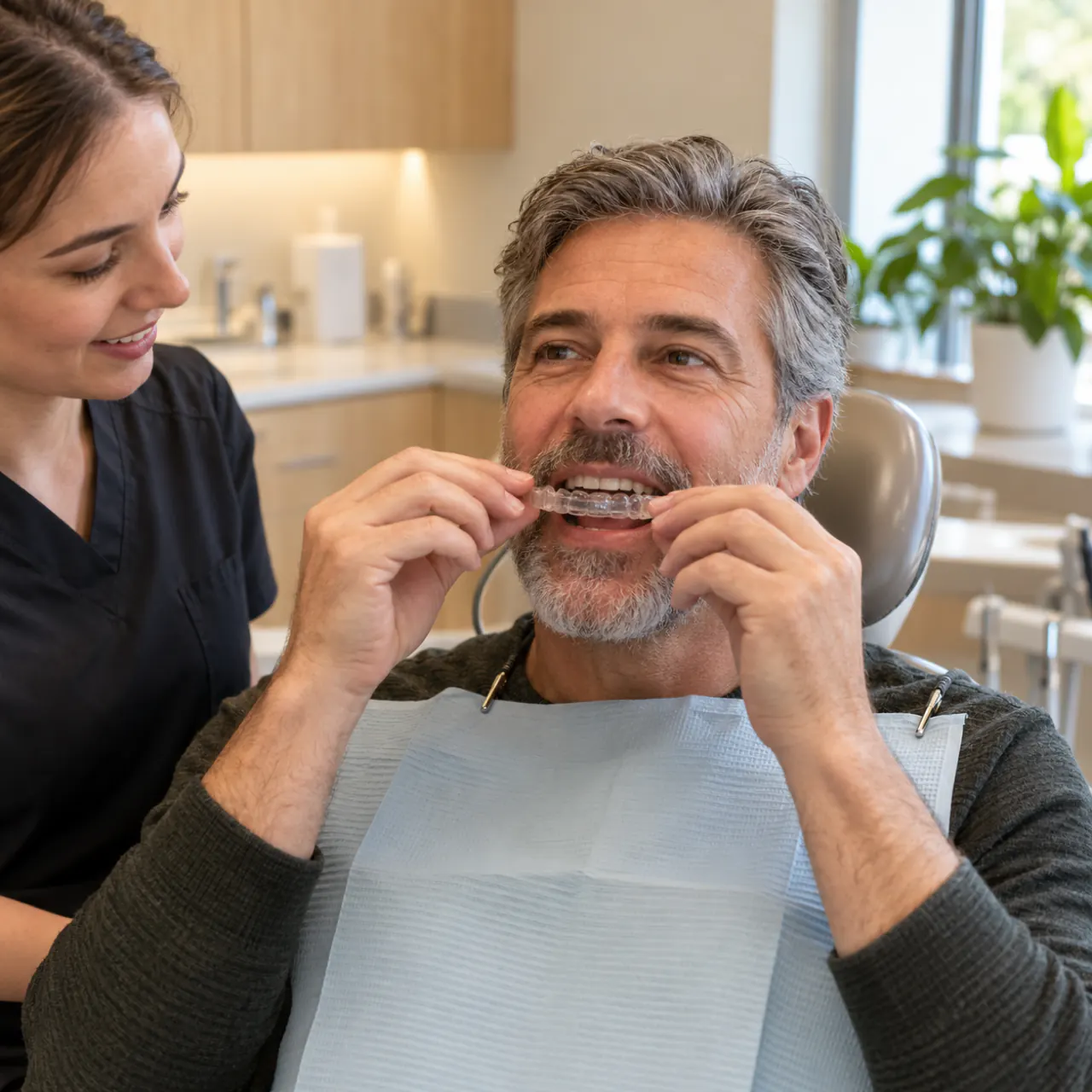
Adult considerations
What makes adult aligner treatment different.
Adult teeth have a history. Fillings, crowns, gum changes, and wear patterns all matter when teeth begin to move.
Things we consider for adult patients
- Gum recession and the thickness of the gums
- Bone levels around the roots of teeth
- Large fillings, crowns, and bridges that affect attachments
- Dental implants, which stay fixed while other teeth move
- Worn or chipped edges that may need bonding after alignment
- Signs of clenching, grinding, or jaw discomfort
- Missing teeth and the spaces they have left
- Medications or health conditions that may affect gum health
Common reasons adults seek treatment
- Never having had braces as a child
- Lower front teeth that have crowded with age
- Teeth that have shifted after old braces
- Gaps that have opened up over time
- Difficulty flossing between overlapping teeth
- Uneven wear on front teeth from the bite
- Preparing for crowns, veneers, or an implant
- Wanting more confidence in professional settings
Adult Invisalign in Guelph
Aligner check-ins that fit around a working week.
Our Kortright Road West office is open until 8 PM Monday to Thursday, so many adult patients schedule their aligner check-ins after work instead of taking time off. We have cared for Guelph families for more than 25 years, and it is common for parents to start treatment of their own after a child's orthodontic journey.
Related services
Related pages for adult patients.
Questions patients ask
Invisalign questions adults ask most
Adults bring different questions than teens do. These are the ones we hear most often.
Am I too old for Invisalign?
There is no upper age limit for moving teeth. What matters more is the health of your gums, bone, and teeth. Many adults in their forties, fifties, and beyond are suitable candidates after an exam.
Can I get Invisalign if I have crowns or fillings?
Often, yes. Crowns and fillings can move with the tooth, though attachments may bond differently to them. We review your dental work during planning and let you know if anything should be updated before or after treatment.
Can Invisalign move teeth around a dental implant?
An implant is fixed in the bone and will not move with aligners, but nearby natural teeth can often still be moved. We plan the treatment around the implant and use it as a stable point when appropriate.
Does Invisalign take longer for adults?
It can, since adult bone may respond a little more slowly and adult cases often involve more existing dental work. Every case is different, so we give you an estimate based on your exam and plan.
Is Invisalign safe if I have had gum disease?
It may be, once the gums are stable and well maintained. Moving teeth while gums are inflamed is not advisable. We assess your gum health first and may recommend periodontal care before and during treatment.
Will my teeth hurt while wearing aligners?
Many adults feel pressure or mild tenderness for a day or two when switching to a new aligner. This usually settles as teeth adjust. Let us know if discomfort is strong or lasts longer than expected.
Can I wear Invisalign if I grind my teeth?
Often, yes, though grinding can wear aligners faster and may need to be discussed. We look at your wear patterns and talk about protecting your teeth during and after treatment.
Will I have to wear a retainer forever as an adult?
Long-term retainer wear is usually recommended, often at night, because teeth can drift at any age. We explain a realistic schedule so it becomes an easy part of your routine.