

Overnight jaw care in Guelph
If your jaw hurts most when you wake up, we look at what your jaw is doing while you sleep.
Morning jaw pain often means something is happening overnight. Grinding, clenching, sleeping on your face, or disrupted sleep can all leave the jaw muscles and joints sore by the time your alarm goes off. We focus on those overnight patterns and help you find ways to wake up more comfortably.
Why focus on the night
Your morning symptoms are a window into your sleep.
Because morning jaw pain usually builds overnight, the most useful solutions often target what happens while you sleep.
Wake up more comfortably
Reducing the strain your jaw goes through overnight may ease that first-thing-in-the-morning soreness.
Find nighttime grinding
Many people grind or clench in their sleep without knowing. Dental signs often confirm it.
Consider sleep position
Sleeping on your stomach or with a hand under your jaw can push it out of a relaxed position. Small changes may help.
Notice sleep breathing clues
Morning jaw pain with snoring, gasping, or daytime fatigue may be worth discussing with your physician.
Protect teeth overnight
A custom appliance can protect enamel and dental work from nighttime forces and may reduce muscle strain.
A gentle morning routine
Simple warmth and slow movements in the morning can help stiff muscles loosen up as your day begins.
Your visit
Piecing together what happens overnight.
You cannot watch yourself sleep, so we use your symptoms, your teeth, and sometimes a partner's observations to understand the pattern.
Your mornings and nights
We ask how your jaw feels on waking, how long the soreness lasts, and how you sleep. If a partner has heard grinding, snoring, or pauses in breathing, that is very helpful to know.
Look for overnight wear
Your dentist checks for flattened or chipped teeth, scalloped tongue edges, cheek ridging, and gum recession. These signs can point to sleep grinding or clenching.
Jaw and muscle check
We examine the jaw joints and chewing muscles for tenderness and measure your opening. This helps tell muscle soreness from joint involvement.
Rule out dental causes
We check the teeth for decay, cracks, or infection that may also cause aching. X-rays may be recommended if a dental cause needs to be ruled out.
Build your overnight plan
We may recommend a nightguard or splint, sleep position changes, and evening habits such as limiting caffeine and alcohol. If sleep breathing concerns come up, we suggest speaking with your physician.
Check how mornings change
At follow-up, we ask how your mornings feel now and adjust the plan. Keeping a short note of morning symptoms for a few weeks helps us see the trend.
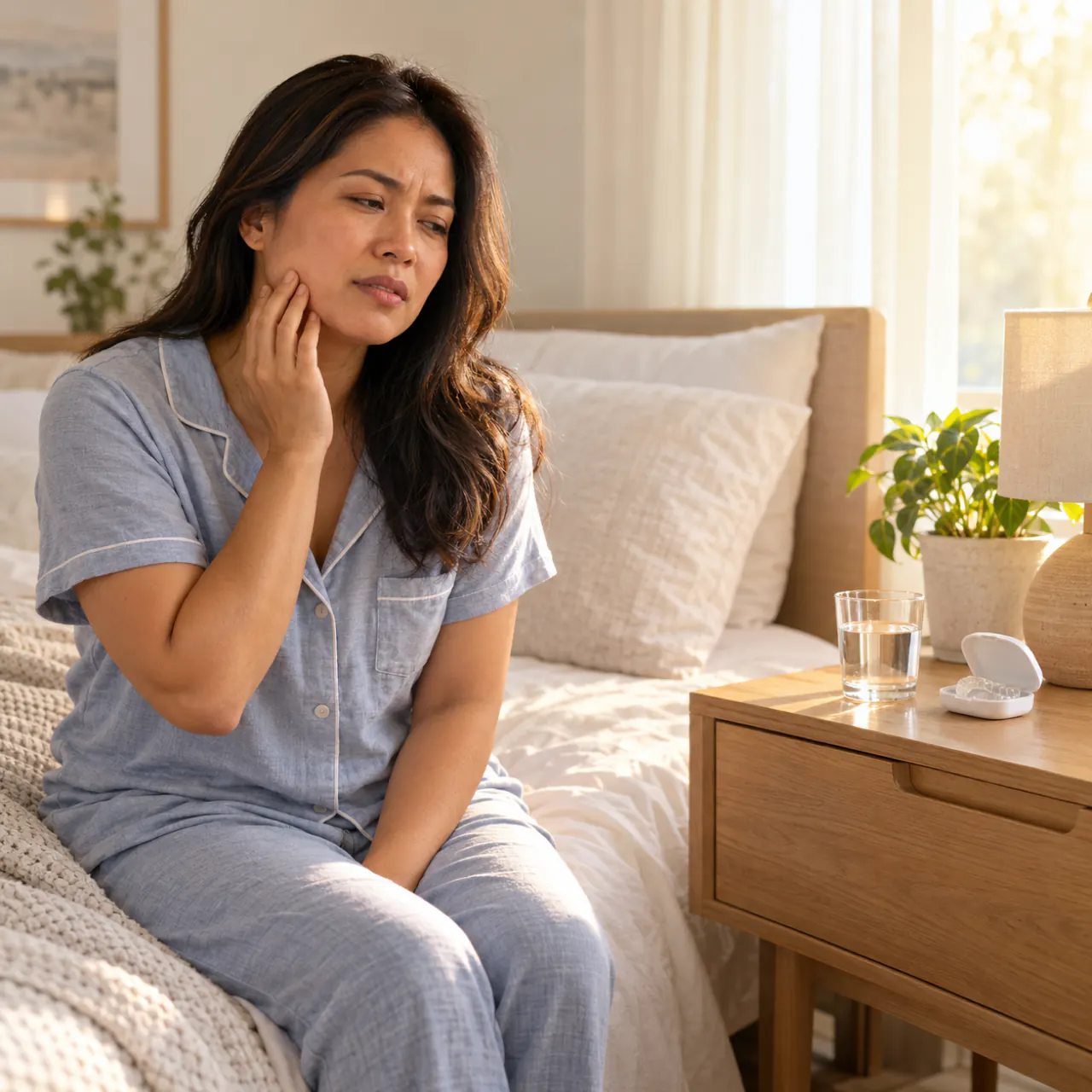
Overnight factors
What can make the jaw sore by morning, and what may help.
Several overnight factors often work together. Addressing even one or two can make mornings easier.
Overnight factors that may cause morning jaw pain
- Grinding or clenching during sleep
- Sleeping on your stomach with your face turned to one side
- Resting your jaw on your hand or arm
- A pillow that pushes your head forward
- Snoring or possible sleep-related breathing problems
- Late caffeine or alcohol that disrupts sleep
- High stress in the hours before bed
- A worn or poorly fitting existing nightguard
Morning and evening habits that may help
- A warm, damp cloth on the jaw muscles for a few minutes after waking
- Slow, gentle opening and closing before breakfast
- Softer foods at breakfast during flare-ups
- A wind-down routine in the hour before bed
- Back or side sleeping with neutral neck support
- Limiting caffeine later in the day
- Wearing your appliance every night as recommended
- Noting morning symptoms to share at follow-up
Morning jaw pain help in Guelph
Appointments that work around your mornings.
If mornings are when you feel worst, an early appointment can let us see your jaw at its most symptomatic. Our Guelph office opens at 8 AM Monday to Saturday, and we also offer evening times Monday to Thursday for follow-up visits.
Related services
Related pages for nighttime grinding and jaw pain.
Questions patients ask
Morning jaw pain FAQs
Common questions from patients who wake up with a sore, stiff, or tired jaw.
Why does my jaw hurt when I wake up?
The most common reason is clenching or grinding during sleep, which tires the jaw muscles overnight. Sleep position, stress, and sleep quality can also contribute, and an exam helps confirm what is most likely in your case.
Can sleeping position cause jaw pain?
It can. Sleeping on your stomach or resting your jaw on your hand may push the jaw into a strained position for hours. Many people find back or side sleeping with neutral neck support more comfortable.
Is morning jaw pain a sign of sleep apnea?
Not necessarily, but morning jaw pain or headaches along with loud snoring, pauses in breathing, or daytime sleepiness are worth mentioning to your physician. Only a physician can arrange a sleep assessment and diagnose sleep apnea.
Will a nightguard help my morning jaw pain?
For many people whose morning pain comes from sleep grinding or clenching, a custom nightguard or splint may help reduce strain and protect the teeth. We review how your mornings feel after you start wearing it.
My jaw hurts more since I started wearing a store-bought guard. Why?
Some bulky or poorly fitting guards encourage chewing on the appliance, which can increase muscle activity. Bring it to your visit so we can assess it and discuss whether a custom appliance would suit you better.
How long should morning jaw stiffness last?
Mild stiffness that eases within an hour of waking is common with sleep clenching. If it lasts most of the day, is getting worse, or limits how wide you can open, book an assessment.
Can stress cause morning jaw pain?
Stress may increase clenching and grinding during sleep, which can lead to soreness in the morning. Managing stress is often one part of the plan, alongside protecting your teeth.
What can I do tonight to help my jaw tomorrow?
Try to avoid caffeine and alcohol late in the evening, take a few minutes to relax before bed, and sleep on your back or side if you can. If you already have a custom nightguard, wear it consistently.