

Bite refinement in Guelph
A precise, conservative bite adjustment when one spot is taking more than its share of force.
An occlusal adjustment is a small procedure in which your dentist smooths and reshapes specific high points on a tooth, filling, or crown so your bite meets more evenly. Because enamel does not grow back, we only recommend it after a careful bite assessment shows a clear reason, and we remove as little as possible.
When it helps
Small refinements that can make a bite feel right again.
Occlusal adjustment is most useful for specific, identifiable high spots rather than as a general treatment for jaw pain.
Relief for an overloaded tooth
A tooth that hits first can become sore or sensitive. Smoothing the high spot may let it settle.
New dental work that feels natural
Fine-tuning a new filling or crown helps it blend into your bite so you stop noticing it.
More even chewing
When contacts are balanced, chewing forces are shared across more teeth.
Smoother jaw movement
Removing interferences when you slide your jaw sideways can make movement feel less blocked.
Fewer chips on restorations
Reducing a heavy contact on a crown or veneer may lower the risk of chipping.
Conservative and targeted
Only the specific areas that need it are adjusted, and changes are kept as small as possible.
The procedure
What happens during an occlusal adjustment.
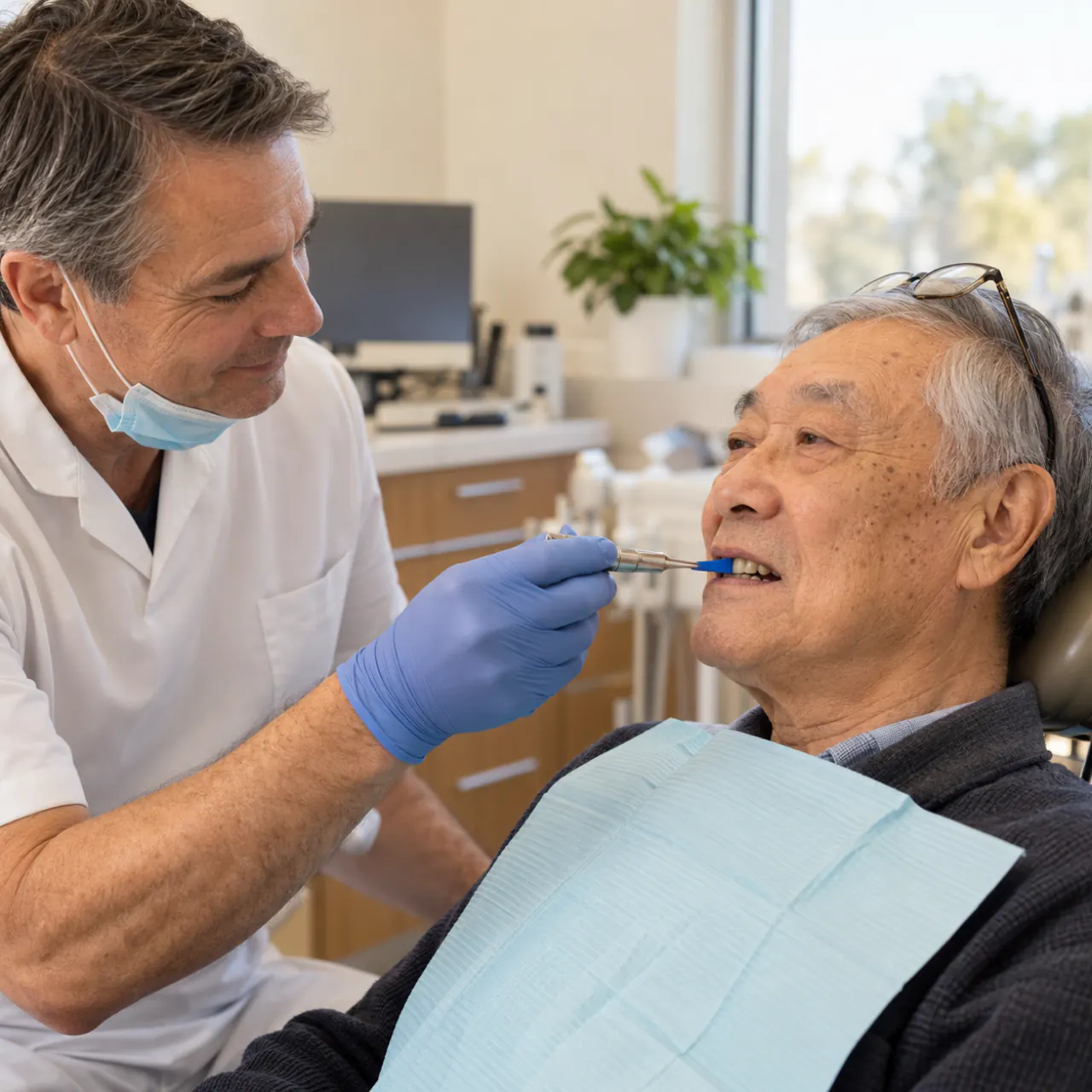
Most adjustments are quick and done in small steps, with frequent checks so nothing is overdone.
Confirm the reason
We start with a bite assessment to identify exactly which contacts are high or interfering. If jaw muscles are very tight, we may wait or use a splint first so the bite can be assessed accurately.
Explain the plan
Your dentist shows you which spots will be adjusted and why. We discuss that enamel removal is permanent so you can make an informed decision.
Mark the contacts
You bite and slide on thin marking paper, which leaves coloured marks where your teeth meet. These marks guide where the adjustment is made.
Adjust in small steps
Your dentist smooths the high areas a little at a time, checking your bite between each step. Most adjustments do not require freezing, but we can discuss options if a tooth is sensitive.
Polish and recheck
Adjusted surfaces are polished smooth so they feel natural and resist staining. We check your bite in several positions before you leave.
Follow-up if needed
Your bite may feel slightly different for a day or two. If anything still feels high or sore, a short follow-up lets us refine it further.
Good uses and limits
When adjustment is a sensible choice, and when it is not.
Because it changes tooth structure, occlusal adjustment is planned carefully and used for the right reasons.
When occlusal adjustment may be appropriate
- A new filling or crown that feels high
- A single tooth that is sore from heavy contact
- Interferences that block smooth side-to-side movement
- A sharp or rough edge catching the opposing tooth
- Refining the bite after orthodontic treatment
- Balancing contacts during larger restorative work
- Reducing a heavy contact on a crown or veneer
- Adjusting after a tooth has shifted slightly
When we take a more cautious approach
- As a first treatment for general jaw or TMJ pain
- When jaw muscles are acutely sore and the bite is not stable
- If the bite problem is from alignment better addressed by orthodontics
- When significant reshaping would be needed
- If teeth are already thin from wear or erosion
- When symptoms are not clearly linked to a specific contact
- Before trying reversible options such as a splint
- When a specialist opinion would be more appropriate
Bite adjustments in Guelph
Quick bite checks after dental work, right here in Guelph.
If a filling or crown placed at our Kortright Road West office feels high after the numbness wears off, give us a call. A short visit to check and refine the bite is often all that is needed, and it is better done sooner than later.
Related services
Related pages for bite and dental work concerns.
Questions patients ask
Occlusal adjustment FAQs
Common questions from patients whose bite feels uneven or whose new dental work feels high.
What is an occlusal adjustment?
It is a procedure where your dentist carefully smooths specific high points on teeth or dental work so your bite meets more evenly. It is sometimes called a bite adjustment or selective reshaping.
Does an occlusal adjustment hurt?
Most patients find it comfortable, and freezing is often not needed. If a tooth is sensitive, tell us and we will discuss ways to keep you comfortable.
Is occlusal adjustment permanent?
Yes. Enamel and restorative material that is removed does not grow back, which is why we only adjust after a careful assessment and keep changes as small as possible.
Can an occlusal adjustment fix TMJ pain?
Occlusal adjustment is not generally a first-line treatment for TMJ or jaw pain. Reversible options such as self-care and a splint are usually tried first, and adjustment is reserved for specific, identified bite problems.
My new crown feels high. Can it be adjusted?
Yes. A crown or filling that feels high can usually be adjusted in a short visit. It is best not to wait, because a high restoration can make the tooth sore.
How long does an occlusal adjustment take?
A simple adjustment of one tooth or restoration is usually quick. Adjusting several areas takes longer and may be spread over more than one visit.
Will my teeth look different after an adjustment?
Usually not. Bite adjustments are made on chewing surfaces and contact areas in very small amounts, so the change is rarely visible.
Why does my bite feel strange after an adjustment?
It may take a day or two for your mouth to get used to the new contacts. If anything still feels uneven after that, call us for a quick recheck.