

Home care coaching in Guelph
Small changes to how you brush and clean between teeth can make a real difference.
Oral hygiene instruction is coaching tailored to your mouth. Your hygienist shows you where plaque is collecting, demonstrates techniques and tools that suit your teeth and hands, and lets you practise with guidance, so the routine you follow at home actually reaches the areas that need it.
Why coaching helps
A routine built around your teeth, not a generic checklist.
Most people brush every day but still miss the same spots. Personal instruction focuses on your trouble areas and the tools that fit them.
Find your missed spots
We show you exactly where plaque is staying behind, often along the gumline and between back teeth.
Choose the right tools
Floss, interdental brushes, water flossers, and electric toothbrushes each suit different situations. We help you pick what will work.
Practise with feedback
Trying a technique while your hygienist watches is the quickest way to correct angle, pressure, and timing.
Protect your dental work
Crowns, bridges, implants, and braces need specific cleaning methods. We teach what is needed to keep them healthy.
Healthier, calmer gums
Better plaque removal at home can help reduce gum bleeding and inflammation over time.
Support for limited dexterity
Arthritis, tremors, or reduced grip strength can make brushing hard. We suggest adapted handles and techniques that help.
A coaching session
How we teach and practise home care.
Instruction can be part of your hygiene appointment or a focused visit on its own. It is relaxed, practical, and never a lecture.
Talk about your current routine
We ask how and when you brush, what you use between your teeth, and what feels difficult. There are no wrong answers.
Show where plaque collects
Your hygienist may use a mirror, intraoral photos, or a disclosing solution that temporarily colours plaque. This makes missed areas easy to see.
Demonstrate the technique
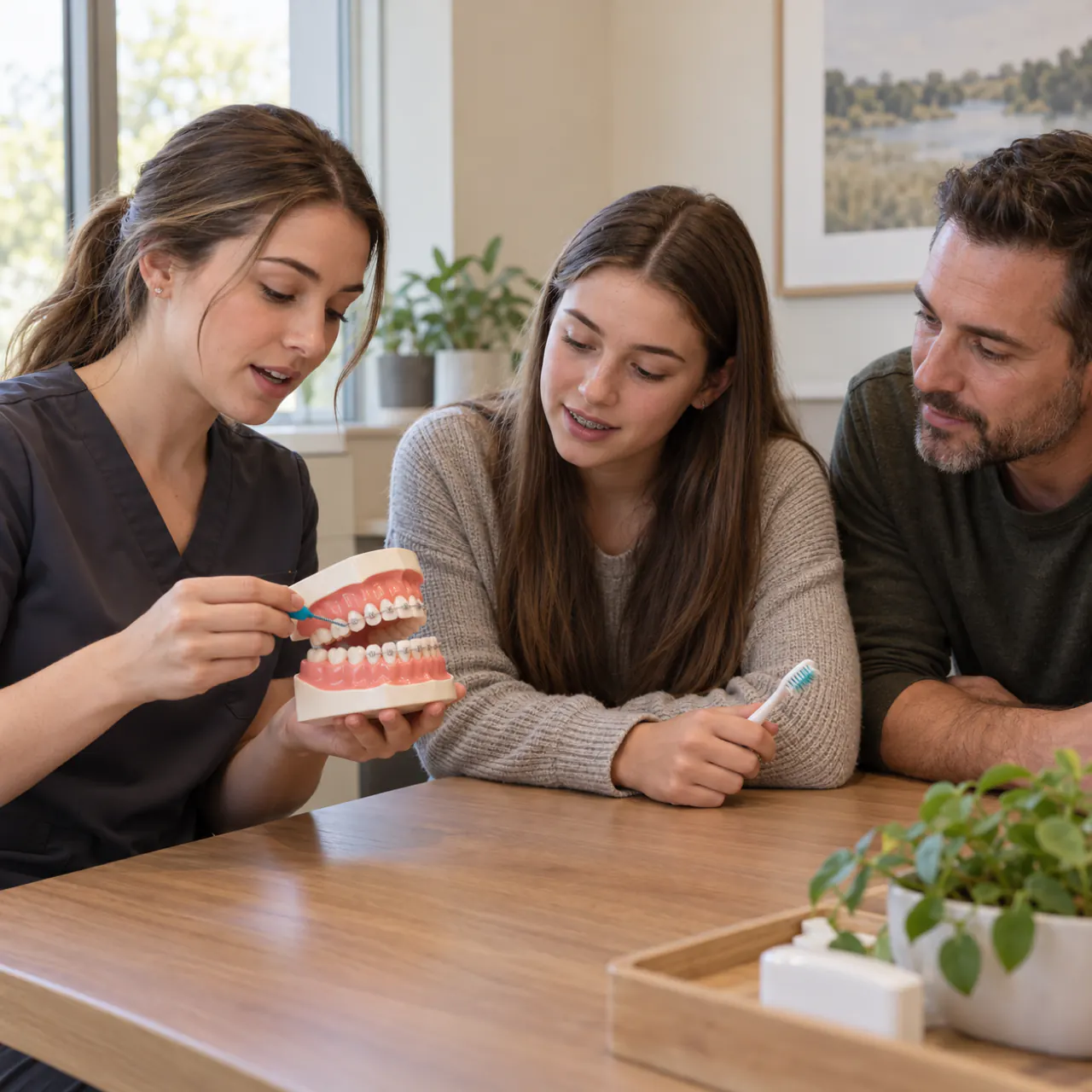
We show the brushing angle, motion, and pressure on a model or in your mouth. Then we demonstrate the interdental tool that suits your gaps.
Let you try it
You practise with your own hands while we guide you. We adjust grip, angle, or tool size until it feels manageable.
Build a simple routine
We agree on a realistic daily routine that fits your schedule. Simple steps done consistently tend to work better than a complicated plan.
Check progress next visit
At your next hygiene appointment, we look at how your gums have responded. We fine-tune the routine based on what we see.
Tools and techniques
What we may cover in your session.
Not every tool suits every mouth. We recommend what makes sense for your teeth, gums, dental work, and dexterity.
Techniques and tools we may cover
- Brushing angle along the gumline
- Manual versus electric toothbrush use
- String floss technique for tight contacts
- Interdental brush sizing for larger gaps
- Water flossers for braces, bridges, and implants
- Floss threaders for cleaning under bridges
- Tongue cleaning for fresher breath
- Fluoride toothpaste and rinse use when recommended
Who benefits most from instruction
- Children learning to brush on their own
- Teens with braces or clear aligners
- Adults with bleeding or inflamed gums
- Patients with new crowns, bridges, or implants
- People with gum recession or sensitive roots
- Older adults with arthritis or reduced grip
- Caregivers brushing for a family member
- Anyone who builds tartar quickly
Coaching in Guelph
Bring your toothbrush to Kortright Road West.
Patients are welcome to bring their own toothbrush, floss, or water flosser to our Guelph office so we can show you how to get the most from what you already use. Parents, caregivers, and teens can join the same session so everyone at home learns the same approach.
Related services
Care that builds on good home habits
Questions patients ask
Oral hygiene instruction FAQs
Common questions about brushing, flossing, and getting personalized home care advice.
How long should I brush my teeth?
About two minutes, twice a day, is a good general goal. What matters most is reaching every surface along the gumline with gentle pressure. Your hygienist can show you a pattern that makes it easy to cover everything.
Is an electric toothbrush better than a manual one?
Both can work well with good technique. Some people find an electric toothbrush easier, especially those with limited dexterity or braces. We can help you decide based on your mouth and habits.
Do I really need to floss?
Brushing does not clean well between teeth, where cavities and gum problems often start. Floss is one option, but interdental brushes or water flossers may suit you better. The key is cleaning between your teeth daily in a way you will keep doing.
Why do my gums bleed when I floss?
Bleeding often means the gums are inflamed from plaque. With gentle, regular cleaning, bleeding usually improves within a couple of weeks. If it continues, let us know so we can check for other causes.
What is a disclosing tablet?
It is a harmless dye that temporarily colours plaque so you can see where it is. It is a useful teaching tool for both children and adults, and the colour brushes away.
How do I clean around braces or a bridge?
Braces and bridges create spaces that a regular toothbrush and floss can miss. Tools like floss threaders, small interdental brushes, and water flossers can help. We will show you how to use them for your specific appliance.
Can you help me brush for my parent or child?
Yes. We can teach caregivers positions and techniques that make brushing someone else's teeth easier and safer. Bring the person you care for, or come on your own to learn first.
Is oral hygiene instruction a separate appointment?
It is often included during hygiene visits. If you want more time to focus on technique, such as after getting braces or implants, we can schedule a dedicated session.