

After-treatment support in Guelph
If something doesn't feel right after dental work, we want to hear about it.
Some tenderness after a filling, crown, root canal, or implant is part of normal healing. Other symptoms, like a bite that feels high, sensitivity that keeps getting worse, or numbness that lingers, are worth a quick check. At Ironwood Dental, we help you sort out what is expected and what needs attention, and we often fix small issues in a short visit.
Why check in
Small adjustments can make a big difference.
Many post-treatment concerns have simple fixes. Checking early also helps us catch the rare complication before it grows.
Fix a high bite
A filling or crown that is slightly high can make a tooth sore. A small adjustment often brings quick relief.
Ease sensitivity
Sensitivity after a filling or whitening is common, and we can suggest products or treatments to help it settle.
Reassurance about healing
Knowing that a symptom is expected and will fade can make recovery much less stressful.
Catch complications early
Rarely, a tooth needs further care after treatment, such as a root canal after a deep filling. Early checks keep options open.
Check temporary restorations
Temporary crowns and fillings can loosen or break. Recementing or replacing them protects the tooth until the final restoration.
Monitor lasting numbness
Numbness that lasts beyond the expected time should be documented and followed, and we can coordinate further assessment when needed.
Your follow-up visit
Short, practical visits focused on comfort.
Most post-operative visits are brief. We focus on what has changed since your treatment and on making the area comfortable again.
Call and describe the change
Tell us which procedure you had, when it was done, and what you are noticing. Mention whether symptoms are getting better, worse, or staying the same.
Review the treatment record
We look at what was done and any notes or x-rays from the visit. For treatment done elsewhere, any details you can share help.
Examine the area
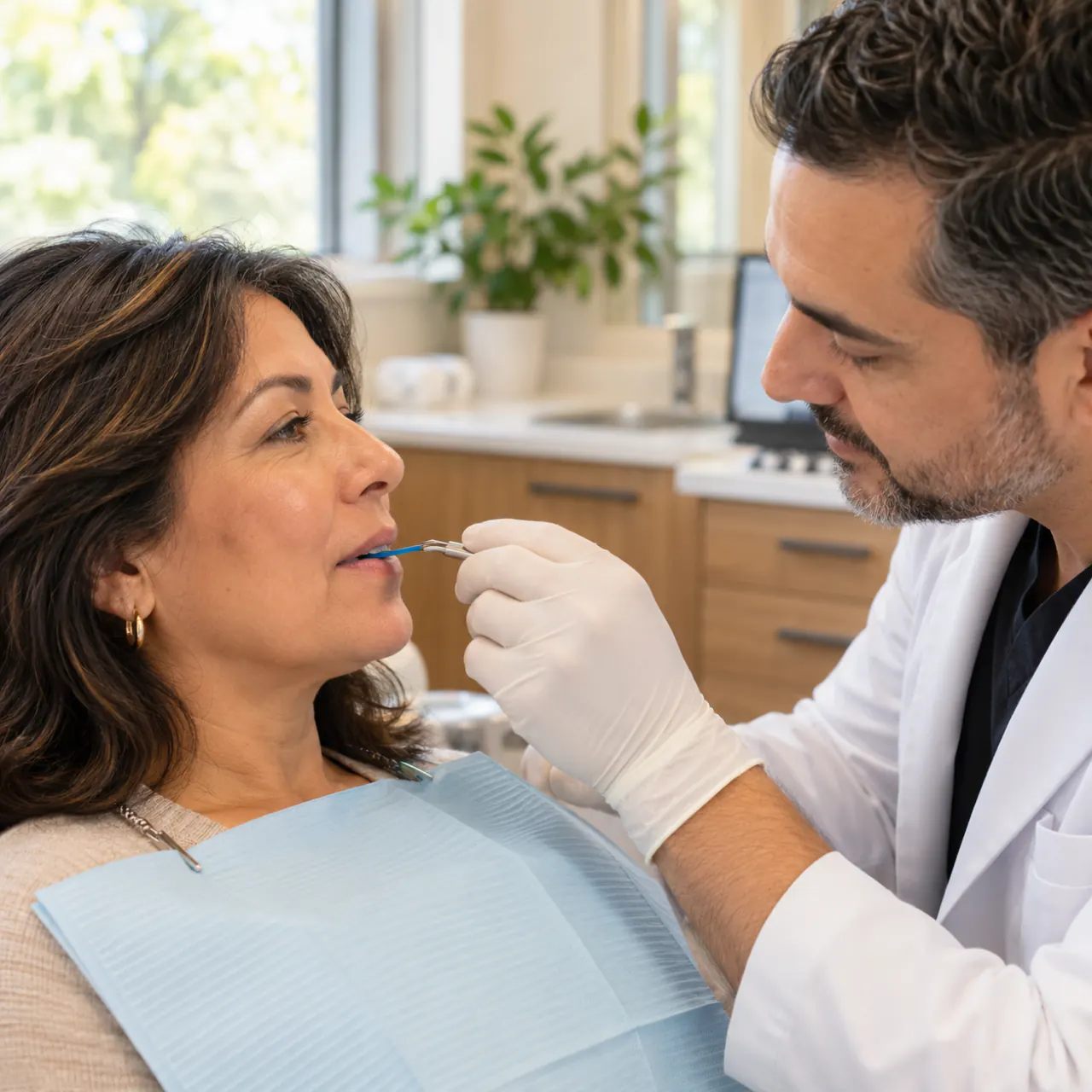
Your dentist checks the tooth, gum, and bite, and looks for swelling, cracks, or a loose restoration. Simple tests show how the tooth responds to cold and pressure.
Check the bite
Thin marking paper shows where your teeth touch. High spots on a new filling or crown can be smoothed in moments.
Treat or reassure
Depending on the findings, we may adjust the bite, apply a desensitizing treatment, recement a temporary, or recommend further care. If the symptom is part of normal healing, we explain how long it may last.
Plan a recheck
When it is helpful, we book a follow-up to make sure things have settled. You will know which changes mean you should call sooner.
What is normal and what is not
How long common symptoms last after treatment.
Healing varies by procedure and by person, but these patterns can help you know when to call.
Often normal for a short time
- Mild sensitivity to cold for a few days to weeks after a filling
- Tenderness when biting for a few days after a root canal
- Gum soreness around a new crown for a few days
- Jaw stiffness after a long appointment
- Mild swelling and bruising after an extraction or implant surgery
- Sensitivity for a day or two after whitening
- A temporary crown feeling slightly different from your teeth
- Minor tenderness at the injection site
Worth calling us about
- A bite that feels high or hits first on one tooth
- Sensitivity that is getting worse rather than better
- Throbbing or pain that wakes you at night
- Numbness that lasts well beyond the day of treatment
- A temporary crown or filling that is loose or has come off
- Swelling or a bad taste that develops days later
- Bleeding that does not stop with firm pressure
- Swelling affecting breathing, swallowing, or vision, or with high fever: go to the ER
Follow-up care in Guelph
Quick check-ins for patients of our office and others.
If you had treatment at our Kortright Road West office, call us and we will look at the area with your records in hand. If your procedure was done elsewhere and you cannot reach your original office, we can still assess the concern and help you get comfortable. Our hours run into the evening Monday to Thursday.
Related services
Related follow-up and emergency care
Questions patients ask
Post-operative dental FAQs
Answers about what to expect after dental treatment. If you develop facial swelling that affects breathing, swallowing, or vision, or swelling with a high fever, call 911 or go to the nearest emergency department right away.
Why does my tooth hurt after a new filling?
Some sensitivity to cold or pressure is common for a few days to a few weeks, especially with deeper fillings. If the bite feels high or the pain is getting worse, call us so we can check it.
My bite feels off after my appointment. Is that normal?
While the area is numb, it can be hard to judge your bite. If it still feels high once the numbness wears off, a quick adjustment usually solves it.
How long is a tooth sore after a root canal?
Tenderness when biting is common for a few days and usually eases steadily. Pain that worsens, swelling, or a temporary filling that comes out should be checked.
How long should numbness last after dental work?
Numbness from local anaesthetic typically wears off within a few hours. Numbness that lasts into the next day or longer should be reported so we can assess and monitor it.
My temporary crown came off. What should I do?
Keep it safe and call us. You may be able to slip it back on with a small amount of temporary dental adhesive from a pharmacy, but avoid household glues. We can recement it properly.
Is swelling after dental work an emergency?
Mild swelling after some procedures is expected. Swelling that grows days later should be checked promptly, and swelling that affects breathing, swallowing, or vision, or comes with a high fever, needs emergency medical care, so call 911 or go to the nearest emergency department.
Why is my new crown sensitive?
A new crown may be sensitive for a short time as the tooth adjusts, or if the bite is slightly high. Sensitivity that lingers or worsens may need further assessment.
Can you help if my treatment was done at another office?
Yes. We can assess the concern and provide care to make you comfortable. It helps to share what was done and when, and we may suggest following up with your original dentist as well.