

Denture preparation in Guelph
Pre-prosthetic oral surgery that shapes a steadier foundation for your new denture.
A denture is only as comfortable as the ridge it rests on. Sharp bone edges, bony growths called tori, or loose folds of gum can make a denture rock, rub, or hurt. Pre-prosthetic surgery gently reshapes these areas before your denture is made, and more involved cases may be coordinated with a trusted oral surgeon.
Why prepare first
Taking care of the foundation can make a new denture feel right sooner.
Pre-prosthetic surgery is not needed for everyone. When it is, it can save months of sore spots and repeated adjustments.
Fewer sore spots
Smoothing sharp bone edges reduces the pressure points that can make a new denture painful to wear.
Better denture stability
A more even ridge gives the denture a broader, steadier surface to rest on, which may reduce rocking while chewing.
Room for the denture to seat
Removing large tori or bony bulges creates space so an upper or lower denture can sit fully without catching.
Firmer supporting tissue
Trimming loose, flabby gum tissue gives the denture firmer tissue to rest on, which can improve fit.
Fewer remakes and adjustments
Addressing problem areas before impressions are taken may mean fewer adjustments once the denture is delivered.
A plan that matches your health
We consider your general health, medications, and healing before suggesting any surgery, and coordinate with your physician when appropriate.
Step by step
How pre-prosthetic surgery fits into your denture plan.
This surgery is one part of a larger plan. Here is how we move from the first denture conversation to a comfortable fit.
Denture consultation and exam
We talk about your goals for a new denture or partial and examine the ridges, palate, and floor of the mouth. If you already wear a denture, we look at where it rubs or rocks.
Imaging and models
X-rays and impressions or digital scans show the shape of the bone and any growths or roots below the surface. Models help you see what we see.
Recommend only what is needed
We explain which areas, if any, would benefit from reshaping and why. Some patients need nothing at all, while others need one small procedure.
Plan the surgery and the timing
We decide whether the procedure can be done at the same visit as extractions or separately, and whether specialist care is a better fit. A temporary or immediate denture may be planned to wear during healing.
Reshaping under local anaesthetic
With the area numbed, the gum is gently opened, the bone or tissue is reshaped, and the site is closed with stitches. You receive detailed aftercare instructions before going home.
Healing, then the final denture
Once the tissues have healed and settled, final impressions are taken for your new denture. We check the fit closely and adjust as needed.
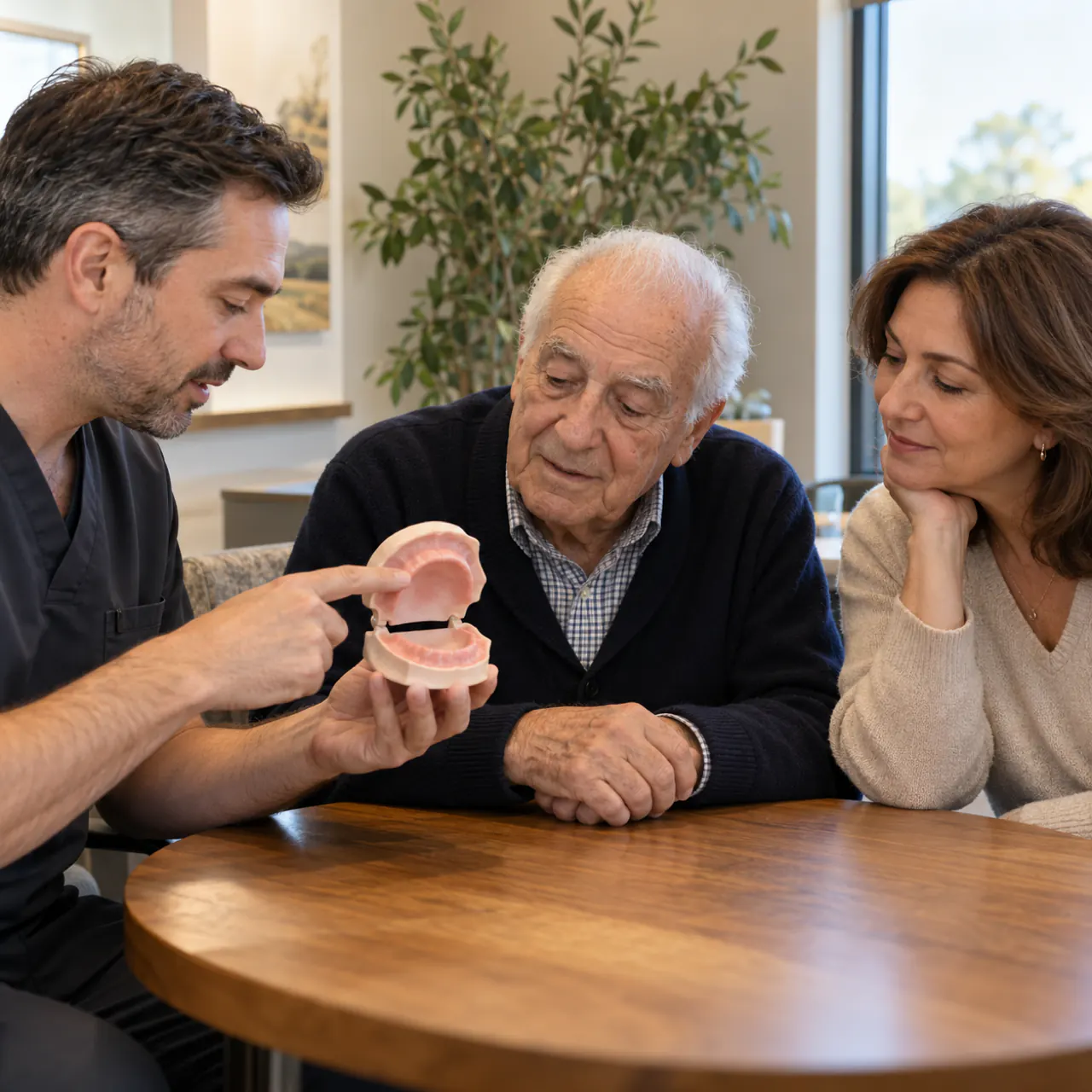
Procedures and planning
Common pre-prosthetic procedures and what we consider before recommending them.
Each procedure addresses a specific feature of the mouth. We only suggest what your exam shows is needed.
Common pre-prosthetic procedures
- Alveoloplasty to smooth and contour the bone ridge
- Removal of tori on the palate or inside the lower jaw
- Reduction of bony bulges that block denture seating
- Trimming of loose or excess gum tissue
- Release of tight muscle or tissue attachments
- Removal of retained roots under the planned denture
- Reshaping after multiple extractions at once
- Smoothing sharp ridges that cause sore spots
What we consider before recommending surgery
- How well your current denture fits and where it rubs
- The size and location of any bony growths
- Whether a reline might solve the problem instead
- Your medical history and medications, including bone medications
- Healing time before final impressions can be taken
- Whether a temporary denture is needed meanwhile
- Plans for implant-supported options in future
- Whether a specialist referral is the safer route
Denture care in Guelph
Surgery and denture planning that stay connected.
Because our Kortright Road West team also designs and adjusts dentures, Guelph patients can have the preparation and the final denture planned by people who know their mouth. When a specialist is involved, we share records and stay closely in touch so nothing falls between appointments.
Related services
Related services for dentures and ridge preparation.
Questions patients ask
Pre-prosthetic surgery FAQs
Answers for patients getting ready for dentures or partials who have been told the ridge may need some preparation.
What is pre-prosthetic oral surgery?
It is a group of minor procedures that reshape the bone or gum tissue so a denture or partial fits better. Examples include smoothing sharp bone, removing tori, and trimming excess gum tissue.
Does everyone need surgery before dentures?
No. Many patients have ridges that support a denture well without any changes. We only recommend surgery when the exam shows a specific feature that would make the denture uncomfortable or unstable.
What are tori and do they have to be removed?
Tori are harmless bony growths on the roof of the mouth or inside the lower jaw. They only need removal if they are in the way of a denture or are frequently injured while eating.
Can this be done at the same time as my extractions?
Often, yes. Smoothing the bone right after teeth are removed is common and avoids a second procedure. We will discuss whether that approach suits your case.
How long before I can get my final denture?
The gums and bone need time to heal and settle, which commonly takes several weeks to a few months. A temporary or immediate denture may be worn during that time, with relines as the tissues change.
Is pre-prosthetic surgery painful?
The area is numbed thoroughly, so you should feel pressure rather than pain during the procedure. Some soreness and swelling afterward is normal and usually settles within several days.
I take medication for osteoporosis. Is this surgery safe?
Some bone medications can affect how the jaw heals after surgery. Please tell us about every medication you take, and we will coordinate with your physician before recommending any procedure. Never stop a medication without medical advice.
My current denture hurts. Could surgery help?
Possibly. Sometimes a sharp ridge, a growth, or a retained root is the cause. In other cases a reline, adjustment, or new denture solves the problem without surgery, so we start with an exam.