

Cosmetic dentistry in Guelph
Replacing discoloured fillings in Guelph so old repairs stop standing out.
Tooth-coloured fillings can stain, darken at the edges, or stop matching as your natural teeth change colour over time. When a filling on a visible tooth no longer blends in, replacing it with a fresh, well-matched composite can quietly refresh your smile. We also check whether the colour change is only cosmetic or a sign of leakage or decay underneath.
Why replace
A fresh filling can blend in where an old one stands out.
Replacing a discoloured filling improves appearance and gives us a chance to check the tooth beneath it.
Better colour match
A new composite can be shaded to match your current tooth colour, including any whitening you have done.
Clean, sealed edges
Dark lines around an old filling can mean the edge has worn. A new filling restores a tight, smooth margin.
A look underneath
Removing the old filling lets us check for decay that may have developed under the surface.
Conservative approach
When only the surface is stained, polishing or resurfacing may be enough instead of full replacement.
Matched to new whitening
If you whiten your teeth, old fillings can look darker. Replacing them afterward brings everything back in line.
Smoother feel
A freshly polished filling feels smoother to the tongue and is easier to keep clean.
What to expect
Check the cause, then replace with care.
Most discoloured fillings can be replaced in a single visit. We start by working out why the filling has changed colour.
Assess the filling
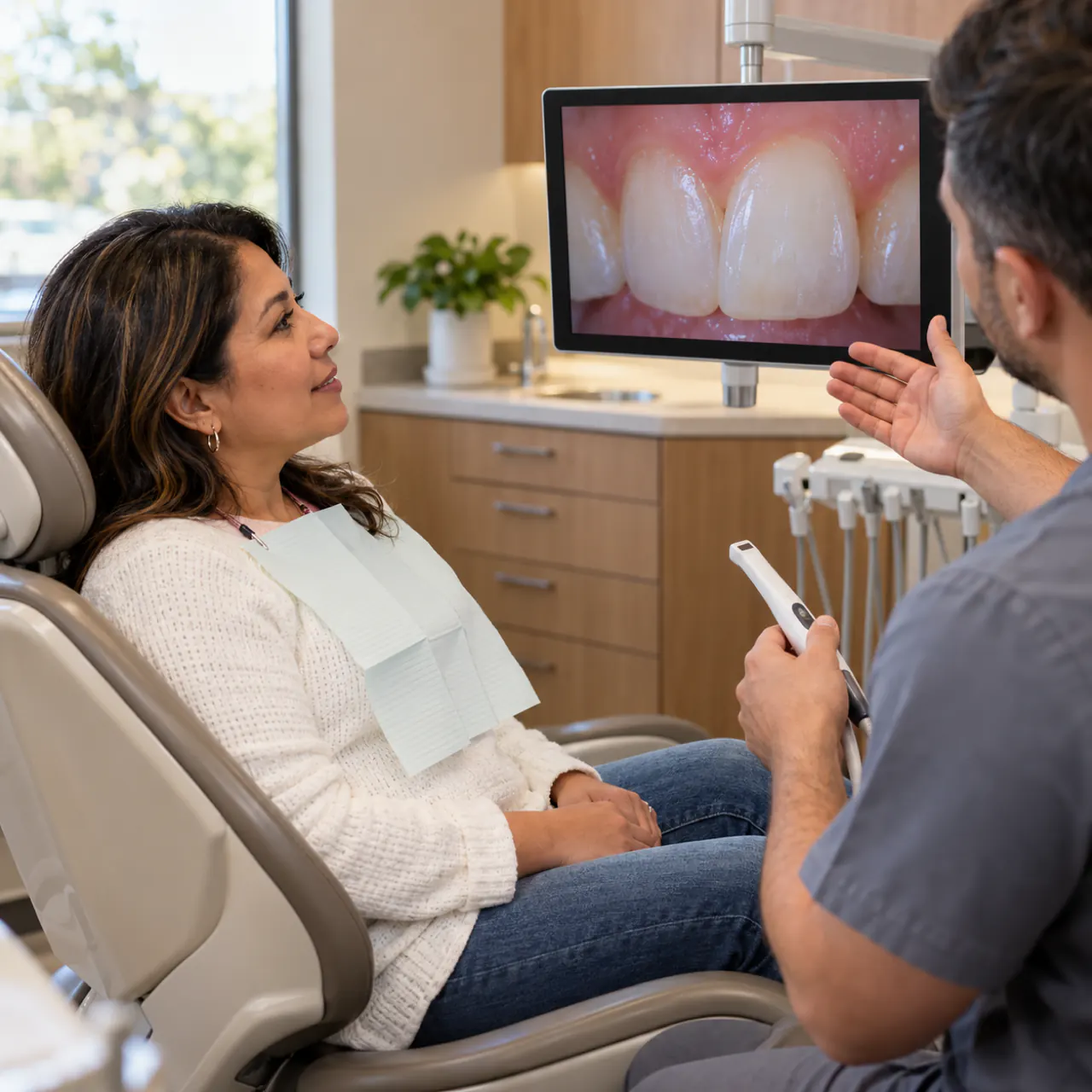
Your dentist examines the filling, its edges, and the tooth around it. Photos or an intraoral camera can show you what we see.
X-ray if needed
An x-ray may be suggested to look for decay under or around the filling. This helps us know whether the colour change is cosmetic or a health concern.
Talk through the options
We explain whether polishing, resurfacing, or full replacement makes most sense. If whitening is planned, we usually whiten first.
Shade selection and freezing
We choose a composite shade in natural light before the tooth dries. The area is frozen if needed for your comfort.
Remove and replace
The old filling is carefully removed, any decay is cleaned out, and the new composite is layered in and hardened. We work to keep as much healthy tooth as possible.
Shape, polish, and check
The filling is shaped to match the tooth, polished to a natural sheen, and checked with your bite. We share tips to help the new filling stay bright.
Filling replacement details
Why fillings discolour, and what affects the new match.
Not every stained filling needs replacing. These details help us decide together.
Why fillings become discoloured
- Surface staining from coffee, tea, wine, or tobacco
- Dark lines where the edge of the filling has worn
- Older composite materials that yellow with age
- Natural teeth getting whiter after whitening treatment
- Small leaks at the margin that let stain in
- Decay developing under or beside the filling
- Rough surfaces that collect plaque and stain
- Fillings placed before your teeth reached their adult shade
What affects the new match
- Your current tooth shade in natural light
- Whether whitening is planned before or after
- How much tooth structure surrounds the filling
- The translucency of your enamel near the edge
- How dark the tooth is beneath the old filling
- Your bite and the forces on that tooth
- Whether a larger restoration like a crown is wiser
- Your staining habits and home care
Care close to home
Filling updates at our Guelph office.
Many Guelph patients mention an older front filling during a routine checkup at our Kortright Road West office. If it is a simple swap, we can often book the replacement for a short visit soon after.
Related services
Related filling and cosmetic care
Questions patients ask
Discoloured filling FAQs
These are the questions patients usually ask when an old filling starts to look darker than their tooth.
Why has my white filling turned yellow or brown?
Tooth-coloured fillings can pick up stain from food and drinks, and older materials may yellow with age. Dark lines at the edges can also mean the seal has worn and needs attention.
Does a discoloured filling mean I have a cavity?
Not always. Many colour changes are only surface stain. Sometimes, though, dark edges are a sign of leakage or decay, which is why we examine the filling and may suggest an x-ray.
Can a stained filling be polished instead of replaced?
Sometimes. If the stain is only on the surface and the filling is otherwise sound, polishing or adding a thin fresh layer may be enough.
Should I whiten my teeth before replacing fillings?
Yes, if you plan to whiten. Whitening does not change filling colour, so it is usually best to whiten first and then match new fillings to your brighter shade.
Is replacing a filling uncomfortable?
The tooth is usually frozen, so most patients feel pressure rather than pain. Some mild sensitivity can occur for a few days afterward.
How long does a replacement filling take?
Most single-filling replacements are done in one appointment. Several fillings may be replaced in one visit or spread over a few, depending on your preference.
Will my new filling discolour again?
All composite fillings can pick up some stain over time. Good brushing, regular polishing at hygiene visits, and rinsing after dark drinks help it stay bright longer.
When is a crown or veneer better than a new filling?
If a tooth has several large fillings, cracks, or deep colour, a crown or veneer may give a better and longer-lasting result. Your dentist will explain the options.