

Adult cavity prevention in Guelph
Protecting the softer root surfaces that show when gums recede.
When gums pull back, part of the tooth root becomes exposed. Roots are not covered by enamel, so they can decay more quickly and in places that are hard to clean. Root-cavity prevention combines targeted fluoride, saliva support, and adjusted home care to help keep these vulnerable areas healthy.
Why roots need extra care
Root surfaces are softer, so prevention matters more.
Root decay is common in adults with recession, dry mouth, or many existing fillings. It is also easier to prevent than to repair.
Stronger root surfaces
Professional fluoride varnish and prescription toothpaste, when appropriate, help harden exposed root surfaces.
Early lesions may be stopped
Some early root lesions can be arrested with fluoride and better cleaning, which may avoid or delay a filling.
Dry mouth addressed
Saliva protects roots. We suggest ways to manage dry mouth, especially when medications are the cause.
Gentler brushing technique
Brushing too hard can worsen recession. We show techniques that clean well without wearing away the root.
Less sensitivity
Many prevention steps also reduce the sensitivity that often comes with exposed roots.
Protection for existing work
Root decay often starts at the edges of crowns and fillings. Prevention helps those restorations last longer.
Your prevention visit
How we assess and protect exposed roots.
Prevention starts with understanding why roots are exposed and what is raising your risk. Many steps can be added to your regular hygiene visit.
Measure gum recession
Your hygienist records how much root is exposed on each tooth. These measurements are compared over time.
Check for early root lesions
The dentist looks for soft, discoloured, or rough areas on the roots. X-rays may be recommended to check between teeth.
Review your risk factors
We ask about medications, dry mouth, diet, and how you brush. Each of these can change the plan.
Apply fluoride varnish
A thin layer of fluoride varnish is painted onto exposed roots when appropriate. It sets quickly and works over the next several hours.
Adjust home care
We may recommend a soft or electric toothbrush, a high-fluoride toothpaste, and interdental brushes for the gumline. We show you how to use them gently.
Set a follow-up interval
Patients at higher risk may benefit from more frequent hygiene visits and fluoride applications. We recommend a schedule based on what we see.
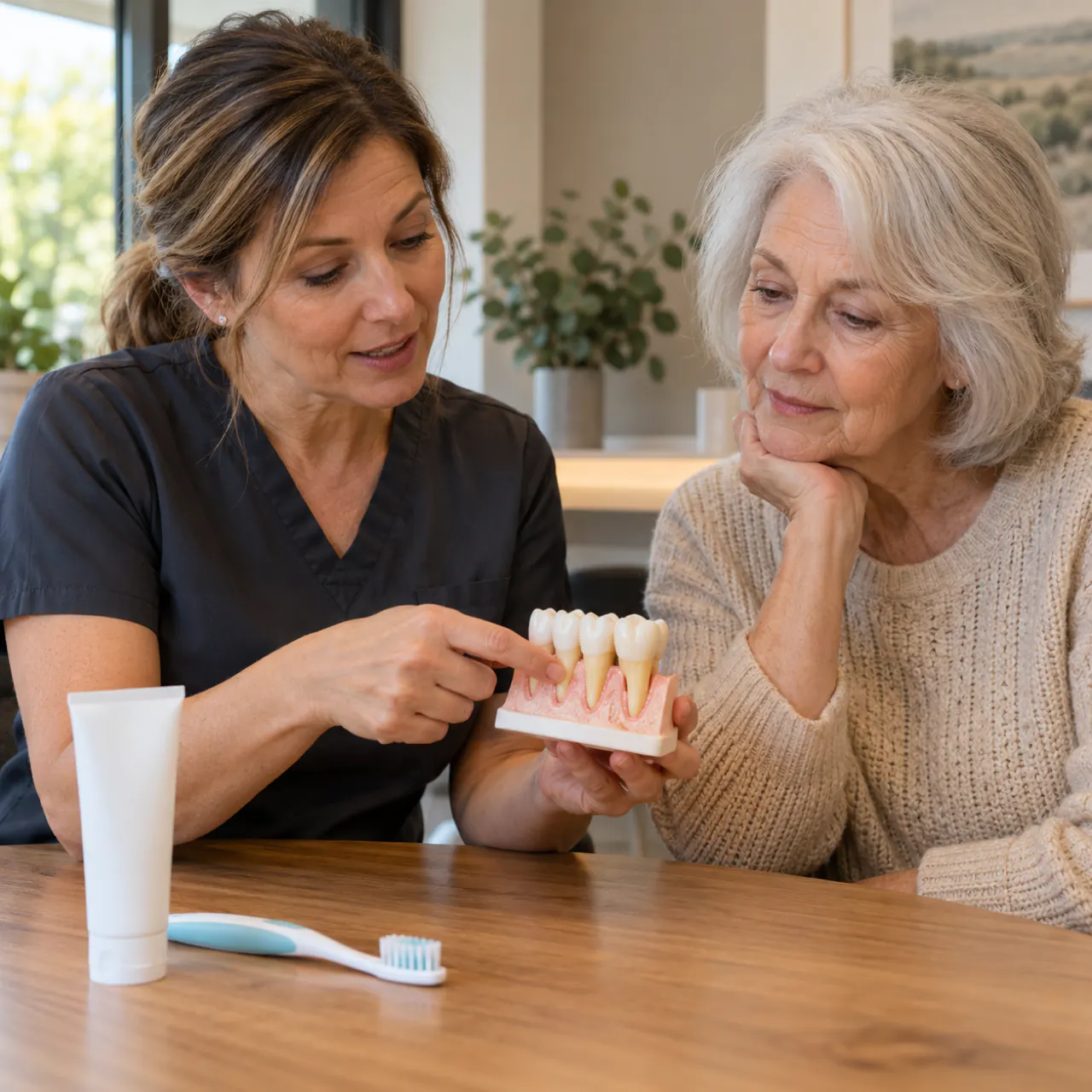
Risks and protection
What raises root-cavity risk and what helps.
Root cavities usually come from a combination of factors. Addressing several at once tends to work best.
Factors that raise root-cavity risk
- Gum recession from age, gum disease, or brushing too hard
- Dry mouth from medications or health conditions
- Frequent snacking or sipping sweet drinks
- Many existing fillings and crowns near the gumline
- Reduced dexterity that makes cleaning harder
- Previous root cavities
- Radiation therapy to the head and neck
- Partial dentures that trap plaque against teeth
Protective steps that may help
- Professional fluoride varnish
- Prescription-strength fluoride toothpaste
- A soft or electric toothbrush with gentle pressure
- Interdental brushes along the gumline
- Sipping water often if your mouth is dry
- Sugar-free gum or lozenges to stimulate saliva
- Limiting sugary snacks between meals
- Regular cleaning of partial dentures
Root care in Guelph
Protecting roots for Guelph adults at every stage.
Many of our long-time Guelph patients have more recession and more dental work than they did years ago, which naturally raises the risk of root decay. At our Kortright Road West office, we build root protection into regular hygiene visits so it becomes part of routine care rather than an extra appointment.
Related services
Related care for gums and roots
Questions patients ask
Root-cavity prevention FAQs
Common questions about root decay, recession, and how to protect exposed root surfaces.
What is a root cavity?
A root cavity is decay on the root of a tooth, usually near the gumline where the gum has receded. Roots are covered by a softer layer than enamel, so decay there can progress more quickly.
Who is most at risk for root cavities?
Adults with gum recession, dry mouth, a history of gum disease, or many fillings near the gumline are at higher risk. Root decay is more common as we age, but it can happen at any adult age.
Can root cavities be reversed?
Some very early root lesions can be hardened and stopped with fluoride and improved cleaning. Once a cavity has formed a hole, it usually needs a filling. Catching it early gives more options.
Does fluoride work for adults?
Yes. Fluoride helps strengthen tooth surfaces at any age, and it is especially useful on exposed roots. Professional varnish and prescription toothpaste are stronger than regular over-the-counter products.
Why does dry mouth cause cavities?
Saliva washes away food, neutralizes acids, and helps repair early damage. When saliva is reduced, often because of medications, teeth and roots are more vulnerable. Talk to us about dry mouth, and speak with your physician before changing any medication.
Is brushing harder better for preventing root decay?
No. Brushing too hard can wear away gum tissue and root surface. A soft brush with gentle pressure along the gumline cleans effectively without causing damage.
Do partial dentures increase root cavity risk?
They can, because clasps and edges may trap plaque against nearby teeth. Removing and cleaning your partial daily, and brushing the teeth it touches, helps lower the risk.
Are exposed roots always sensitive?
Not always, but many people do feel sensitivity to cold or touch on exposed roots. Fluoride and desensitizing toothpaste often help with both protection and comfort.