

Non-surgical periodontal therapy in Guelph
Scaling and root planing cleans and smooths the roots so your gums can heal against them.
Scaling and root planing is the main non-surgical treatment for periodontitis. Scaling removes hardened tartar and bacterial deposits from the root surfaces below the gumline. Root planing then smooths those surfaces so they are harder for bacteria to cling to and easier for gum tissue to settle against. At Ironwood Dental we plan it carefully, one section of the mouth at a time, and measure the results once you have healed.
How it helps
Clean, smooth roots give inflamed gums the conditions to heal.
The goal of scaling and root planing is not just a cleaner tooth but a healthier relationship between the gum and the root.
Removes deposits below the gum
Scaling reaches tartar on the root surfaces inside pockets, which regular cleanings and home care cannot remove.
Smooths the root surface
Root planing leaves a smoother surface that is less likely to collect new plaque and tartar quickly.
Allows gums to tighten
With the irritants gone, inflamed tissue can shrink and gums may settle closer to the root.
Often reduces pocket depth
Many patients see shallower pocket readings at re-evaluation, which makes daily cleaning more effective.
Non-surgical first step
For many patients, scaling and root planing with good maintenance is enough to control gum disease without surgery.
Measurable outcome
Re-evaluation compares pocket depths and bleeding before and after, giving an objective view of your response.
The clinical process
How scaling and root planing is carried out.
Treatment is usually divided into sections, called quadrants or sextants, so each area receives focused attention under local anaesthetic.
Plan the sections
Using your gum chart, we decide how to divide treatment, usually by quadrant. Areas with the deepest pockets may be prioritized.
Local anaesthetic
The section being treated is numbed so you stay comfortable while we work below the gumline. Numbing gel is applied first.
Ultrasonic scaling
An ultrasonic scaler uses vibration and a water spray to break up heavier tartar and flush bacteria from the pockets.
Hand scaling and planing
Fine hand instruments, shaped to follow root contours, remove remaining deposits and smooth the root surfaces. This detailed step takes the most time.
Irrigation and review
Pockets are rinsed, and the area is checked for any remaining roughness. A locally placed product may occasionally be recommended for specific sites.
Re-evaluation after healing
After several weeks, we remeasure the treated areas. The results guide whether you move to periodontal maintenance or need further care in specific spots.
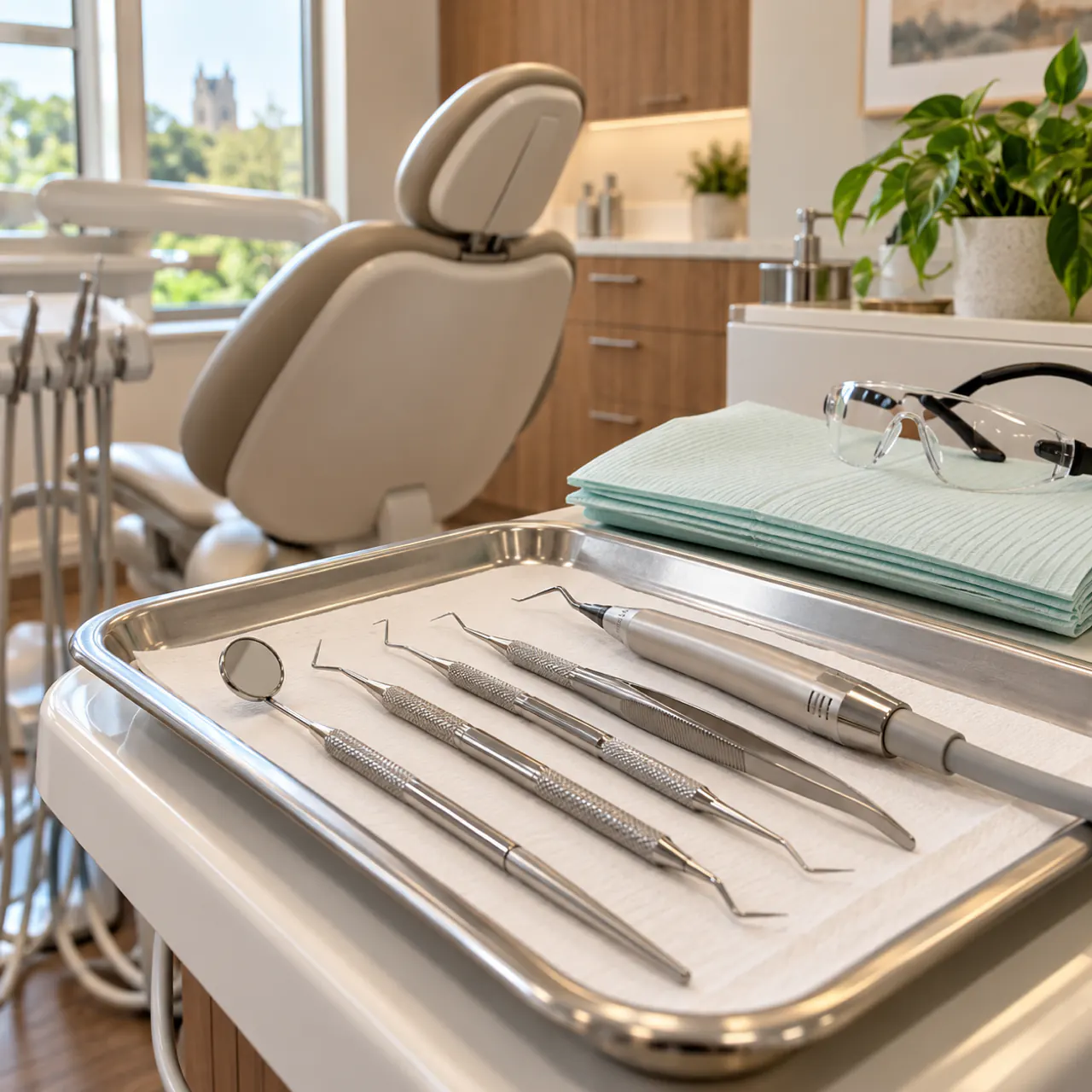
Technique and healing
The tools we use, and what healing looks like.
Understanding how the treatment works and how gums heal helps you know what to expect in the weeks that follow.
Tools and techniques
- Ultrasonic scalers for heavier tartar
- Fine curettes shaped to follow root surfaces
- Area-specific instruments for back teeth and furcations
- Water irrigation to flush pockets
- Local anaesthetic for comfort
- Quadrant-by-quadrant treatment planning
- Detailed pocket charting before and after
- Locally applied adjuncts when appropriate
What healing looks like
- Mild tenderness for a few days
- Temporary sensitivity to cold as roots are cleaner
- Gums that look less swollen within a couple of weeks
- Less bleeding when brushing and cleaning between teeth
- Slight gum shrinkage as inflammation settles
- Small spaces between teeth that may look more noticeable
- Continued tightening of tissue over several weeks
- Re-evaluation once healing is underway
Gum therapy in Guelph
Scaling and root planing at our Guelph office.
Our hygiene team at 570 Kortright Rd W plans scaling and root planing around your schedule, whether that means treating two quadrants in one longer visit or spreading care across shorter appointments. We also book your re-evaluation in advance so the healing check is never forgotten.
Related services
Related periodontal services
Questions patients ask
Scaling and root planing FAQs
These answers focus on the procedure itself and on healing afterward.
What is the difference between scaling and root planing?
Scaling removes tartar and bacterial deposits from the tooth and root surfaces below the gumline. Root planing smooths the root surface afterward so it is less likely to collect new deposits and the gum can heal against it.
How many appointments does scaling and root planing take?
It depends on how many areas need treatment. Some patients have the whole mouth done over two visits, while others have one quadrant treated per visit. We recommend a plan based on your chart and comfort.
Why do my gums look like they shrank after root planing?
As inflammation settles, swollen tissue tightens and may sit slightly lower on the tooth. This is part of healing, though it can make spaces between teeth look more noticeable.
How long does it take gums to heal after root planing?
Tenderness usually fades within a few days, and gums continue to tighten over several weeks. That is why re-evaluation is scheduled after a healing period rather than right away.
Can I eat after scaling and root planing?
Wait until the freezing wears off so you do not bite your cheek or tongue. Softer foods may be more comfortable for a day or two, and very hot or spicy foods may sting at first.
Will I need antibiotics after root planing?
Most patients do not. In some situations, such as certain medical conditions or particularly aggressive disease, antibiotics or local antimicrobial products may be recommended alongside treatment.
What if my pockets are still deep after re-evaluation?
Some pockets do not fully respond, especially where bone loss is significant. Options may include repeat targeted treatment, more frequent maintenance, or referral to a periodontal specialist.
Should I tell you about my medical conditions before treatment?
Yes. Conditions such as heart problems, joint replacements, diabetes, and medications like blood thinners can affect how we plan treatment. Please do not stop any medication without speaking with your physician first.