

Appliance replacement in Guelph
Replacing a worn or lost sleep appliance, using what we learned from the first one.
Sleep appliances do not last forever. Over several years, materials wear, connectors loosen, and your teeth may change with new crowns or fillings. A replacement appliance is made from fresh records of your teeth, and we use what worked, and what did not, with your previous appliance to guide the new design.
Why replace
A fresh appliance restores fit and keeps therapy reliable.
An appliance that no longer fits well can be less effective and less comfortable. Replacement brings both back.
A fit that matches your teeth today
New crowns, fillings, or small shifts in your teeth can make an old appliance fit poorly. Fresh records fix that.
Restored effectiveness
Worn connectors and loose trays can let the jaw slip back. A new appliance holds the intended position more reliably.
Start from a known setting
We can begin the new appliance close to the jaw position that worked for you, which may shorten the adjustment period.
Improve on the old design
If the old appliance felt bulky, broke often, or caused sore spots, the new design can address those issues.
Cleaner and fresher
Older appliances can become stained, odorous, or roughened. A new one is easier to keep clean.
Plan ahead to avoid gaps
Planning replacement before the old appliance fails means you are less likely to go without therapy.
Replacement process
How a replacement appliance is planned and made.
Replacing an appliance is usually quicker than starting from scratch, because we already know your history.
Review your previous appliance
We look at your old appliance, if you still have it, and review how well it worked, how comfortable it was, and what problems came up.
Check your current health and sleep
We ask about your symptoms and any updates from your physician. If your health has changed significantly, your physician may want to reassess your sleep first.
Examine teeth, gums, and jaw
Your dentist checks for new dental work, bite changes, gum health, and jaw joint comfort. Any dental needs are addressed before new records are taken.
Take new records
Fresh impressions or scans and a new bite record are taken, usually close to your previous effective setting.
Design and make the new appliance
We choose the design, adjusting features based on your experience with the old one. The new appliance is then fabricated to fit your current teeth.
Fit and confirm
We fit the new appliance, check comfort and retention, and schedule follow-up adjustments. Your physician may recommend confirming results with a sleep test.
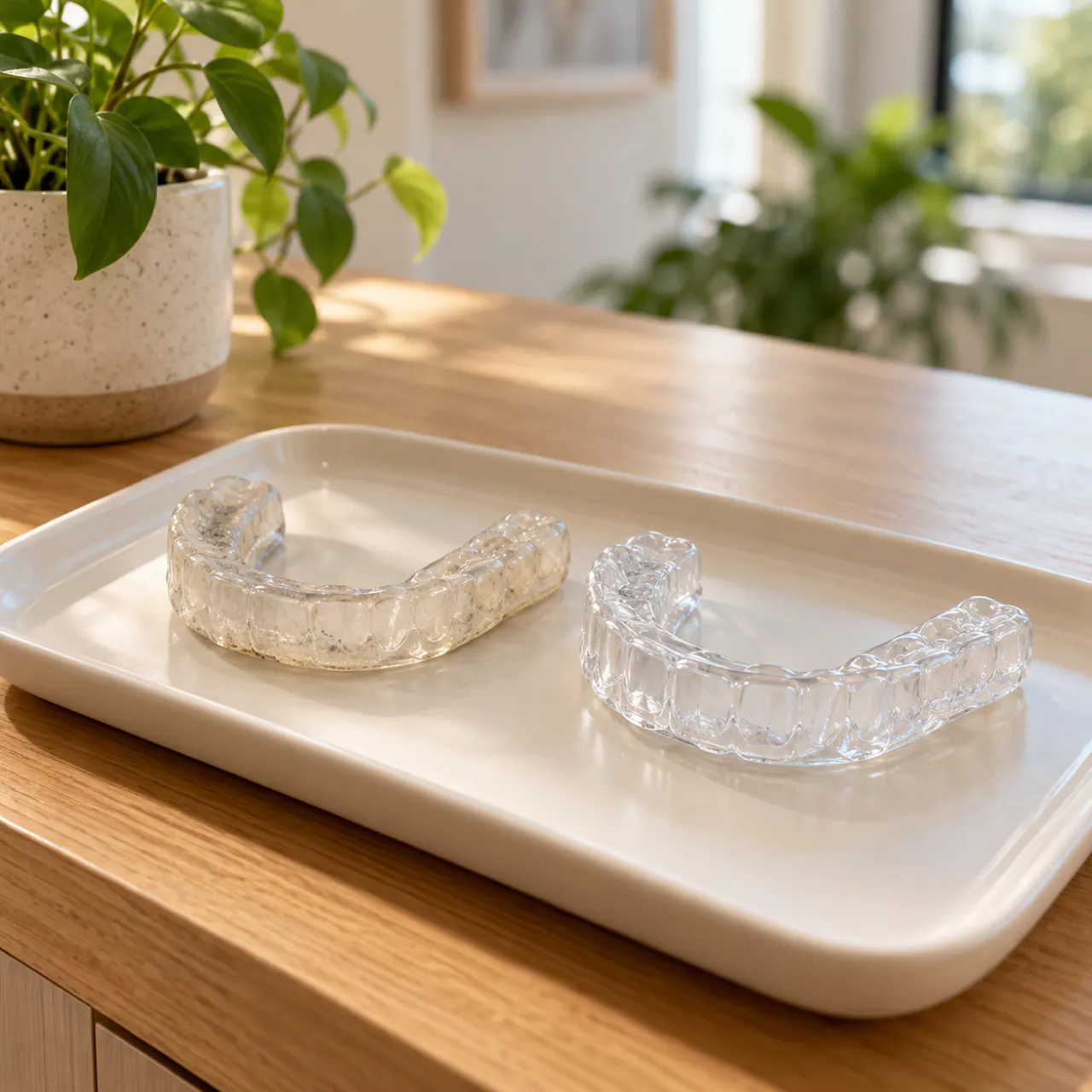
Replacement details
Signs it may be time, and how we use your history.
We will usually tell you at a follow-up when replacement is approaching, but these signs are worth knowing.
Signs it may be time to replace
- Cracks that have been repaired more than once
- Connectors or adjustment parts that no longer hold
- A loose fit that adjustments cannot fix
- New crowns, bridges, or implants that change the fit
- Snoring or tiredness returning despite adjustment
- Heavy wear from grinding
- Persistent staining or odour
- A lost or badly damaged appliance
How we use your history
- Your previous effective jaw setting
- Notes on comfort, sore spots, and preferences
- Records of how your bite has changed over time
- Information from your physician or sleep clinic
- The design features that worked well
- Features that caused problems or breakages
- How you handle and store the appliance
- Your schedule, so the transition causes minimal disruption
Continuity in Guelph
Your appliance history stays with us.
Because your earlier records, settings, and notes are kept at our Kortright Road West office, Guelph patients do not have to start their therapy over. If you received your previous appliance elsewhere, bring it with you so we can learn from its design.
Related services
Related services for appliance care and long-term therapy.
Questions patients ask
Sleep appliance replacement FAQs
Common questions about when and how to replace a sleep appliance.
How long does a sleep appliance usually last?
Many appliances last several years with good care, but heavy grinding, changes to your teeth, and daily wear can shorten their life. We check yours at every follow-up and let you know when replacement is approaching.
I lost my appliance. What should I do?
Call us to start a replacement. If you have CPAP or another prescribed therapy, use it in the meantime, and let your physician know if you will be without treatment for a while.
Do I need a new sleep study before replacing my appliance?
Not always. Your physician decides whether retesting is needed, often depending on how long it has been and whether your health or symptoms have changed.
Can my new appliance be different from my old one?
Yes. If your previous design had drawbacks, such as bulk or frequent breakage, we can consider a different style or material for the replacement.
Will I need to go through all the adjustments again?
Usually fewer. Because we know the setting that worked for you before, the new appliance can often start close to it, with smaller fine-tuning afterward.
I just had a crown placed. Does my appliance need replacing?
Not necessarily. Sometimes an existing appliance can be adjusted to fit around new dental work. If the change is significant, a replacement may fit more reliably.
Can you replace an appliance that was made somewhere else?
Yes. Bring the old appliance and any records you have, and we will complete a dental assessment and take new records for your replacement.
Should I keep my old appliance after getting a new one?
Some patients keep it as a short-term backup, but only if it still fits safely. Ask us before using an older appliance, especially if your teeth have changed.