

Quieter nights in Guelph
Custom snoring appliances for quieter nights, for you and for whoever shares your room.
For many adults, snoring happens when the jaw and tongue relax during sleep and narrow the airway. A custom snoring appliance gently holds the lower jaw forward, which may reduce the vibration that causes snoring. Because snoring can be a sign of sleep apnea, we recommend a medical evaluation before an appliance is made.
Why a custom appliance
A custom-fitted snoring appliance may be easier to live with than store-bought options.
Fit, comfort, and adjustability make the difference between an appliance you wear and one that stays in the drawer.
May reduce snoring
Holding the lower jaw slightly forward can reduce the airway narrowing that leads to snoring for many people.
Better sleep for your partner
Quieter nights often mean better rest for the person beside you, and fewer nudges to roll over.
Comfortable custom fit
Made from records of your teeth, the appliance fits securely without the bulk of boil-and-bite devices.
Adjustable for comfort
The jaw position can be changed in small steps to find a balance between comfort and quieter sleep.
Easy to pack
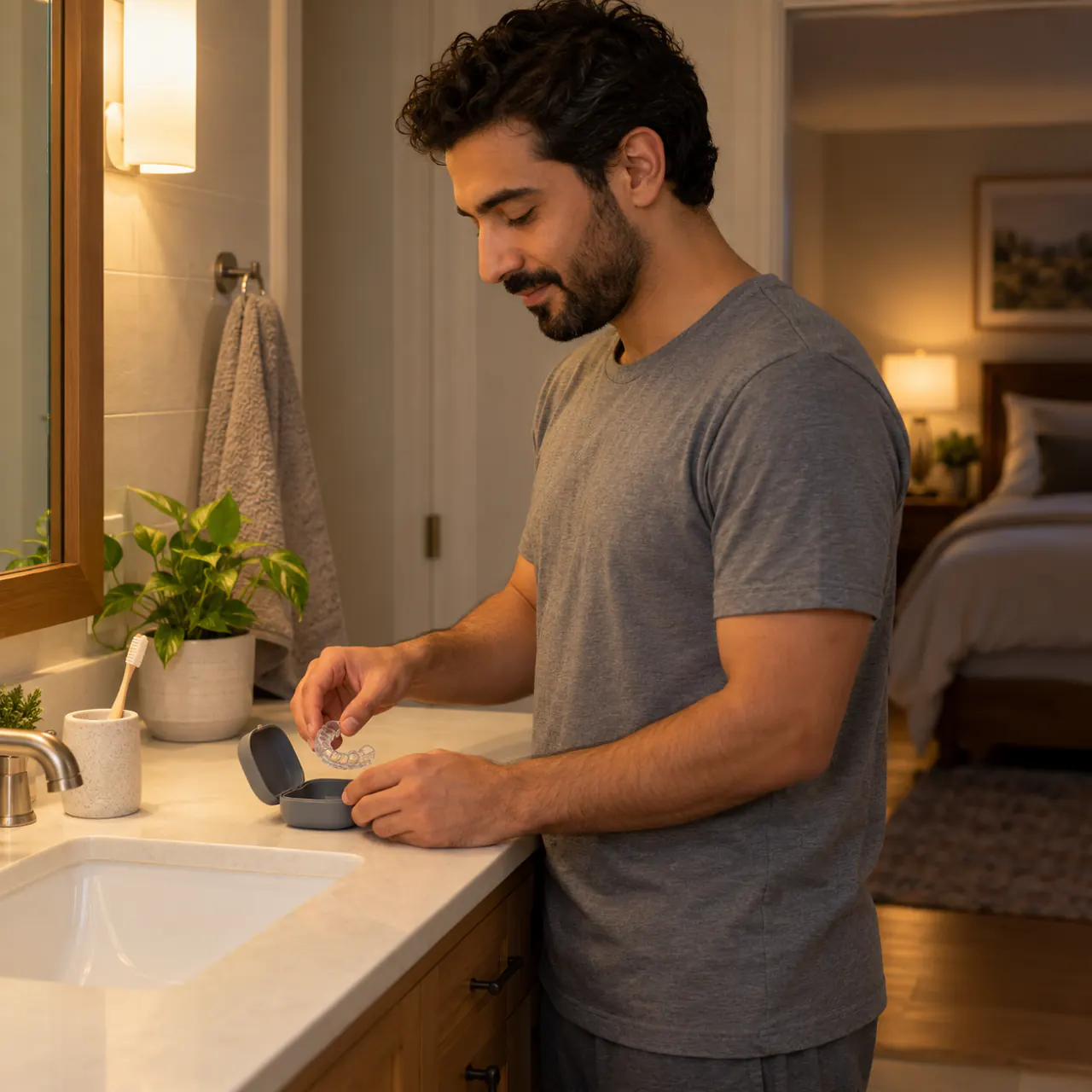
A small case makes it simple to bring the appliance on trips, to the cottage, or when staying with family.
Monitored for your teeth
Regular dental checks help make sure the appliance is not causing unwanted changes to your bite.
Getting an appliance
From first conversation to a quieter night.
The process is straightforward once a physician has evaluated your snoring. Here is how it usually goes.
Medical evaluation first
We recommend that your physician evaluate your snoring to rule out sleep apnea before an appliance is made. A snoring assessment with us can help you prepare for that conversation.
Dental exam
We check that your teeth, gums, and jaw joints are healthy enough to support an appliance. Any needed dental treatment is discussed first.
Records and design
Impressions or scans of your teeth and a bite record are taken. We choose a design that suits your mouth and sleep habits.
Fitting
Your appliance is fitted, and we show you how to insert, remove, and clean it. You also learn a short morning routine to help your bite settle.
Adjust as needed
Over the next few weeks, we fine-tune the position based on your comfort and feedback from you and your bed partner.
Ongoing checks
Once you are settled, we check the appliance and your bite at regular visits. If snoring changes or new symptoms appear, we recommend checking in with your physician.
Expectations
Who may benefit, and what to expect.
Snoring appliances work well for many people, but not for everyone. Realistic expectations help.
Who may benefit
- Adults whose snoring is worse when sleeping on their back
- People whose physician has ruled out sleep apnea
- Partners and households disturbed by snoring
- Patients with enough healthy teeth to hold an appliance
- People with healthy jaw joints and comfortable movement
- Those who want a portable, quiet option
- People who have had poor results with store-bought devices
- Adults willing to wear an appliance every night
What to expect
- Noticeable change may take some adjustment
- Mild tooth or jaw tenderness in the first weeks
- Extra saliva or a dry mouth at first
- A brief morning routine to settle the bite
- Snoring may not stop completely
- Alcohol and congestion can still increase snoring
- Regular follow-up visits to protect your teeth
- Replacement after several years of nightly wear
For Guelph households
Better sleep for the whole household.
Snoring rarely affects just one person. Guelph couples often come to our Kortright Road West office together, and we are glad to hear from both of you as we plan and adjust the appliance. Evening hours make it easier to fit in visits after work.
Related services
Related services for snoring and sleep.
Questions patients ask
Snoring appliance FAQs
Answers to common questions about dental appliances for snoring.
How does a snoring appliance work?
It holds the lower jaw slightly forward during sleep, which may keep the tongue and soft tissues from narrowing the airway. Less narrowing often means less vibration and quieter breathing.
Why do I need to see a doctor before getting a snoring appliance?
Snoring can be a sign of sleep apnea, which needs medical care. A snoring appliance might quiet the noise while leaving sleep apnea undiagnosed, so a medical evaluation comes first.
Will a snoring appliance stop my snoring completely?
Many people notice a meaningful reduction, but results vary. Factors such as nasal congestion, alcohol, and sleep position can still affect snoring.
Is a custom appliance better than a store-bought mouthguard?
A custom appliance is made to fit your teeth and is adjusted and monitored by your dental team. Store-bought devices may be bulkier, less secure, and not checked for effects on your bite.
Can I use a snoring appliance if I grind my teeth?
Often, yes, though the design may need to be reinforced. Let us know if you grind, as it affects both the design and how long the appliance lasts.
Will it be uncomfortable to sleep with?
There is usually an adjustment period of a few days to a few weeks. Most discomfort is mild and settles, and we can adjust the appliance if something feels wrong.
Can I wear a snoring appliance with dentures?
A full denture usually cannot support an appliance, since the device needs natural teeth or implants to hold onto. Partial denture wearers may still be candidates, depending on their remaining teeth.
How do I care for my snoring appliance?
Rinse and gently brush it each morning with cool water, let it dry, and store it in its case. Keep it away from heat and pets, and bring it to your dental visits.