

Denture comfort in Guelph
Soft denture relines that cushion tender gums and make everyday wear more comfortable.
A soft reline replaces the hard fitting surface of a denture with a flexible, cushioning material. It can help when gums are thin, ridges are sharp, or tissues are still healing after extractions. At Ironwood Dental in Guelph, we assess your gums first and explain whether a soft liner, a temporary conditioner, or a standard hard reline suits you best.
Why choose a soft liner
Extra cushioning where your gums need it most.
Soft relines are not for everyone, but for the right mouth they can make the difference between tolerating a denture and wearing it comfortably.
Gentler pressure on your gums
The flexible lining absorbs some of the force of chewing, which can reduce soreness on thin or sensitive gum tissue.
Help over sharp or uneven ridges
When the bone under the gums has bony edges or undercuts, a soft liner may make the denture more comfortable to wear.
Support during healing
After extractions or minor oral surgery, a temporary soft material can help the denture sit more comfortably while gums settle.
A closer, more secure feel
Relining fills the gaps that develop as gums change shape, which may improve how snugly the denture sits.
Keeps your familiar denture
A reline updates the fitting surface without changing the teeth you are used to, so your bite and appearance stay familiar.
A useful step before bigger decisions
For some patients, a soft reline offers comfort while they consider a new denture or implant-supported options.
Your reline appointment
How a soft reline is planned, placed, and checked.
A soft reline is often completed in a short appointment, with a follow-up to make sure your gums are responding well.
Talk about where it hurts
We ask where your denture rubs or presses and when it is most uncomfortable. Your description helps us decide whether a soft liner is the right fit.
Check your gums and denture
We examine the gums for sore spots, redness, or signs of irritation and look at the condition of the denture itself. If there is an infection or ulcer, we may treat that first.
Prepare the fitting surface
A thin layer of the old fitting surface is adjusted so the new material can bond well. This is done on the denture, not on your gums.
Shape the soft lining
Soft lining material is placed and the denture is seated in your mouth so the material takes the shape of your gums. Depending on the material, it may be finished chairside or processed for a longer-lasting result.
Trim and fine-tune
We trim excess material, check your bite, and make sure the edges feel smooth. You should be able to close and speak comfortably before you leave.
Follow-up and liner checks
We usually see you again to check how your gums are responding. Soft liners need periodic review because the material can wear or harden over time.
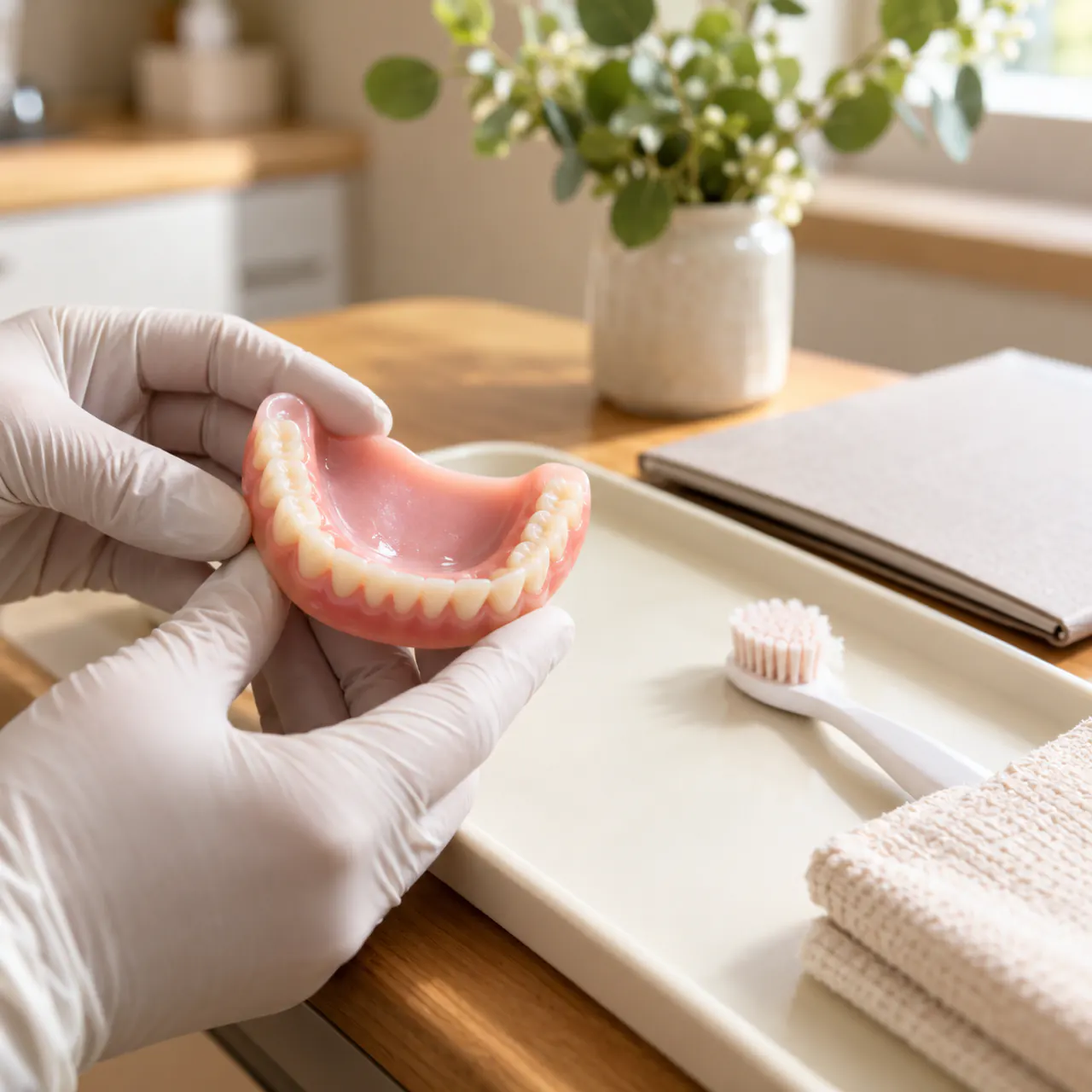
Soft reline details
Who may benefit, and how to care for a soft liner.
Soft lining materials behave differently from hard acrylic, so they need slightly different care and more regular checks.
Patients who may benefit from a soft reline
- Long-time denture wearers with thin, easily bruised gums
- Patients with sharp or knife-edge lower ridges
- People healing after extractions under an immediate denture
- Patients with recurring sore spots despite adjustments
- Lower denture wearers who find chewing pressure uncomfortable
- Patients waiting to have a new denture made
- People with dry mouth that makes hard acrylic feel harsher
- Patients considering implants who need comfort in the meantime
Caring for a soft-lined denture
- Clean daily with a soft brush and a cleanser recommended for soft liners
- Avoid stiff brushes and abrasive toothpaste on the lining
- Skip hot water, which can distort the material
- Rinse after meals to keep food from settling into the liner
- Store the denture as advised, usually moist and in a clean case
- Watch for staining, roughness, or hardening of the liner
- Book a check if the liner starts to peel or separate
- Expect the liner to need renewal more often than hard acrylic
Comfort-focused denture care
Soft relines for Guelph denture wearers.
Many of the denture wearers we see at 570 Kortright Rd W have worn dentures for years and simply want them to stop hurting. A soft reline is one of the gentler ways we can help, and we keep follow-up visits easy to book during our weekday, evening, and Saturday morning hours.
Related services
Related denture fit and comfort care
Questions patients ask
Soft denture reline FAQs
Answers to common questions about soft liners, how long they last, and how they compare with hard relines.
What is the difference between a soft reline and a hard reline?
A hard reline uses rigid acrylic similar to the denture base and tends to last longer. A soft reline uses a flexible, cushioning material that is gentler on tender gums but usually needs to be checked and renewed more often.
How long does a soft denture reline last?
It varies with the material, your mouth, and your cleaning routine. Some soft materials are meant to be temporary while gums heal, while longer-term soft liners may last longer before they need renewing. We will explain what to expect for the material we recommend.
Will a soft reline fix a loose denture?
It can improve the fit if the looseness comes from gums that have shrunk. If the denture is loose because of worn teeth, bite problems, or significant bone loss, other options such as a new denture or implant support may be worth discussing.
Can I get a soft reline right after having teeth removed?
A temporary soft material is often used during healing under an immediate denture, because gums change quickly in the first months. A longer-lasting reline is usually done once the gums have settled.
Does a soft reline make dentures harder to clean?
Soft liners are a little more delicate. They need gentle brushing and a cleanser suited to soft materials, and they can stain or harbour bacteria if not cleaned well. We show you how to look after it.
Is a soft reline done in one visit?
Some soft relines are completed chairside in a single appointment. Others are processed outside the mouth for a longer-lasting result, which may mean leaving the denture with us for part of a day. We will tell you which applies to you.
Can partial dentures have a soft reline?
In some cases, yes, particularly acrylic partials. Partials with metal frameworks have less acrylic in contact with the gums, so we assess whether a soft liner would help or whether another approach makes more sense.
My soft liner has turned rough and hard. What should I do?
That usually means the material has aged and is no longer cushioning as it should. Book a check at our Guelph office so we can assess the liner and renew it if needed.