

Mouth injury care in Guelph
Cuts and sores inside the mouth heal well with the right first steps.
Lips, tongue, cheeks, and gums can be cut in a fall, bitten after a numbing appointment, scraped by a broken tooth, or burned by hot food. The mouth heals quickly, but some injuries need cleaning, protection, or stitches, and some hide damage to the teeth underneath. Ironwood Dental assesses soft-tissue injuries and helps you know whether home care, a dental visit, or hospital care is the right fit.
Why have it checked
Soft-tissue injuries can hide other problems.
Most mouth cuts heal on their own, but a dental check can confirm the teeth are unharmed and help the tissue heal cleanly.
Check for tooth damage
A cut lip often comes with a hit to the teeth. We check for chips, loosening, and fragments embedded in the lip.
Clean healing
Gently cleaning the wound removes debris and lowers the chance of infection and irritation.
Remove the source of irritation
A broken tooth, sharp filling, or rough denture edge can keep cutting the same spot. Smoothing it lets the tissue heal.
Know when stitches are needed
Deep cuts or cuts across the lip border may need stitches, and we help you get to the right place for them.
Comfort while healing
We suggest rinses, protective gels, and soft-food options to make eating and speaking easier.
Watch for sores that don't heal
Any sore that lasts more than two weeks should be rechecked, even if it started with an injury.
Your injury visit
Clean, assess, protect, and heal.
A soft-tissue visit is usually short and gentle. We focus on comfort and on making sure nothing more serious is going on.
Control bleeding at home
Rinse gently and press clean gauze or a damp cloth firmly on the area for 10 to 15 minutes. A cold compress on the outside of the face can help with swelling.
Call and describe the injury
Tell us how it happened, where the cut is, and whether any teeth feel loose or broken. If bleeding is heavy or the cut is deep, we will direct you to the emergency department.
Gentle examination
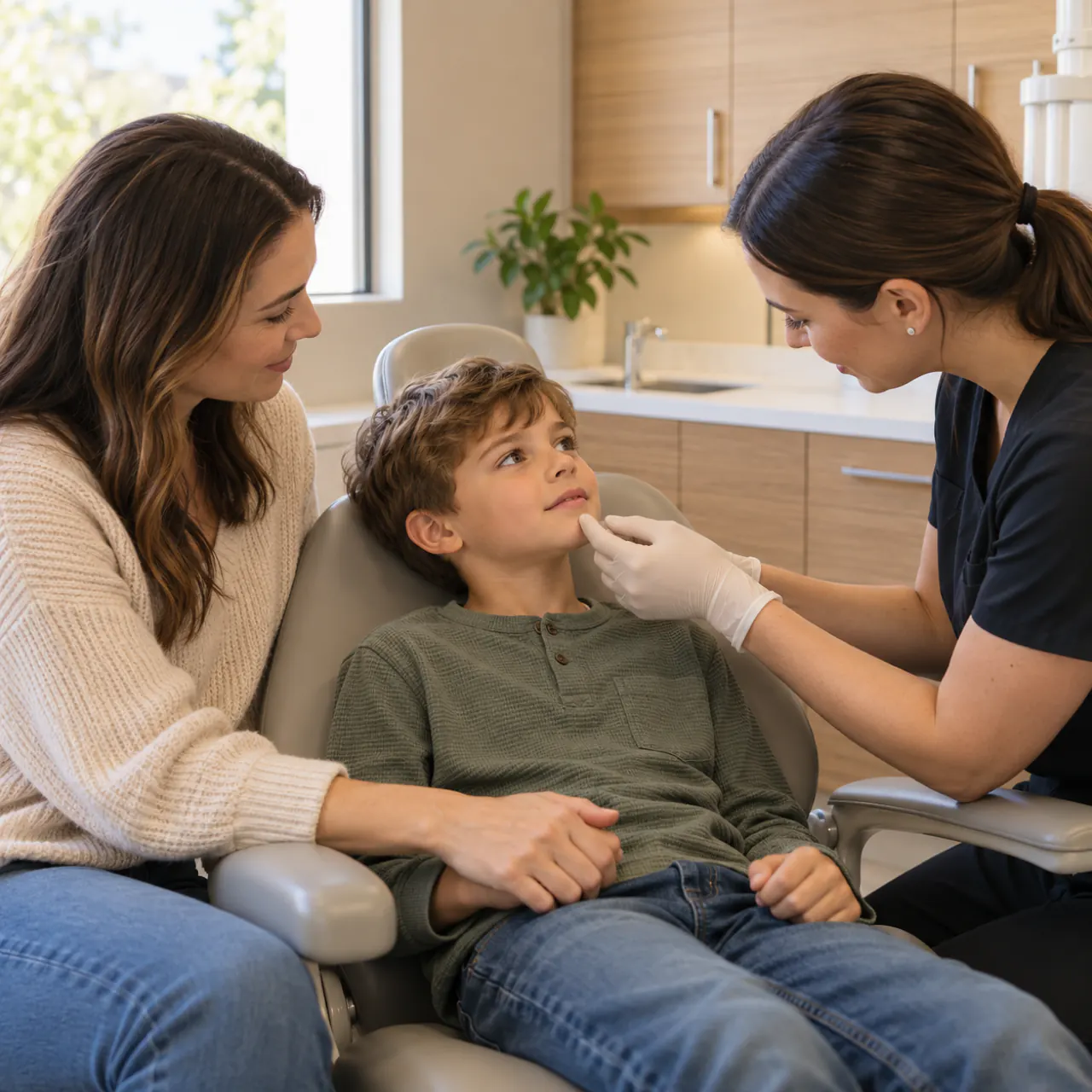
Your dentist looks at the wound and checks the nearby teeth, bite, and jaw. Children are given time to settle, with a parent close by.
X-ray if teeth may be involved
If a tooth was struck or a fragment may be in the lip, an x-ray can help. We explain why before taking it.
Clean and protect
The area may be rinsed and cleaned, and any sharp tooth edges smoothed. Protective coverings or rinses may be recommended.
Healing check
We explain how long healing should take and book a follow-up when needed. If a sore has not healed in about two weeks, we will want to see it again.
Injuries and first aid
Common mouth injuries and what to do right away.
The right first aid can reduce bleeding and swelling and help the area heal well.
Common soft-tissue injuries
- Cut or split lips from falls and bumps
- Tongue or cheek bites, including after numbing
- Cuts on the gum from hard or sharp foods
- Torn tissue between the lip and gum
- Burns from hot food, drinks, or microwaved meals
- Ulcers caused by broken teeth or sharp fillings
- Sore spots from dentures, retainers, or braces
- Puncture wounds from objects held in the mouth
First aid and warning signs
- Apply firm pressure with clean gauze for 10 to 15 minutes
- Use a cold compress on the outside of the face
- Rinse gently with cool water or salt water
- Eat soft, cool foods and avoid spicy or acidic ones
- Go to the ER for bleeding that will not stop with pressure
- Go to the ER for deep or gaping cuts through the lip border
- Seek care for any injury from a fall with head impact
- Recheck any mouth sore that has not healed in two weeks
Mouth injury care in Guelph
Gentle care for kids, adults, and seniors on Kortright Road West.
Families bring children to our Kortright Road West office after playground tumbles and bitten lips, and adults come in after slips, sports, and sharp broken teeth. Call us to describe the injury, and we will help you decide whether it can be seen at the office or needs a hospital visit first.
Related services
Related injury care
Questions patients ask
Soft-tissue mouth injury FAQs
Answers for cuts, bites, and burns inside the mouth. Go to the nearest emergency department or call 911 for bleeding that will not stop with firm pressure, a deep or gaping cut through the lip, a possible head injury, or swelling that affects breathing, swallowing, or vision, or comes with a high fever.
When does a cut lip need stitches?
Cuts that are deep, gaping, longer than a small nick, or that cross the border between the lip and skin may need stitches for proper healing. These are often best managed at an emergency department or urgent care clinic.
How do I stop a mouth cut from bleeding?
Press clean gauze or a damp cloth firmly on the area for 10 to 15 minutes without lifting to check. If bleeding continues despite steady pressure, go to the nearest emergency department.
My child bit their lip after a filling. What should I do?
This is common while the lip is still numb. Rinse gently, use a cold compress, and offer soft foods. The area may look white or swollen for a few days as it heals, but call us if it is getting worse.
How long does a tongue cut take to heal?
The tongue has a rich blood supply and usually heals quickly, often within a week or two for minor cuts. Deep or gaping tongue cuts should be seen in case stitches are needed.
What helps a burn on the roof of my mouth?
Sip cool water, eat soft and cool foods, and avoid spicy, crunchy, or acidic foods while it heals. Most minor burns heal in about a week. Call us if it blisters severely or does not improve.
A broken tooth keeps cutting my tongue. Can you help?
Yes. We can smooth the sharp edge or place a temporary covering so the tongue can heal, then plan a lasting repair for the tooth.
When should I worry about a sore in my mouth?
Any sore that has not healed within about two weeks should be checked, even if you remember injuring the spot. Most are harmless, but it is important to rule out other causes.
Should I go to the hospital for a mouth injury?
Go to the emergency department or call 911 for bleeding that will not stop, a possible head injury or broken jaw, or swelling that affects breathing, swallowing, or vision or comes with a high fever. Otherwise, call us to arrange a dental assessment.