

Sports injury care in Guelph
From the bench to the dental chair, help for athletes with injured teeth.
A stray elbow, puck, stick, or ball can chip, loosen, or knock out a tooth in seconds. Guelph has busy hockey rinks, soccer fields, and basketball courts, and teeth are often caught in the action. Ironwood Dental treats sports-related dental injuries for athletes of every age, guides coaches and parents through first aid, and helps players return to the game with better protection.
Why prompt care helps
Athletes recover better with quick, coordinated care.
Injured teeth respond best when they are treated quickly. Fast care also helps players know when they can safely get back to training.
Better outcomes for knocked-out teeth
A knocked-out adult tooth that is replanted or stored in milk and seen quickly has a better chance of being kept.
Repairs that fit the sport
We plan repairs with your sport in mind, including how bonding or crowns hold up to future contact.
Return-to-play guidance
We explain when it may be safe to train again, especially when a tooth is splinted or a repair is still healing.
Documentation for leagues and claims
Notes, photos, and x-rays can be helpful for team records or accident claims.
Better protection going forward
A custom-fitted mouthguard can help reduce the risk of future injuries, especially after a tooth has been repaired.
Monitoring for delayed problems
Injured teeth can show nerve changes weeks or months later. Follow-up checks keep players on track.
After the game
What happens from the field to follow-up.
Sports injuries often involve more than one tooth, as well as lips and gums. We work through each part of the injury in order.
Sideline first aid
Stop play, check for head injury, and look for any missing teeth or pieces. For a knocked-out adult tooth, hold it by the crown and replant it or store it in milk.
Rule out concussion and jaw injury
If a player is dazed, has a headache, or cannot close their teeth together normally, seek medical care first. Dental care can follow once those concerns are cleared.
Call on the way
Tell us what happened and what was injured, so the team can be ready. Bring any tooth pieces and the mouthguard if one was worn.
Exam and x-rays
Your dentist checks the injured teeth, neighbouring teeth, lips, and bite, and takes x-rays to look for root fractures or displacement. Lips and cheeks are checked for embedded fragments.
Stabilize and repair
Treatment may include replanting, repositioning, splinting, smoothing, or bonding broken edges. We explain each step and keep the area numb while we work.
Back to play with protection
We explain when training can resume and schedule follow-up checks. When healing allows, we can discuss a custom mouthguard for the rest of the season.
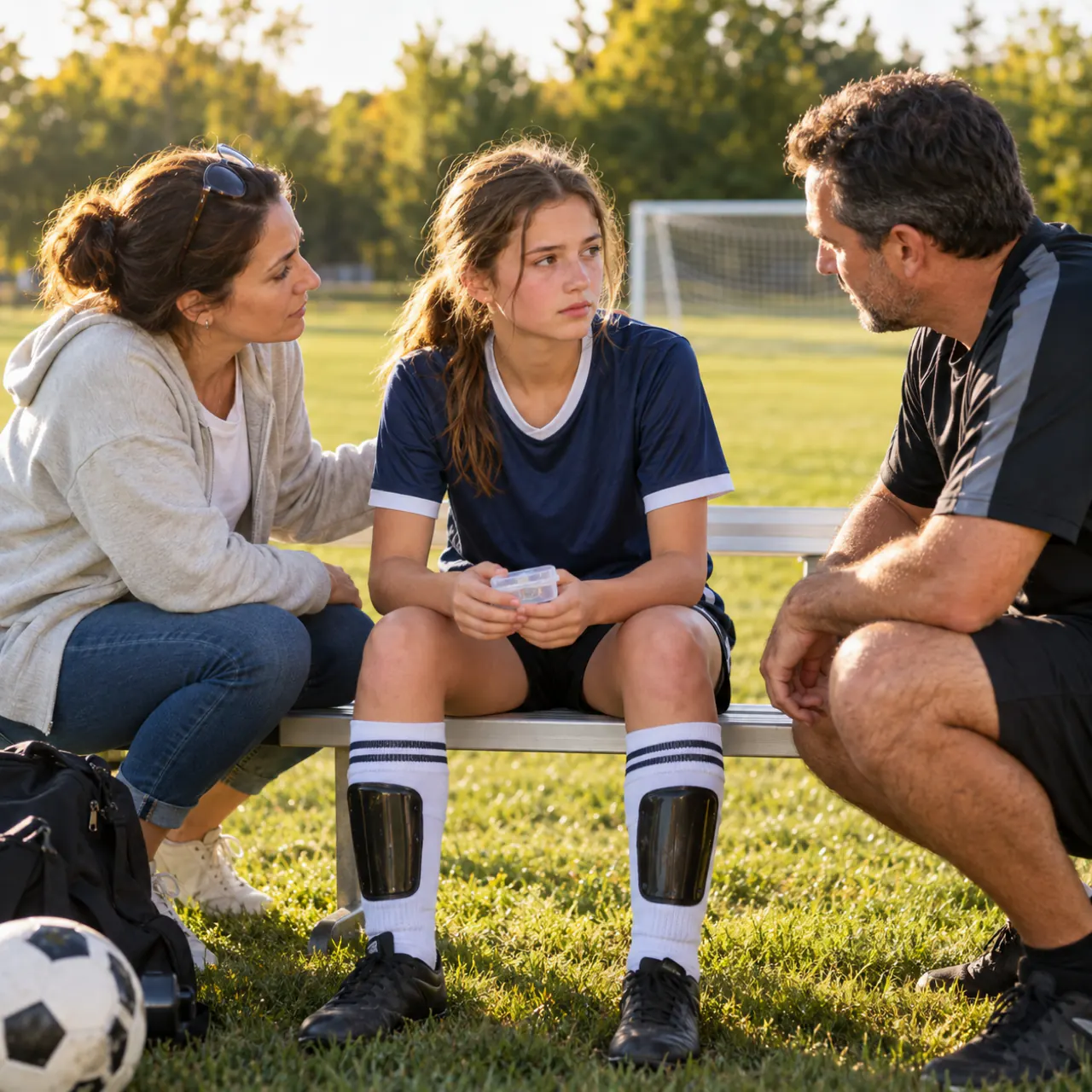
Sideline guide
First aid on the field and protection for the season.
Coaches, parents, and players can save this guide for the equipment bag.
Sideline first aid checklist
- Check for concussion signs before focusing on teeth
- Find any knocked-out teeth or broken pieces
- Hold a knocked-out tooth by the crown, never the root
- Replant an adult tooth gently, or store it in cold milk
- Never replant a baby tooth
- Press clean gauze on bleeding areas
- Apply a cold pack to the outside of the face
- Call the dental office on the way
Common sports injuries we treat
- Chipped or fractured front teeth
- Knocked-out teeth from sticks, pucks, or elbows
- Teeth pushed out of place by impact
- Loosened teeth after a fall or collision
- Split lips and cheek cuts from contact
- Damage to existing crowns, veneers, or bonding
- Injuries to teeth with braces
- Damaged or ill-fitting mouthguards
Sports dental care in Guelph
Close to rinks and fields across the south end.
Our Kortright Road West office is a short drive from many of Guelph's arenas, school fields, and university athletic facilities. Evening hours Monday to Thursday and Saturday mornings help with game-night and weekend tournament injuries. Call ahead so we can be ready when you arrive.
Related services
Related injury and protection services
Questions patients ask
Sports dental injury FAQs
Questions from players, parents, and coaches after an on-field injury. If a player may have a concussion, a broken jaw, bleeding that will not stop, or facial swelling that affects breathing, swallowing, or vision, call 911 or go to the nearest emergency department first. Swelling with a high fever in the days after an injury also needs emergency care.
What should I do if a tooth is knocked out during a game?
Find the tooth, hold it by the crown, and rinse briefly if it is dirty. For an adult tooth, gently place it back in the socket or store it in cold milk, then get to a dentist as quickly as possible, ideally within the hour.
Should a player return to the game after a dental injury?
It is safest to stop playing, especially if a tooth is loose or knocked out or there are any concussion signs. Return to play should wait until the player has been assessed.
Can a chipped tooth from sport be fixed?
Usually, yes. Small chips can often be smoothed or bonded, and larger fractures may need a crown or other restoration. Bring any broken pieces, since they can sometimes be reattached.
Does wearing a mouthguard prevent all injuries?
No mouthguard can prevent every injury, but a well-fitted guard can help cushion impacts and protect teeth, lips, and cheeks. Custom guards tend to fit more securely and comfortably than generic ones.
When can I play again after a tooth is splinted?
It depends on the injury and the sport. Contact sports may need to wait until the splint is removed and the tooth is stable. We will give you guidance based on your situation.
What if the injury happened at an evening game?
We are open until 8 PM Monday to Thursday, so call us right away. If the office is closed and a permanent tooth is knocked out, or there is a head injury or heavy bleeding, go to the nearest emergency department.
Can you repair a tooth injured while wearing braces?
We can assess the teeth, lips, and braces and provide urgent care. We may also coordinate with your orthodontist about the brackets and wires.
Do adult recreational players need mouthguards?
Yes, adults in contact or fast-moving sports such as hockey, basketball, rugby, and martial arts can benefit from a mouthguard. Ask us at your next visit about a custom fit.