

Senior hygiene care in Guelph
Gentle, unhurried cleanings shaped around the needs of older smiles.
Teeth and gums change as we age. Recession, dry mouth, more crowns and bridges, and medications can all affect how plaque builds and how a cleaning should be done. Our senior hygiene visits take those changes into account, with extra time, comfortable positioning, and care for every kind of dental work.
Why adapted cleanings
Cleanings that respect what has changed with time.
Older mouths often have more dental work and more exposed root surfaces. A cleaning that accounts for both helps keep teeth longer.
Extra time and patience
We schedule enough time so you can settle in, take breaks, and ask questions without feeling hurried.
Care around dental work
Crowns, bridges, implants, and partials need careful cleaning. We use techniques that protect them while removing buildup.
Root surfaces protected
Exposed roots are cleaned gently and may be protected with fluoride to lower the risk of root decay.
Dry mouth support
Many medications reduce saliva. We look for signs of dry mouth and suggest ways to keep your mouth more comfortable.
Denture checks included
If you wear a denture or partial, we can clean it and check how it fits and whether the gums underneath are healthy.
Easier home care
If arthritis or reduced grip makes brushing harder, we suggest electric brushes, larger handles, or simpler tools.
Your visit
How we plan a senior hygiene appointment.
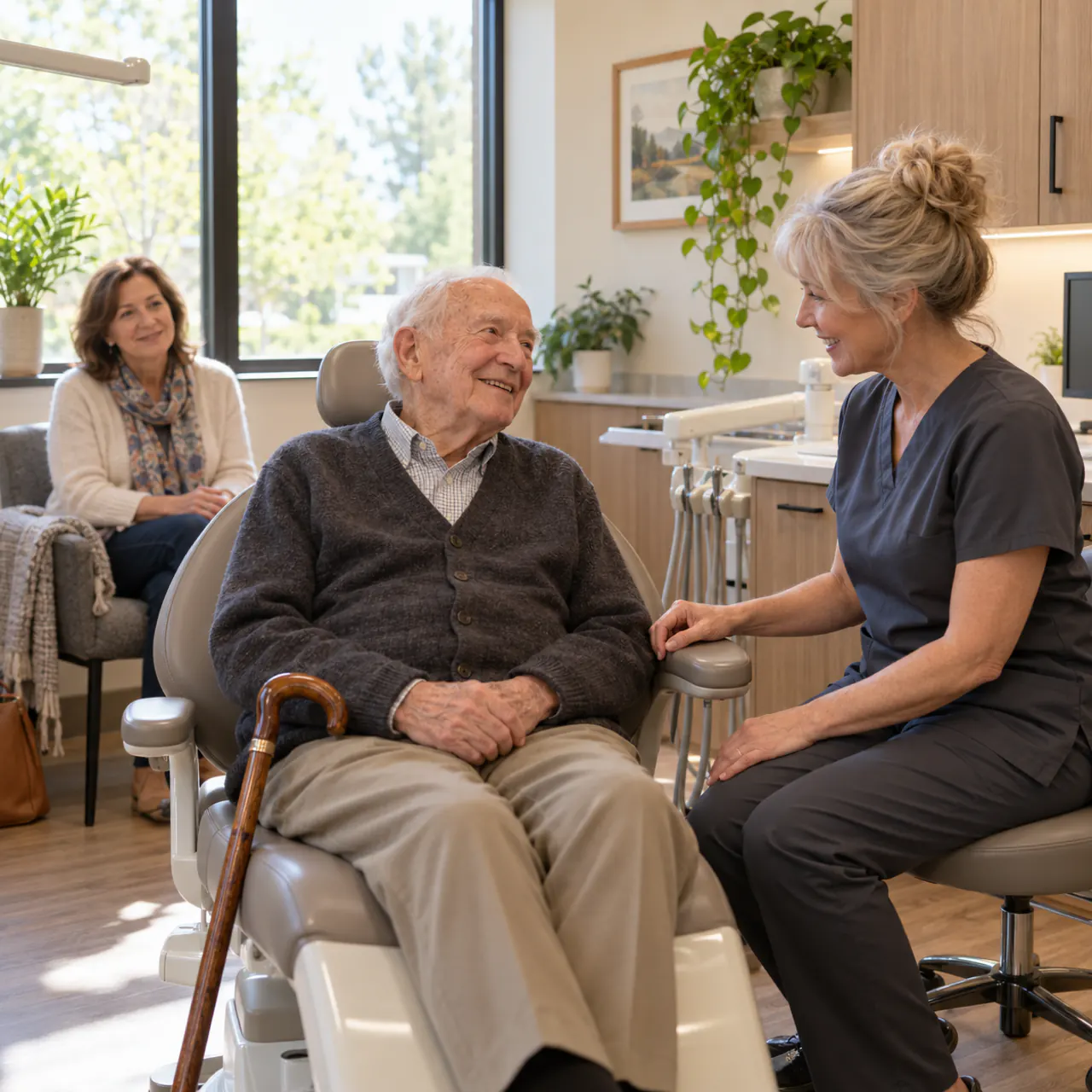
We allow extra time so nothing feels rushed. Family members or caregivers are welcome to join if that helps.
Settle in comfortably
We help you into the chair and adjust the headrest and back so your neck and back are supported. Pillows or blankets are available if you like.
Review health and medications
We go over your current medications, recent hospital visits, and health changes. Some conditions or medications may change how we plan your cleaning.
Check gums, roots, and dental work
Your hygienist looks at gum health, recession, dry areas, and the condition of crowns, bridges, and implants. Any sores or denture spots are noted for the dentist.
Gentle cleaning
Tartar and plaque are removed with care around sensitive roots and restorations. We pause whenever you need a rest.
Clean and check dentures
Removable dentures or partials can be cleaned while you are in the chair. We check for cracks, worn areas, or fit concerns.
Simple, practical home tips
We suggest home care that suits your hands and routine, and include caregivers if helpful. Your next visit is set based on what we found.
What we pay attention to
Common needs and home care support for seniors.
These are the areas we focus on most often during hygiene visits for older adults.
Common needs we look for
- Gum recession and exposed root surfaces
- Root decay along the gumline
- Dry mouth from medications
- Plaque around crowns, bridges, and implants
- Sore spots under dentures or partials
- Worn or cracked older fillings
- Changes in the soft tissues of the mouth
- Difficulty reaching back teeth when brushing
Home care support we can offer
- Recommendations for electric toothbrushes
- Wider or adapted brush handles for arthritis
- Interdental brushes that are easier to hold than floss
- Prescription fluoride toothpaste when appropriate
- Tips for managing dry mouth
- Daily denture cleaning and overnight storage
- Guidance for caregivers who help with brushing
- A recall schedule that fits your needs
Senior care in Guelph
Comfortable visits for Guelph's older adults.
Many of our senior patients have been coming to our Kortright Road West office for years, and some now bring a family member or caregiver along. Mid-morning appointments are often easiest for older adults, and couples can usually book their cleanings back to back.
Related services
Other care for older adults
Questions patients ask
Teeth cleaning for seniors FAQs
Common questions from older adults and their families about cleanings, dentures, and comfort.
Do seniors still need regular teeth cleanings?
Yes. Older adults are often at higher risk for gum disease and root decay, especially with dry mouth or more dental work. Regular cleanings help keep natural teeth healthy for longer.
How often should seniors get their teeth cleaned?
It depends on gum health, tartar buildup, and cavity risk. Some seniors do well with two visits a year, while others benefit from more frequent cleanings. We will suggest a schedule that fits you.
My medications make my mouth dry. Does that affect my teeth?
Yes. Saliva protects teeth, and dry mouth raises the risk of cavities and sore gums. Let us know about your medications so we can help, and talk to your physician before changing any prescription.
Can you clean my dentures at my appointment?
Yes. We can clean dentures and partials during your visit and check them for wear or damage. We also check the gums underneath for sore spots.
I have arthritis and brushing is hard. What can help?
An electric toothbrush, a brush with a wider handle, or interdental brushes can make home care easier. We can show you options and let you try them in the office.
Can a family member come with me?
Of course. Family members and caregivers are welcome to join you in the room, help share health information, and learn home care tips.
Do I need a cleaning if I have full dentures?
You may not need a traditional tooth cleaning, but regular visits are still important. We check your gums, tongue, and soft tissues, screen for oral cancer, and make sure your dentures fit well.
Are cleanings uncomfortable for sensitive older teeth?
Exposed roots can be more sensitive, so we work gently and can use numbing gel or other options if needed. Let us know if anything feels uncomfortable and we will adjust.